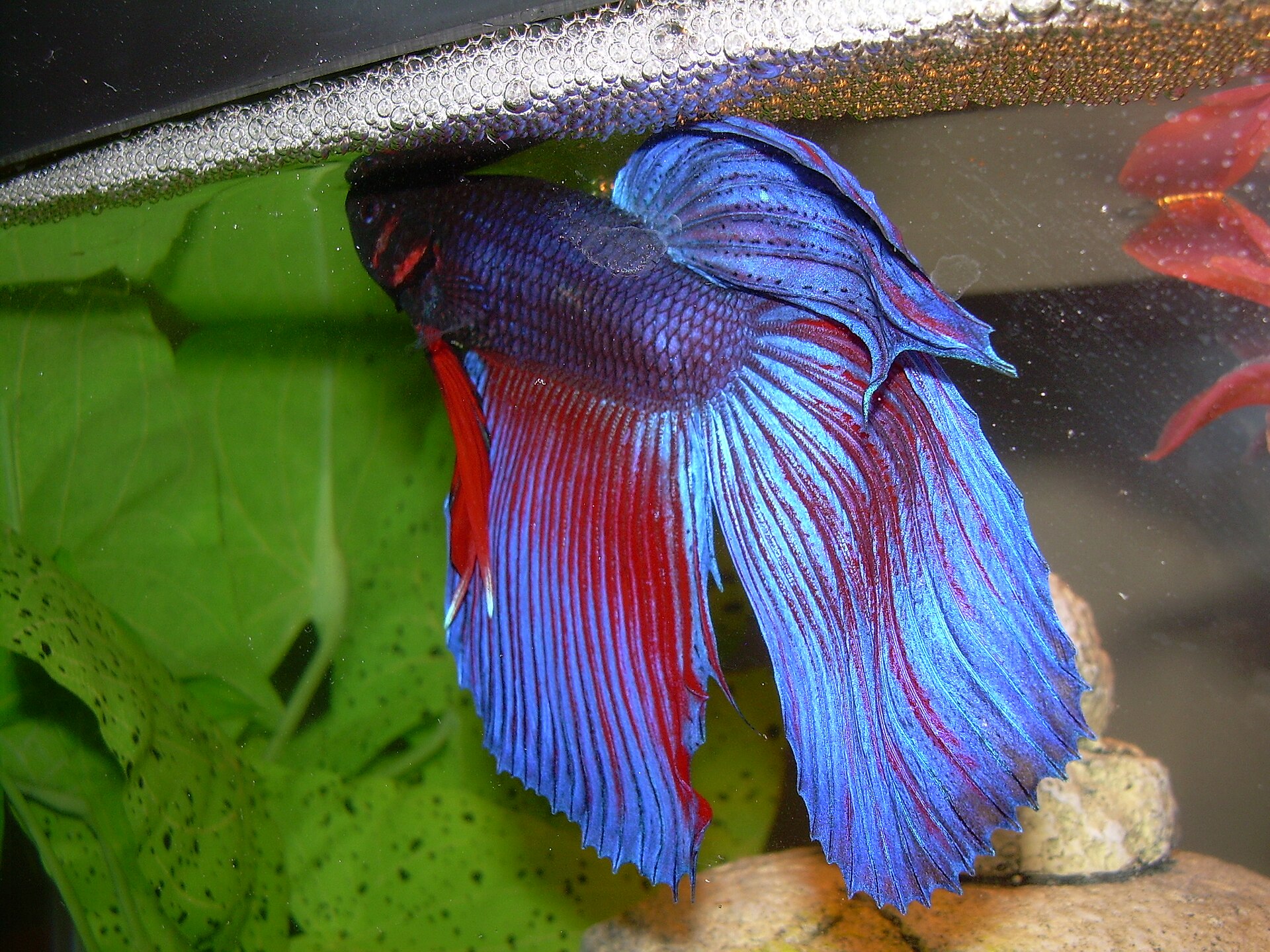
The spawning tank is a specialized setup distinct from normal keeping or conditioning. It’s a 10-gallon long aquarium with only 4 to 6 inches of water, warmer than usual (27 to 28 °C), with a floating anchor for the bubble nest, plant cover for the female, and a clear chimney for controlled introduction. Built right, it functions as a miniature courtship arena where the male can display, the female can retreat when needed, and spawning happens safely (IBC Exhibition Standards).
Parts list
- 10-gallon long aquarium (30 inches × 12 × 12). Longer footprint matters more than height.
- 25W or 50W preset heater.
- Thermometer.
- 4 × 4 inch styrofoam square or 1 indian almond leaf (half-submerged).
- Silk plants, a ceramic cave, or a dense live plant clump (Java moss, Anubias).
- Clear glass jar or 2-liter plastic bottle with the bottom cut off (the “chimney”).
- Optional sponge filter at very low air flow.
- Dechlorinated water, Seachem Prime.
- Lid (glass, kit lid, or plastic wrap): bubble nests need still warm air above the water to stay intact.
Total setup cost if you already have a spare 10-gallon: about $20 for consumables.
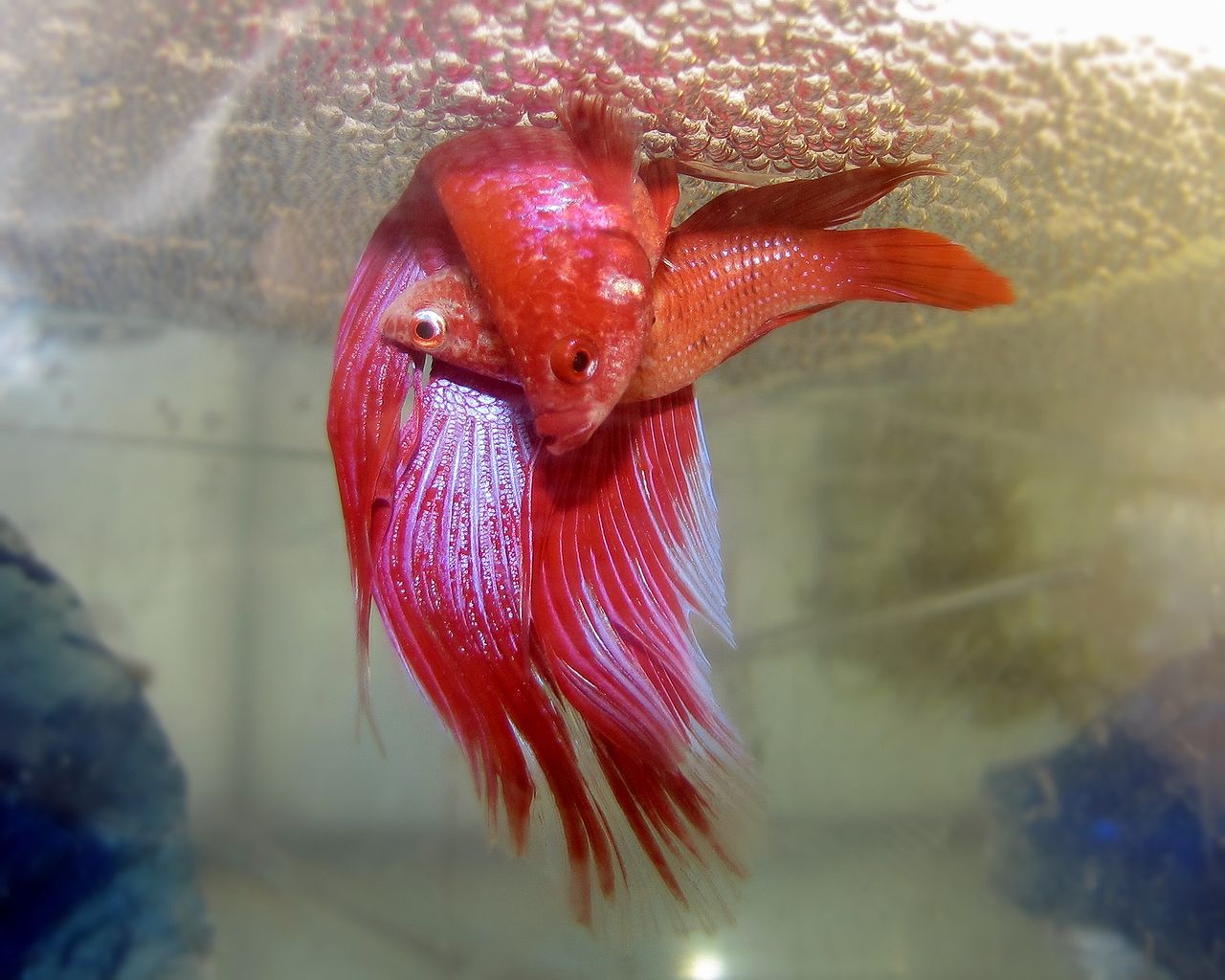
Fill depth: why 4-6 inches
Bettas spawn at the surface. The male wraps around the female just below the bubble nest, and the eggs are released and sink. The male has to dive to retrieve each sinking egg and carry it up to the nest. Deep water (8+ inches) means:
- Longer retrieval dives.
- More eggs lost to the substrate.
- Male exhaustion, shorter spawn duration.
- Female able to flee to unreachable depth, delaying or preventing wraps.
Four to six inches is shallow enough that the male retrieves nearly every egg and cannot get exhausted from diving.
The nest anchor
The styrofoam square is the standard anchor in most modern hobbyist setups. The male glues bubbles to its underside. It doesn’t sink, doesn’t deteriorate, and makes the nest easy to observe.
Alternatives:
- Half an indian almond leaf, weighted with a pebble on one end, floating at the surface. Adds tannins and mild antimicrobial benefit. Leaf gradually deteriorates over the spawning week.
- A floating plastic cup on its side.
- Floating live plants (duckweed, water lettuce) but this produces a diffuse nest that’s harder to observe.
Styrofoam is the boring correct answer.
Female cover
This is the overlooked but critical part. The female must have places to hide from the male between wraps. Without cover, a male repeatedly attacks the female between spawning rounds, and she’s damaged or killed.
Plant the opposite end of the tank densely:
- 3 to 5 silk plants or a dense live plant clump.
- One or two ceramic caves or inverted terracotta pots with gaps.
- A Java moss clump.
The female retreats between wraps, the male’s attention stays on the nest, and the pair spawns over 1 to 3 hours without damage.
The chimney introduction
Direct release of the female with no introduction period is the most common beginner failure. The male, territorial about his nest, attacks a fish that appeared from nowhere. The female panics, hides, cannot be found for courtship wraps.
The chimney solves this:
- The male is alone in the tank for 24 hours. He builds his nest and claims territory.
- You introduce the female inside a clear container (a glass jar, or a 2-liter bottle with the bottom cut off and the top screwed down). The container sits upright in the tank, bottom submerged, top at or above the water line. The female is inside, visible but isolated.
- The male displays vigorously around the container. The female, if receptive, shows horizontal bars, faces the male, pushes against the glass.
- 4 to 24 hours later, when both fish are at peak courtship intensity and the nest is complete, you lift the container out.
- The female swims out. The male has been preparing for this moment; he leads her to the nest.
Direct release works sometimes. Chimney release works most of the time. Use it.
Temperature and water parameters
- 27 to 28 °C. Warmer than general care because it triggers reproductive behavior.
- pH 6.8 to 7.2. Slightly acidic helps.
- Zero ammonia, zero nitrite, nitrate under 10 ppm.
- Soft to moderately hard water (dGH 5 to 12).
Some breeders add a drop of indian almond leaf tannin-dark water to the fill. Mild pH reduction, mild antimicrobial, simulates wild conditions.
Filtration during spawning
Optional. Most breeders run a sponge filter at extremely low air flow (just enough for surface oscillation), or no filter at all for the 5 to 7 days of active spawning and initial fry tending.
Once fry free-swim (day 5), the filter stays off or at minimum for another 10 days. Fry are too small to resist filter intake. After day 15, slowly introduce gentle filtration.
Without a filter, water quality is managed by small drip water changes (3 to 5 drops per second through an airline tube) and by the biofiltering capacity of live plants and biofilm.
The lid and still air
The lid matters for two reasons:
- Bettas jump. An open spawning tank loses a fish.
- Cold drafts above the tank break the bubble nest and chill the labyrinth organ. Fry especially need warm still air for the first weeks.
A tight glass lid or the original kit lid is fine. Plastic wrap taped down is the cheap solution.
Between spawning attempts
If a pair doesn’t spawn in 7 days despite all signals being right:
- Remove both fish, return to separate tanks.
- Rest for 1 to 2 weeks with heavy conditioning continuing.
- Try again with fresh chimney introduction.
- If still no spawn, try a different pair. Some combinations don’t work.
If the pair DOES spawn:
- Remove the female immediately after the last wrap.
- Male tends the nest.
- Eggs hatch in 36 to 48 hours at 27 °C.
- Fry free-swim day 4-5.
- Remove the male at free-swimming.
See spawning methods for the actual spawning process and what to watch, and fry: first 30 days for what happens next.
The spawning tank is a one-week rental from normalcy for the pair. Build it right, run the protocol, and the rest of the project follows.
Related on this site
- How to Breed Betta Fish: A Breeder’s Complete Guide
- Betta Spawning Methods: Thai Jarring vs Open-Tank vs Foam-Lid
- Betta Breeding Conditioning: The 14-Day Protocol
- Culling in Betta Breeding: The Ethical Framework
- Betta Breeding FAQ: The 20 Questions New Breeders Ask
Frequently asked
- Why only 4 to 6 inches of water?
- Bettas spawn at the surface. Deeper water means the male has to dive further to retrieve sinking eggs, loses some, and exhausts faster. Shallow water also prevents the female from evading the male endlessly.
- Do I need substrate?
- No. Bare bottom is standard. Makes it easy to see eggs that sink and clean up between spawns. A thin layer of sand is fine if preferred.
- What about a filter?
- Optional during spawning. Fry are too small for standard filtration once they free-swim. Most breeders run a sponge filter at very low flow during conditioning and remove or bypass it during the first 2 weeks of fry life.
- How long can the chimney stage last?
- 4 to 24 hours. If the female is strongly receptive (full horizontal bars, pushing against the chimney), release after 4 to 6 hours. If she seems unsure, give another 12 to 18. Longer than 24 hours stresses her.
- What if the male attacks the female after release?
- Some chasing is normal during courtship. If he's drawing blood or relentlessly damaging her fins with no courtship pauses, separate immediately. Try again in a week or with a different male. Never leave a female with a genuinely aggressive male.