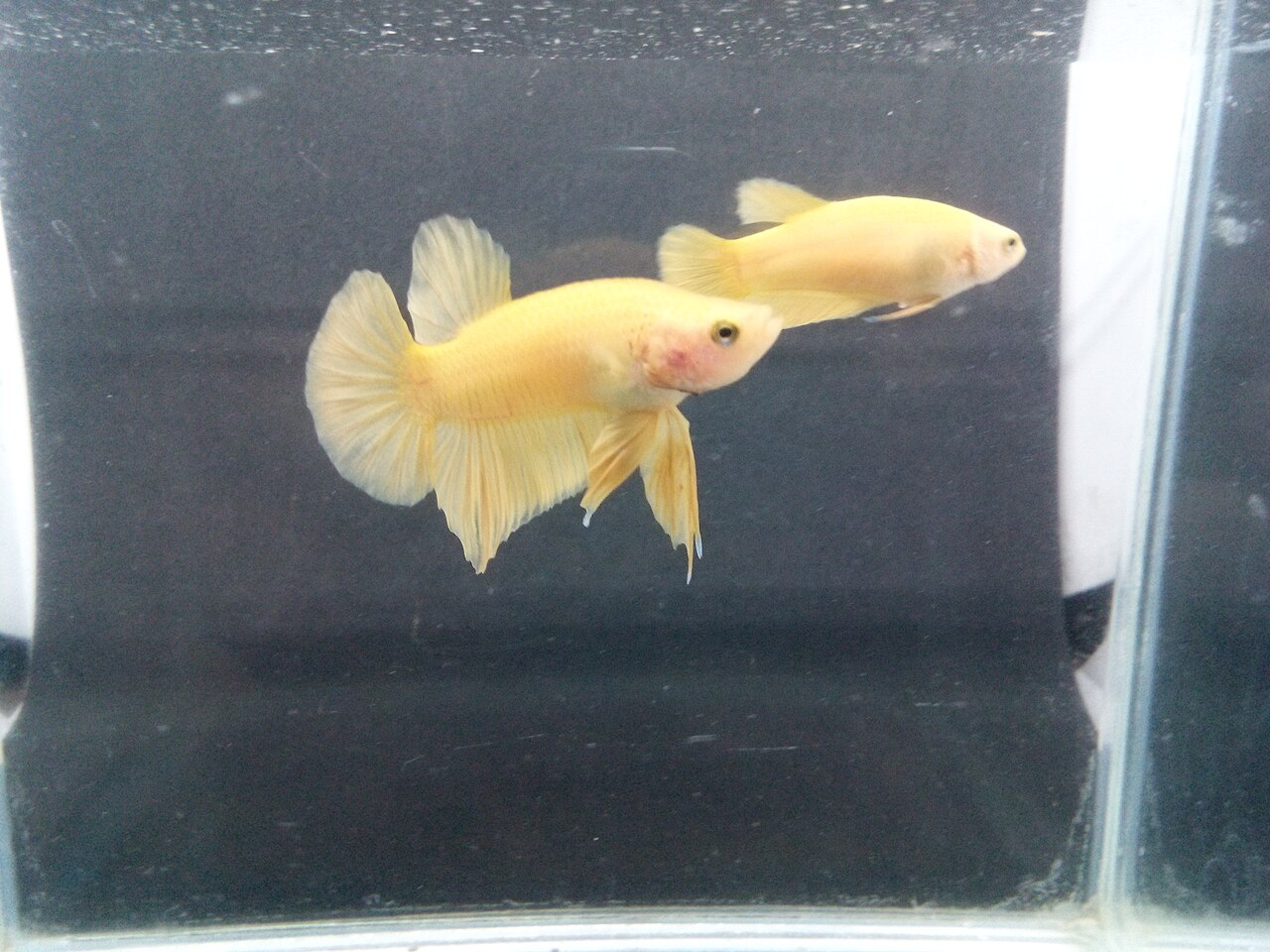
Four pellets worth buying as the staple diet for a pet betta. All are 40%+ protein with fish or insect meal as the first ingredient. Priced $8 to $15 per jar. Affiliate disclosure at our affiliate disclosure. Protein and ingredient targets follow PMC9334006 on ornamental fish nutrition.
Quick ranking
| Pellet | Protein % | First ingredient | Size | ~Price | Buy |
|---|---|---|---|---|---|
| New Life Spectrum Betta | 45% | Krill meal | 1mm | $8 | Amazon |
| Fluval Bug Bites Betta | 40% | Black soldier fly larvae | 1.4mm | $10 | Amazon |
| Hikari Betta Bio-Gold | 45% | Fish meal | 1mm | $7 | Amazon |
| Omega One Betta Buffet | 42% | Whole salmon | 1.5mm | $9 | Amazon |
1. New Life Spectrum Betta Formula
The default recommendation.
Why:
- 45% protein.
- Krill meal first ingredient.
- Natural pigments for color enhancement.
- Widely trusted among breeders.
- No wheat or corn in formula.
Cons:
- Smaller than typical pellets (1 mm). Some fish struggle initially.
- Jar size runs small; 1 oz (28 g).
Check price on Amazon Affiliate link — see our disclosure.
2. Fluval Bug Bites Betta
The newer insect-meal option.
Why:
- 40% protein.
- Black soldier fly larvae first ingredient; sustainable protein source.
- Bettas take to it enthusiastically.
- Good sinking behavior.
Cons:
- Higher price per ounce.
- Pellets slightly larger (1.4 mm); some smaller bettas struggle.
Check price on Amazon Affiliate link — see our disclosure.
3. Hikari Betta Bio-Gold
The legacy option.
Why:
- Long track record; established brand since the 1980s.
- 45% protein.
- Fish meal first.
- Slow-sinking pellets.
- Usually the cheapest of the four.
Cons:
- Ingredient list includes some filler ingredients lower down.
- Formulation unchanged for decades; newer options have edge on sustainability.
Check price on Amazon Affiliate link — see our disclosure.
4. Omega One Betta Buffet
The whole-fish option.
Why:
- 42% protein.
- Whole salmon first ingredient (not meal).
- Pungent, real-fish smell (a good sign).
- Color enhancement.
Cons:
- Pellets on the larger side (1.5 mm).
- Availability can be spotty.
Check price on Amazon Affiliate link — see our disclosure.
What to skip
TetraBettaMin and other generic pet-store betta pellets. Wheat or similar filler first ingredient. Under 40% protein. Skip.
Freeze-dried bloodworms as staple. Cause constipation. Occasional treat only.
Tropical flakes. Not betta-specific. Too low in protein.
“Gel food” sold in fishkeeping communities. Niche and requires freezer space. For advanced keepers only.
How to feed
- Count pellets. 4-6 per meal. Not a pinch.
- Drop at one end of the tank; wait 30 seconds.
- Observe. Uneaten pellets at 60 seconds means you overfed.
- Remove uneaten food with a small net.
- Fast one day per week.
The supplement plan
Pellets as staple, plus variety 2-3 times per week:
- Frozen bloodworms (Hikari cubes, $8).
- Frozen brine shrimp (San Francisco Bay, $6).
- Frozen daphnia (Hikari, $7).
- Occasional live blackworms if sourced clean.
Variety matters for long-term health. Single-food diets produce nutritional gaps.
Storage
- Keep lid tight. Oxygen exposure oxidizes oils and destroys nutrient content.
- Store at room temperature in a dry cupboard.
- Opened jars last 4 months. Date the jar with a Sharpie on day of opening.
- Stale pellets are a common cause of “my betta stopped eating.” Replace every 4-6 months.
The value-per-year calculation
A $8 jar of NLS Betta lasts 6 months feeding one fish. Annual pellet budget: ~$16. Plus ~$40/year in frozen supplement foods. Total: ~$60 annual feeding cost per fish.
Cheaper than most pet store “complete betta kits” priced at $40. Real nutrition isn’t expensive when you buy the right staple.
The bottom line
Start with New Life Spectrum Betta Formula or Hikari Betta Bio-Gold. Both are excellent. Both are cheap. Both have track records.
Rotate in Fluval Bug Bites or Omega One for variety.
Never make generic tropical flakes or sub-standard pet store pellets the main diet. Your fish is a small insectivore; feed accordingly.
Related on this site
- Betta Feeding: What to Feed, How Often, How Much
- Best 5-Gallon Betta Tanks in 2026
- Best Betta Heaters in 2026: Preset vs Adjustable
- Best Live Plants for Betta Tanks in 2026
- Betta Buyer’s Guide: What NOT to Buy
Frequently asked
- How long does a jar last?
- A 1 oz jar feeding one betta lasts 4 to 6 months. A 3 oz tub lasts a year. Pellets go stale 4 months after opening; note the open date.
- Sinking or floating?
- Slow-sinking or buoyant that sinks within 30 seconds is ideal. Pure floating pellets cause surface air-gulping. Pure fast-sinking pellets miss the surface-oriented feeding instinct. Most good pellets are slow-floating.
- Pellet size?
- 1 to 1.5 mm for adult bettas. Smaller for juveniles. Too large and the fish spits it repeatedly and dirties the water; too small and the fish doesn't feel fed.
- How many pellets per feeding?
- 4 to 6 pellets for an adult. Total food volume roughly the size of the fish's eye.