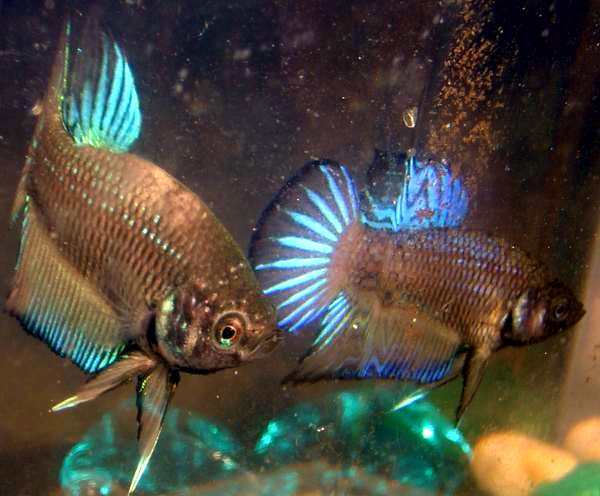
The betta pet market is full of products that look appropriate and aren’t. This page catalogs the common mistakes, honestly. If you skip everything on this list and buy real gear from the other buyer’s guides, you’ll have a fish that lives 3 to 4 years instead of 18 months (PMC9334006).
Tanks to skip
Peace-lily vases. Animal cruelty. See the betta vase myth.
Desktop bowls under 5 gallons. Includes the “Betta Cube” and similar marketed products. Too small for stable ammonia processing.
Complete betta kits under 3 gallons. Most pet-store starter kits. Usually include gravel, plastic plants, and a fish cup. Inadequate volume.
Tall, narrow tanks. Column tanks with small footprint. Bettas swim horizontally; vertical space is wasted and hard to reach the surface.
Unheated tanks in rooms under 25 °C. No heater, no tropical fish. A 5-gallon without a heater is still the wrong answer.
Medications to skip
Melafix and Bettafix (API). Tea tree oil based. Irritates the labyrinth organ. Do not use on bettas. Use kanamycin or Furan-2 for bacterial issues.
Pimafix. Pimenta racemosa oil. Similar issues as Melafix. Skip.
API Stress Zyme as a cycling substitute. Marketed as “instant cycle.” Heterotrophic bacteria that don’t nitrify. Use Dr. Tim’s One and Only if you want a real cycling boost.
Broad-spectrum antibiotics dosed as prevention. Breeds drug resistance. Only medicate when there’s a diagnosis.
Methylene blue and malachite green as general tonic. These are specific treatments for specific conditions. Not general health boosters.
Foods to skip as staples
Freeze-dried bloodworms as primary food. Cause constipation. Treat only.
Tropical fish flakes for community tanks. Too low in protein and insufficient insect-based nutrition. Bettas are insectivores.
Generic pet-store betta pellets with wheat as first ingredient. Check labels. First ingredient should be fish meal or insect meal.
Live tubifex worms. Often carry parasites and bacteria. Use live blackworms from a clean culture instead.
Décor to skip
Hard plastic plants with sharp edges. Shred fins. Use silk plants or live plants.
Resin caves with small entry holes. Bettas get stuck. Use caves with larger entries.
Glass ornaments with tight corners. Bettas can wedge in and not get out.
Sharp gravel. Damages slime coat on bottom-resting fish.
Accessories to skip
Permanent mirrors attached to the tank. Constant stress, not exercise. 60 seconds per day maximum.
Bubble décor with strong airflow. Bettas do not want strong current in small tanks.
UV sterilizers for a 5-gallon tank. Overkill and expensive for tiny tanks. UV sterilizers belong on 40+ gallon community tanks with specific pathogen concerns.
pH altering chemicals. “pH Down” and “pH Up” products produce swings, not stability. Adjust pH through substrate (crushed coral for up, indian almond leaves for down) if needed at all.
Brand-specific flags
Tetra brand is mixed. Some products are fine (Tetra Whisper air pumps); some are marketing (Tetra SafeStart is OK, Tetra Stress Coat is fine, their complete kits are undersized).
Top Fin (PetSmart house brand) is generally budget-compromise quality. OK for basics; their tank kits are undersized.
Aqueon is reasonable quality, fair value.
API makes good test kits and some good medications (Furan-2, Ich Cure), and bad medications (Melafix, Bettafix). Read each product individually.
Seachem is generally high quality (Prime, Kanaplex, Stability).
Fluval is higher-end. Mostly good, priced accordingly.
Marketing claims to ignore
- “Complete Betta Kit”, usually means the retailer made a bundle, not that the kit is complete.
- “Self-cleaning tank”, doesn’t exist. All aquariums need water changes.
- “Low-maintenance betta”, ambient-temp bowl keeping is not low-maintenance, it’s slow-motion neglect.
- “Betta-safe” without specifics, marketing. Check ingredients.
- “As seen in fishkeeping magazines”, advertising, not endorsement.
The honest reframe
A well-kept betta costs about $150 upfront (tank, filter, heater, décor, starter food, test kit) and about $10-15 per month in food, water conditioner, and replacement test kit reagents. A 3-to-4-year lifespan fish adds up to about $500 total investment.
Compare that to the pet-store bowl-and-fish combo at $35, followed by a dead fish in 14 months and another $35 replacement. Three bowl cycles cost $105 in fish and $60 in bowls over 4 years, and three fish die.
The real betta setup is cheaper per year of fish-life than the bad setup.
What TO buy
See the other spokes in this pillar:
Disclosure
Buyer’s guides on this site contain affiliate links to Amazon and other retailers. See our affiliate disclosure for details. We don’t recommend products we wouldn’t use on our own fish. Skipping the products on this page is as important as buying anything we recommend.
Related on this site
- Betta Fish Care: The Evidence-Based Guide
- Betta Disease: Diagnosis and Treatment, Evidence-Based
- Best 5-Gallon Betta Tanks in 2026
- Best Betta Heaters in 2026: Preset vs Adjustable
- Best Betta Pellets in 2026: Four That Don’t Embarrass Themselves
Frequently asked
- Are any pet-store betta kits good?
- Most are not. The Marineland Portrait 5-gallon and Fluval Evo 5 are exceptions that include adequate volume and filtration, though they still need a heater added. Most sub-$40 'complete betta kits' are inadequate.
- Should I buy Melafix or Bettafix?
- No. Tea tree oil based. Irritates the labyrinth organ that bettas rely on for breathing. The labels market these for bettas; the products harm them.
- What about those hanging mirror exercise tools?
- Limit to 60 seconds per day. Constant mirror access produces chronic stress, not exercise. Many bettas flared at mirrors constantly develop fin damage and shortened lifespan.
- Freeze-dried bloodworms as main diet?
- No. Dehydrated chitin swells in the gut, causing constipation and swim bladder issues. Occasional treat only. Use frozen or live instead.