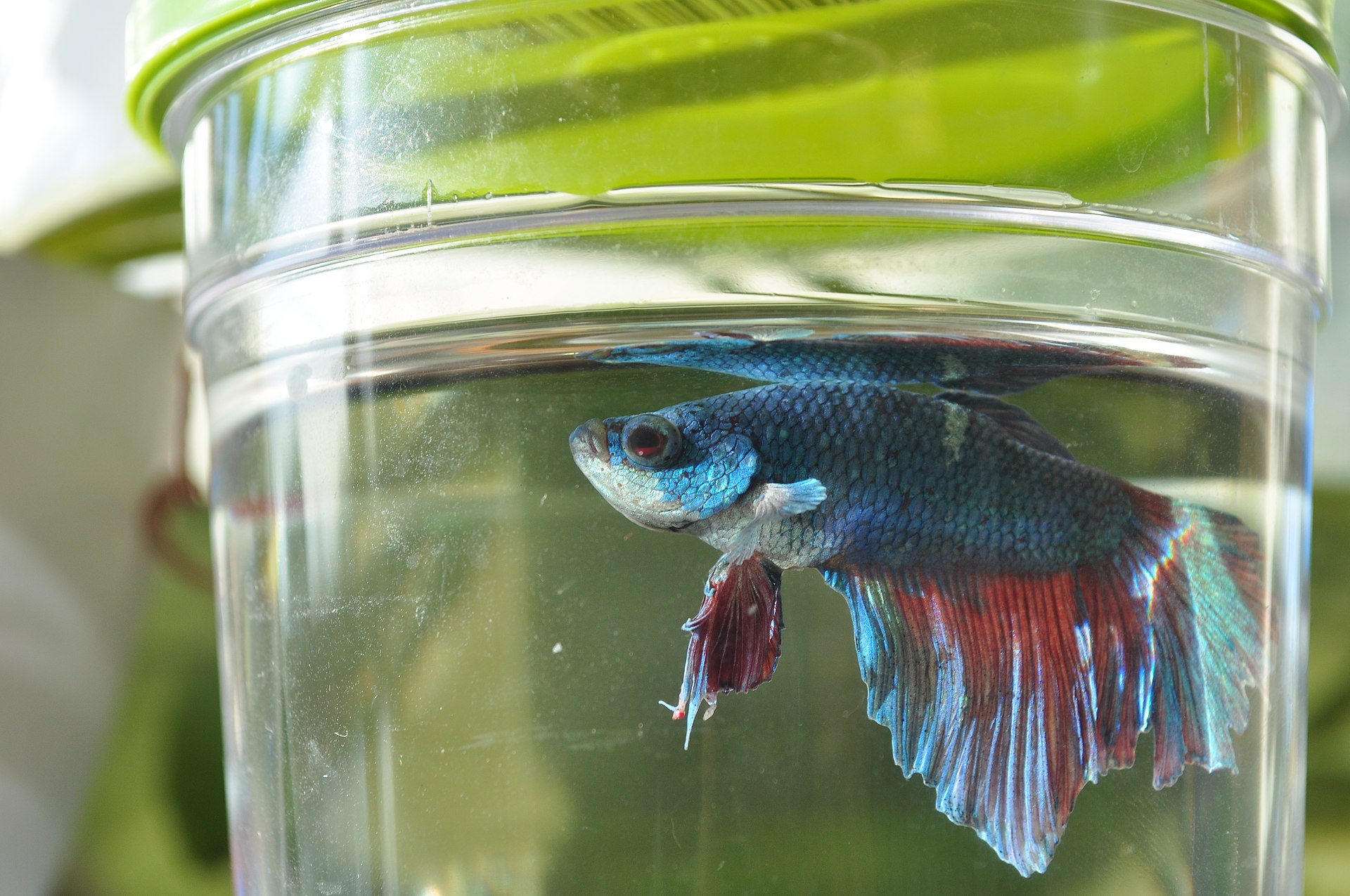
Acclimation is the process of moving a fish from transport conditions to tank conditions without killing it in the process. Done wrong, it is one of the highest-stress moments of a betta’s captive life. Done correctly, it takes about 30 minutes.
Why acclimation matters
Two physiological risks during transfer:
Temperature shock. A betta transported at 68°F dropped into a 78°F tank experiences a 10-degree jump in seconds. That is equivalent to hypothermic shock in reverse — it causes immediate immune suppression, stress hormone release, and in severe cases, direct organ damage.
pH and chemistry shock. Pet store water and your tank water may differ significantly in pH, hardness, and mineral content. Fish regulate their internal chemistry against the external water through osmosis. An abrupt large chemistry change triggers osmotic stress across all cell membranes.
Both can be prevented by giving the fish 30 minutes to equalize.
The float method
This is appropriate for most betta transfers from pet store bags or breeder shipping bags.
What you need: The transport bag (sealed), a cup or small container, a net or clean hands, a thermometer.
Step 1 — Turn off the tank lights. A dark tank reduces visual stress when the fish is introduced.
Step 2 — Float the sealed bag for 15–20 minutes. Place the sealed bag on the tank surface. Do not open it yet. The bag water temperature will equalize with the tank water through the bag walls. Check with your thermometer when you think the bag temperature has equalized — the bag should feel the same temperature as your hand dipped in the tank.
Step 3 — Open the bag and begin water addition. Once temperatures have equalized, open the bag and add small amounts of tank water — about a quarter cup every 5 minutes for 15–20 minutes. This gradually introduces the fish to your tank’s water chemistry. The fish is still in the bag; you are adding tank water to it.
Step 4 — Net the fish into the tank. Do not pour the bag water into your tank. Use a soft net to gently transfer the fish. Alternatively, use a small cup to scoop out the fish along with minimal bag water, and release it at the tank surface.
Step 5 — Discard the bag water. Bag water can carry disease. It goes down the drain, not into your tank.
The drip method
The drip method provides a slower, more controlled chemistry transition. It is recommended for:
- Fish coming from very different water chemistry (low pH blackwater fish going into neutral community water)
- Sensitive or already-stressed fish
- Breeder shipments that have been in transit for 24+ hours
How to do it:
- Float the bag for temperature equalization as above
- Empty the bag into a clean bucket (not the tank)
- Use airline tubing with a knot or valve to create a slow drip from the tank into the bucket — roughly 2–4 drips per second
- Double the volume in the bucket before transferring the fish
- Net the fish into the tank; discard the bucket water
The drip method takes 30–60 minutes but is gentler than any batch water-addition approach.
What not to do
Do not dump the bag straight in. Temperature and chemistry shock risk.
Do not float for longer than 20–25 minutes without opening the bag. CO2 accumulates in sealed bags. As CO2 dissolves in water it forms carbonic acid, progressively lowering bag water pH. A fish floated for an hour in a sealed bag may be in significantly acidified water by the time you open it — then gets hit with a pH jump when the bag opens. Float to temperature, then open.
Do not add aquarium salt or medication to the bag “just in case.” Unnecessary medication adds chemical stress.
Do not put the fish directly under the filter outlet. After introduction, give the fish a few hours to locate rest spots before subjecting it to any current.
After acclimation
Expect the following in the first 24–72 hours:
- Minimal activity, resting on the substrate or near the bottom
- Not eating (normal for up to 3 days)
- Color slightly faded (transport stress; resolves within 24–48 hours)
- Possible hiding behind decorations
Offer food once daily. Remove uneaten food after 3 minutes. Do not try multiple foods repeatedly — that constitutes overfeeding and contaminates the water. If the fish has not eaten after 72 hours and shows other symptoms, see betta not eating for the full diagnostic.
Quarantine
If you have other fish in the home — another betta tank, a community tank, a breeding colony — the new fish should be quarantined for 2–4 weeks in a separate tank before any contact with established fish. New fish can carry ich, velvet, and bacterial disease without displaying symptoms. See quarantine tank setup for the protocol.
Related on this site
- Quarantine Tank Setup
- Betta Not Eating: Diagnostic Guide
- Tank Setup: A 5-Gallon Minimum Build
- Water Chemistry
Frequently asked
- How long should I float a betta bag?
- 15–20 minutes is sufficient for temperature equalization. Beyond 20 minutes, CO2 accumulation in the bag begins reducing pH in the bag water, which makes subsequent dumping into the tank a pH shock risk. Float for equalization, then begin the water-addition phase. Do not float for an hour.
- Should I add tank water to the bag during acclimation?
- Yes, if there is a significant water chemistry difference between the transport water and your tank. Add small amounts of tank water (roughly 25% of bag volume) every 5 minutes over 15–20 minutes. This buffers the pH transition and reduces osmotic shock. Bettas sold in pH-neutral water going into a soft-acid tank benefit most from this step.
- Can I just dump the bag water into my tank?
- No. The bag water from a pet store contains whatever is in that store's water — which can include disease organisms, medications, or water chemistry very different from yours. Never add bag water to your tank. Net the fish out or use a cup to transfer it, leaving the bag water behind.
- My new betta won't eat after acclimation — is that normal?
- Yes. 1–3 days of feeding refusal after relocation is normal stress behavior. Offer food once a day, remove uneaten food after 3 minutes, and wait. Most bettas resume eating within 72 hours. See the full diagnostic guide at betta not eating.
- Do I need to quarantine a new betta?
- Yes, if you have other fish in the home. New fish can carry disease without showing visible symptoms. A 2–4 week quarantine in a separate tank before introducing the fish to an established tank or aquarium room is standard practice for serious hobbyists. See the quarantine tank guide.