
A male betta building a bubble nest is one of the best signs the tank is working. He is blowing mucus-coated air bubbles at the water surface, arranging them into a cluster, and periodically adding to it. No female is required. This happens because the fish is healthy and well-conditioned, not because he needs a mate.
What a bubble nest is
Male bettas are paternal mouthbrooders — after spawning, the male collects fertilized eggs in his mouth, deposits them in the bubble nest, and guards them until the fry are free-swimming (typically 3–4 days). The bubbles hold the eggs at the surface where dissolved oxygen is highest and temperature is most stable.
In captivity, the behavior does not require an actual spawn to proceed. The nest is built because the fish’s hormonal state drives it, not because eggs are present. A solo male building an elaborate nest in a tank with no female is not confused — he is just healthy.
What triggers nest building
Research on wild Betta splendens nest-building behavior (Jaroensutasinee & Jaroensutasinee, 2001) documented that nest size and construction rate correlate with male condition, not with female availability. The triggers are:
- Correct temperature. Cold water suppresses nest building reliably. A male that has never built a nest in a tank kept at 72°F will start building within days of the temperature reaching 78°F.
- Adequate feeding. Underfed males build smaller, less persistent nests. Regular feeding with high-protein food produces the best nest-building behavior.
- Low stress. A male constantly fighting his reflection or agitated by activity around the tank directs energy toward threat display rather than nest building. Reduced reflection exposure and calm tank surroundings correlate with more building.
- Female visibility (optional, increases frequency). A conditioned female visible through the tank glass or divider significantly increases nest-building activity and size. This is the conditioning signal used by breeders — but it is additive to existing building behavior, not the trigger for it.
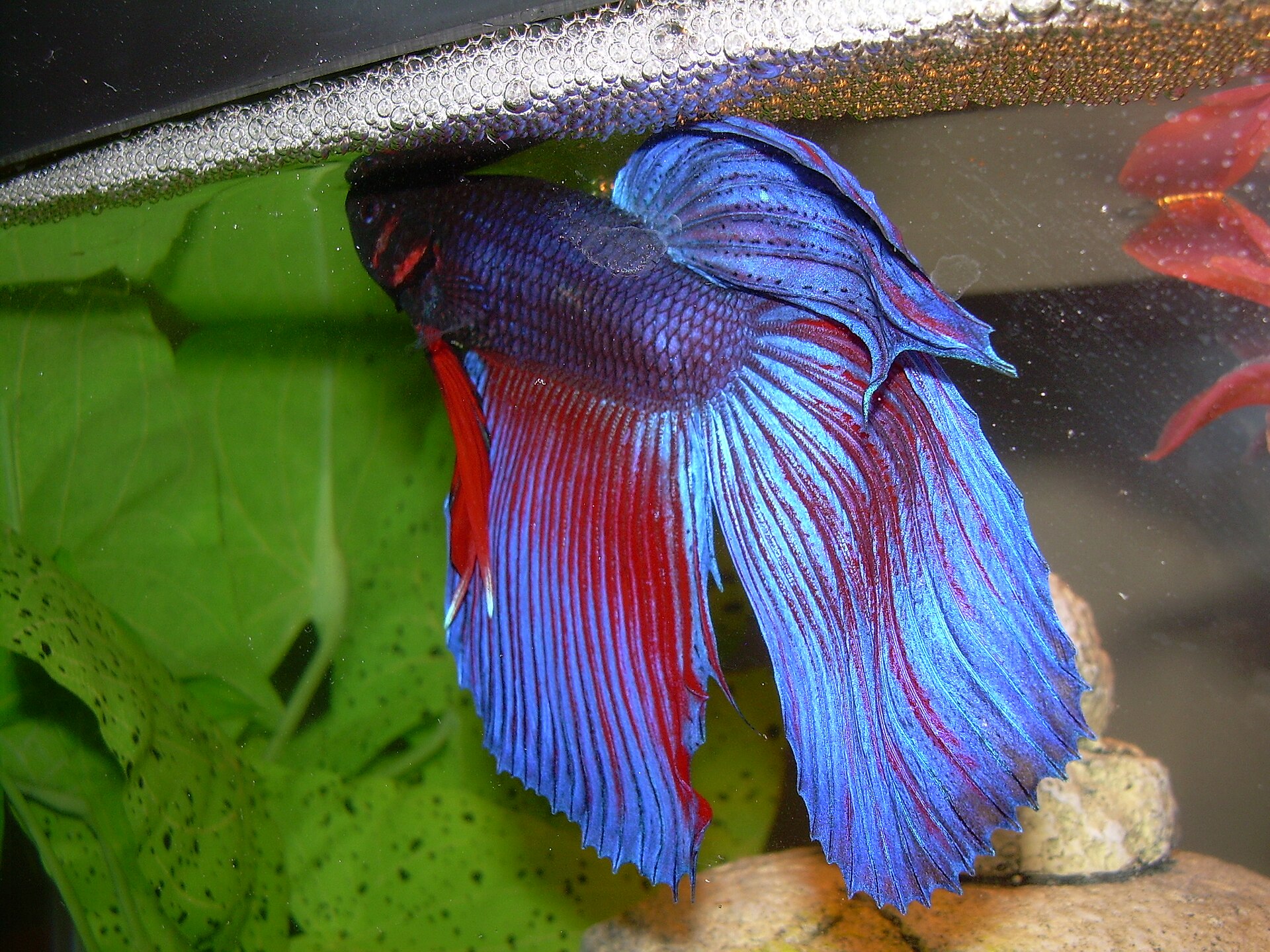
Nest size varies
Wild bettas build nests from a few centimeters to nearly a meter in diameter in habitat with abundant cover and stable surface. Captive nests are much smaller — constrained by tank dimensions, flow from the filter, and available surface area. A nest the size of a 50-cent coin in a 5-gallon tank is completely normal. A nest covering half the surface is a sign of a very healthy, motivated male.
Flow disrupts nest building. A filter outlet that creates significant surface agitation will prevent persistent nest construction even in a healthy fish. Reducing surface agitation — by pointing the filter outlet below the waterline or using a sponge filter that produces minimal surface disturbance — allows nests to accumulate.
Water changes and nests
The most common question: “I just did a water change and destroyed his nest. Did I hurt him?”
No. The nest is not critical to the male’s health. He will rebuild, usually within 24 hours. If you want to preserve the nest during maintenance, use a small cup to scoop the nest along with the surface water, do your water change, and float the cup back afterward. The nest will often survive this process.
Nest building and breeding
If you are planning to breed bettas, a male with an active bubble nest is approximately ready for introduction to a conditioned female. See pair selection and spawning setup for the full conditioning and introduction protocol. Do not introduce a female to a male with no nest or minimal nest — he is not ready.
Related on this site
- Betta Behavior: What Normal Looks Like
- Pair Selection: Choosing Male and Female for a Spawn
- Spawning Tank Setup
- Betta Breeding: The Complete Guide
Frequently asked
- Why is my betta building a bubble nest if there is no female?
- Male bettas build bubble nests in response to their own physical condition, not specifically to female presence. A well-fed, warm, healthy male builds nests. A female may increase the frequency or urgency of building once she is visible, but the behavior is driven by the male's hormonal state, not by her.
- Does a bubble nest mean my betta is happy?
- It is a reliable signal that the fish is at or near optimal condition: correct temperature, adequate feeding, low stress. It does not mean the fish is emotionally content in a complex sense, but it is one of the clearest positive health indicators a male betta produces. Males that never build nests in otherwise normal conditions may be undersized, cold, underfed, or subclinically stressed.
- Should I remove the bubble nest?
- In a solo tank with no breeding intent, removing it does no harm — the male will rebuild. Leaving it also does no harm. If you want to preserve it during a water change, use a cup to scoop some tank water and the nest together temporarily, then float it back on the surface.
- My betta has never built a bubble nest — is something wrong?
- Not necessarily. Some males are infrequent builders. Check temperature (should be 76–82°F), feeding (a fasted or underfed male builds less), water quality, and stress sources (constant reflection exposure, nearby aggressive fish). If all parameters are correct and the male is otherwise active and eating, occasional or absent nest building in a solo pet tank is not a clinical concern.
- Will my betta try to spawn if he builds a nest?
- Without a female, no spawning will occur. A male may display to his reflection or posture, but full spawning behavior — the embrace, egg release, and egg placement — requires a receptive female physically present. A solo male building a nest is not at risk of any harm from the unfulfilled behavior.