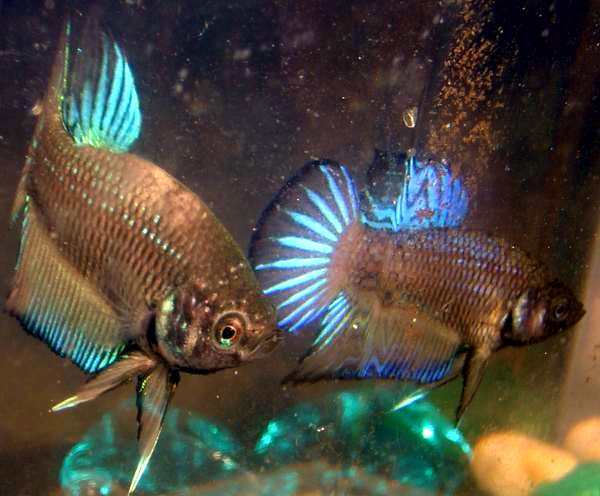
Yes, betta fish sleep. They rest in a motionless state, usually at night, often on a leaf, near a decoration, or on the substrate. They have no eyelids, so there is no obvious visual cue of the kind you would get from a mammal. A sleeping betta looks like a still betta.
The confusion that drives this question is real: a betta resting on a leaf near the bottom of the tank looks, at first glance, exactly like a sick or dying fish. Knowing the difference is one of the more useful skills a betta keeper develops.
What betta sleep looks like
During a rest period, a betta will:
- Remain motionless for minutes at a time
- Hover in mid-water, rest on a leaf or decoration, or lie on the substrate
- Show reduced color — pigment cells contract during inactivity, making the fish appear paler than its normal display color
- Surface briefly for air (bettas breathe through the labyrinth organ at regular intervals, even while sleeping), then settle back to the resting position
- Not respond immediately to food or movement outside the tank
This is entirely normal. The brief surfacing is not distress — it is the obligate air-breathing pattern that keeps a labyrinth fish alive.
Diurnal rhythm and light schedules
Bettas are diurnal: active in light, resting in dark. A tank with no light schedule — lights on 24 hours — disrupts this rhythm. The fish will still find rest periods, but they become irregular, which is a low-grade chronic stressor.
Running a consistent 8–10 hour light schedule (on in the morning, off in the evening) improves the fish’s sleep regulation, reduces stress, and also prevents algae overgrowth that accelerates in continuously lit tanks.
A simple timer on the tank light costs a few dollars and removes the need to remember.
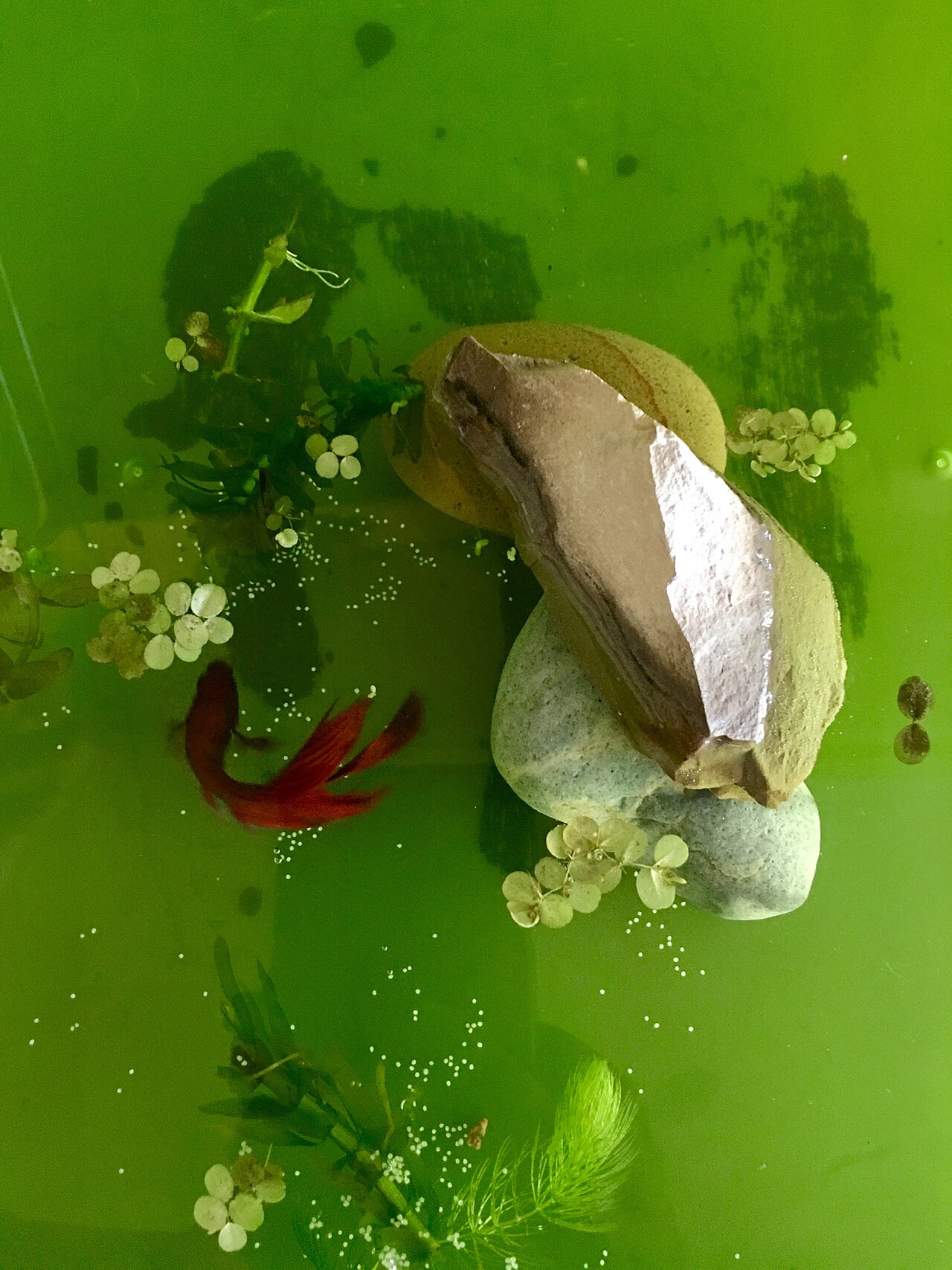
Sleep positions to know
| Position | Normal? | Notes |
|---|---|---|
| On a broad leaf, mid-water | Yes | The most common resting position |
| Wedged near a decoration | Yes | Bettas like enclosed spaces to rest in |
| On the substrate at the bottom | Yes | Normal during sleep; concerning if the fish stays there during active hours |
| At the surface, motionless | Usually | Normal if the fish surfaces, breathes, settles; concerning if gasping repeatedly |
| On its side | No | Not a sleep position — check for disease immediately |
When resting becomes a warning sign
A betta resting during its normal sleep hours is fine. A betta that is:
- Resting during daytime active hours and not responding to food
- Resting with clamped fins (fins held close to the body)
- Resting with faded color that does not brighten when approached
- Resting at an abnormal angle or on its side
…is displaying illness behavior, not sleep behavior. The first check is always water quality: test ammonia, nitrite, and temperature. See betta behavior for the full behavioral baseline.
The leaf hammock trick
Many betta keepers install a small floating leaf hammock near the surface of the tank — a broad, flat artificial leaf positioned a few centimeters below the waterline. Bettas frequently use these for resting, which has two benefits: the rest position is near the surface for easy air access, and you can observe the fish easily during its rest periods to confirm normal positioning and breathing.
This is not a necessity, but bettas use them reliably when available.
Related on this site
- Betta Behavior: What Normal Looks Like
- Temperature: Why Stability Matters
- Water Chemistry
- The Nitrogen Cycle
Frequently asked
- Do betta fish sleep at night?
- Bettas are diurnal — they are active during daylight hours and rest at night. In tanks with no light schedule (left-on 24 hours), bettas still establish rest periods but the cycle becomes irregular. Running a consistent 8–10 hour light schedule is better for the fish's sleep regulation.
- Why is my betta not moving?
- If it is nighttime or the lights have been off, the fish is probably sleeping. If it is during normal daylight and feeding hours, check: temperature (too cold causes lethargy), water quality (ammonia or nitrite will slow the fish), and disease signs. A betta that is unresponsive to food during its active hours needs water testing immediately.
- Is it normal for bettas to sleep at the bottom?
- Yes. Bettas sleep in a variety of positions: on leaves, wedged near a decoration, on the substrate near the side of the tank. Bottom-resting during sleep is normal. Bottom-resting during the day combined with labored breathing, clamped fins, or failure to respond to food is illness behavior.
- Why does my betta change color when it sleeps?
- Bettas often become paler during rest — pigment cells (chromatophores) partially contract when the fish is not actively displaying or threatened. Color restoration on waking is normal. Permanent fading that persists during active hours indicates stress or illness, not sleep.
- How many hours do betta fish sleep?
- Bettas typically rest 8–12 hours during a 24-hour cycle, predominantly at night. The rest is not continuous — they will surface for air during rest periods. This is normal. A healthy betta surfacing briefly and then settling back is sleeping normally.