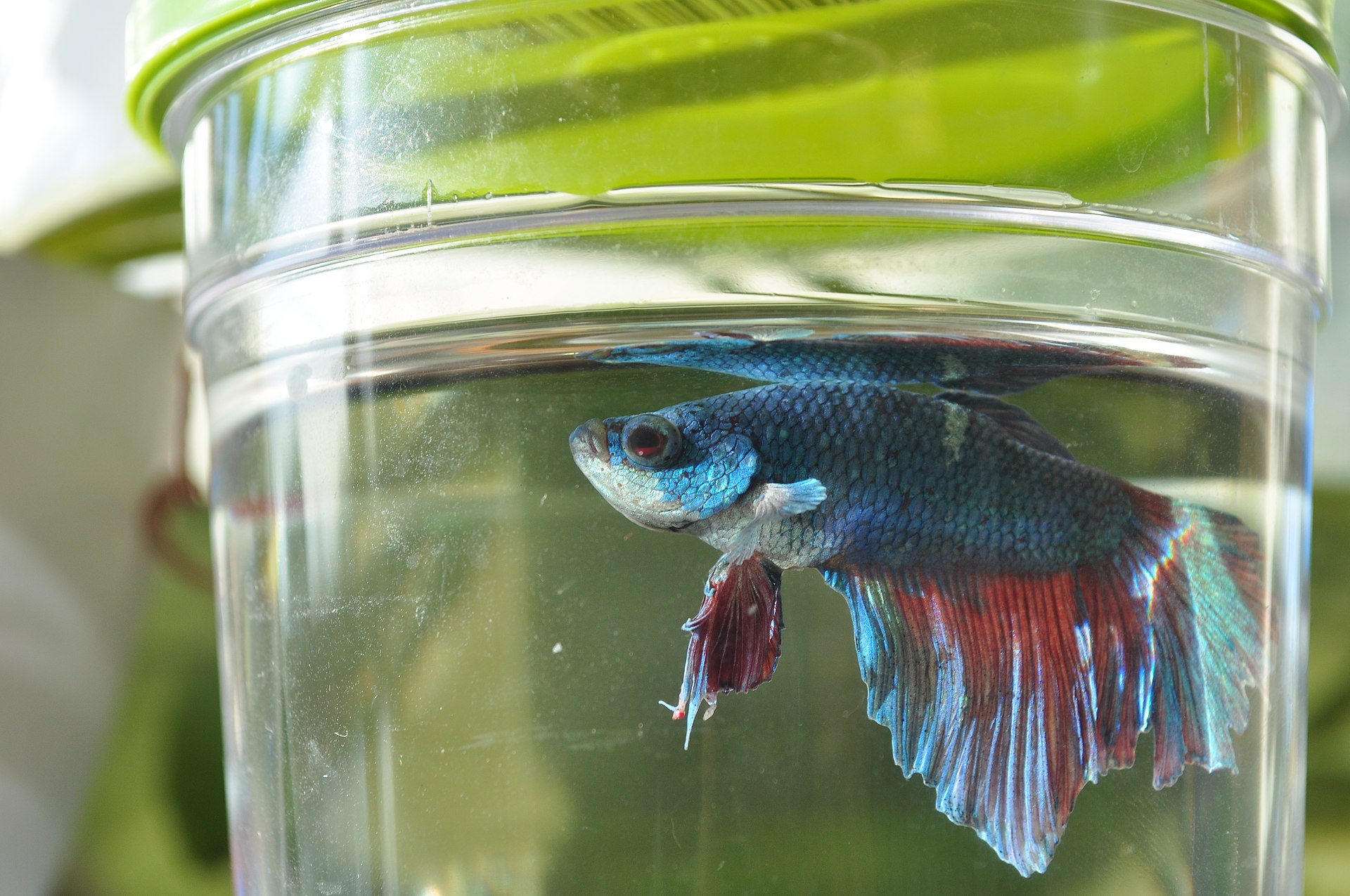
A single male betta in 10 gallons or more can live peacefully with species that stay small, occupy a different part of the water column, and don’t have flowing fins. Pygmy corydoras, otocinclus, kuhli loaches, ember tetras, and nerite snails are the reliable five. Never two males. Never fin-nippers. Sororities fail more often than they succeed, and the ones that “work” often hide a low-grade chronic aggression that shortens every fish’s life (Seriously Fish, Betta splendens compatibility).
The three rules
Rule 1: Different water column. The betta claims the upper third. Tank mates should live on the substrate (corydoras, kuhli loaches) or be small enough to school in the mid-column out of the way (ember tetras).
Rule 2: No flowing fins. Guppies, endlers, long-finned danios, fancy goldfish. Any fish with a dorsal or caudal fin flowing enough to be mistaken for another male betta triggers attack. The betta’s territorial reflex is older than the pet trade.
Rule 3: Enough space. Ten gallons is the absolute floor for a community betta tank, and 20 is where most combinations actually work. Crowding forces overlap; overlap forces aggression.
What works, with honest failure rates
| Tank mate | Min tank | Success rate | Notes |
|---|---|---|---|
| Pygmy corydoras (C. pygmaeus) | 10 gal | ~90% | School of 6+. Substrate-dwelling, peaceful, small. Gold standard. |
| Otocinclus | 15 gal | ~85% | Group of 3-5. Algae grazers. Need mature tank with biofilm. |
| Kuhli loach | 15 gal | ~85% | Group of 5+. Nocturnal, hide in substrate, ignore the betta. |
| Ember tetra | 15 gal | ~80% | School of 8+. Small, peaceful, red. Occasional fin-nipping if understocked. |
| Harlequin rasbora | 20 gal | ~75% | School of 8+. Mid-column. Sometimes triggers territorial display. |
| Nerite snail | any | ~95% | One per 5 gallons. Algae grazer, doesn’t reproduce in freshwater. |
| Amano shrimp | 10 gal | ~70% | Large enough to ignore. Some bettas still chase. |
| Neon tetra | 20 gal | ~65% | School of 8+. Fin-nipping risk; depends on individual betta. |
| Mystery snail | 10 gal | ~85% | Big slow peaceful snail. Occasionally a betta picks at its antennae. |
A “success rate” here means the combination works for the expected lifespan of the fish in a well-set-up tank. The other cases end with nipped fins, stressed fish, or one side dead.
What usually fails
Guppies, Endler’s livebearers. Colorful flowing tails. The betta identifies them as rivals. Males hit, females sometimes are ignored. Female-only groups in 20+ gallons work occasionally. Don’t start here.
Mollies, platies, swordtails. Livebearers too, and all three prefer harder, warmer, more mineralized water than a betta. Parameter mismatch on top of behavioral mismatch.
Tiger barbs, serpae tetras. Notorious fin-nippers. They’ll target long betta fins until the fins are shredded. Never mix.
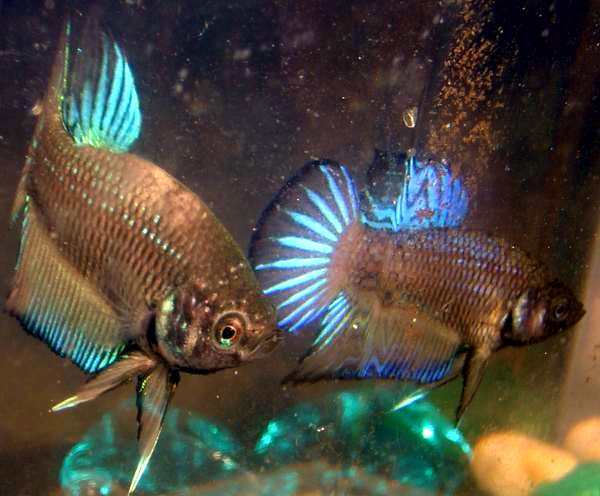
Other male bettas. Never. A divider in a single tank stresses both fish even with opaque material; separate tanks with no sight line is the only answer.
Goldfish. Different species entirely. Coldwater, heavy bioload, completely different requirements. No betta goes with any goldfish ever.
Angelfish, gourami, other labyrinth breathers. Angels are too large. Gourami species are territorial labyrinth competitors; bettas and gourami sometimes coexist, often don’t. Not worth the risk.
The sorority question
A female betta sorority is a group of 4 to 6 (never fewer, sometimes more) female Betta splendens in a 20-gallon or larger heavily planted tank. The theory: a large enough group diffuses aggression so no single female becomes the permanent target.
Reality: sororities are high-risk. They work for experienced keepers who cull out bullies, add more females to restabilize the pecking order, and accept that one or two fish will die before equilibrium is reached. They fail for beginners who introduce three females and watch the dominant one kill the others over six weeks.
If you’re reading a beginner’s betta care page, a sorority is not for you. Bettas are solitary in the wild and tolerate each other in captivity under narrow conditions. Respect that.
If you’re determined to run one: start with 5 to 7 females introduced simultaneously into a pre-planted 20+ gallon. Add as much cover as the tank will hold (plants, driftwood, caves). Watch for the first week. Any female that hides persistently, refuses food, or shows ragged fins is being bullied; remove her. Replace with another random female from a batch, never alone.
Tank-mate rules by tank size
5 gallons. Single male betta only. Maybe a nerite snail. No fish.
10 gallons. Betta plus one small school (6 pygmy corydoras, or 6 ember tetras). Or betta plus 2 to 3 amano shrimp. Not both.
15 to 20 gallons. Betta plus a small bottom-dweller group (corydoras, kuhlis) plus a small mid-column school (ember tetras, harlequin rasboras) plus nerites. This is the “thriving betta community tank” configuration.
40+ gallons. Room for more experimentation. Still: one male betta. The constraint is the betta, not the tank.
The individual betta matters
Some males are zen. Some are murderers. Personality varies. A fish that ignored its corydoras for a year might suddenly attack them when the tank is rescaped or a new fish is added. Always have a 5-gallon hospital/backup tank running so you can separate when things go wrong.
Add tank mates after the betta has been in the main tank for at least two weeks. Let the betta establish territory, then introduce the newcomers. Not the reverse; adding a betta to an established community tank is the most common cause of aggression outbreaks, because the existing fish are “intruders” from the betta’s perspective.
The safest betta tank is a 5-gallon with one betta. Everything beyond that is a judgment call about your risk tolerance and your willingness to manage failure.
Related on this site
- Betta Fish Care: The Evidence-Based Guide
- How to Breed Betta Fish: A Breeder’s Complete Guide
- Wild Bettas: The 70+ Species Beyond Betta splendens
- Betta Anatomy: What You’re Looking At When You Look at a Betta
- The Betta Vase Myth: Why Peace-Lily Setups Are Animal Cruelty
Frequently asked
- Can bettas live with guppies?
- Usually no. Male guppies have flowing tails that trigger territorial aggression, and bettas sometimes strike them as rivals. Female-only guppy groups work occasionally in 20+ gallons, but this combination fails more often than it succeeds.
- Are sororities a good idea?
- Rarely. A female betta sorority is a group of 4 to 6 females in 20+ gallons with heavy planting. They establish a pecking order through real aggression, and one female is usually bullied to death within months. Experienced keepers can stabilize them. Most people shouldn't try.
- Can I keep a betta with a pleco?
- Depends which pleco. Bristlenose plecos work in 20+ gallons. Common plecos reach 18 inches and will outgrow any reasonable setup. Rubber-lip or clown plecos are better-sized alternatives.
- Can I keep two male bettas together?
- Never. Two males in the same tank is a fight to exhaustion. Dividers work only if opaque; a visible rival stresses both fish. Separate tanks or a divided tank with no sight line.
- Will my betta eat shrimp?
- Adult shrimp might survive. Shrimplets will be eaten. A ghost shrimp or large amano shrimp in a planted tank is usually ignored. Cherry shrimp colonies get cropped. The betta considers anything smaller than a pellet to be food.