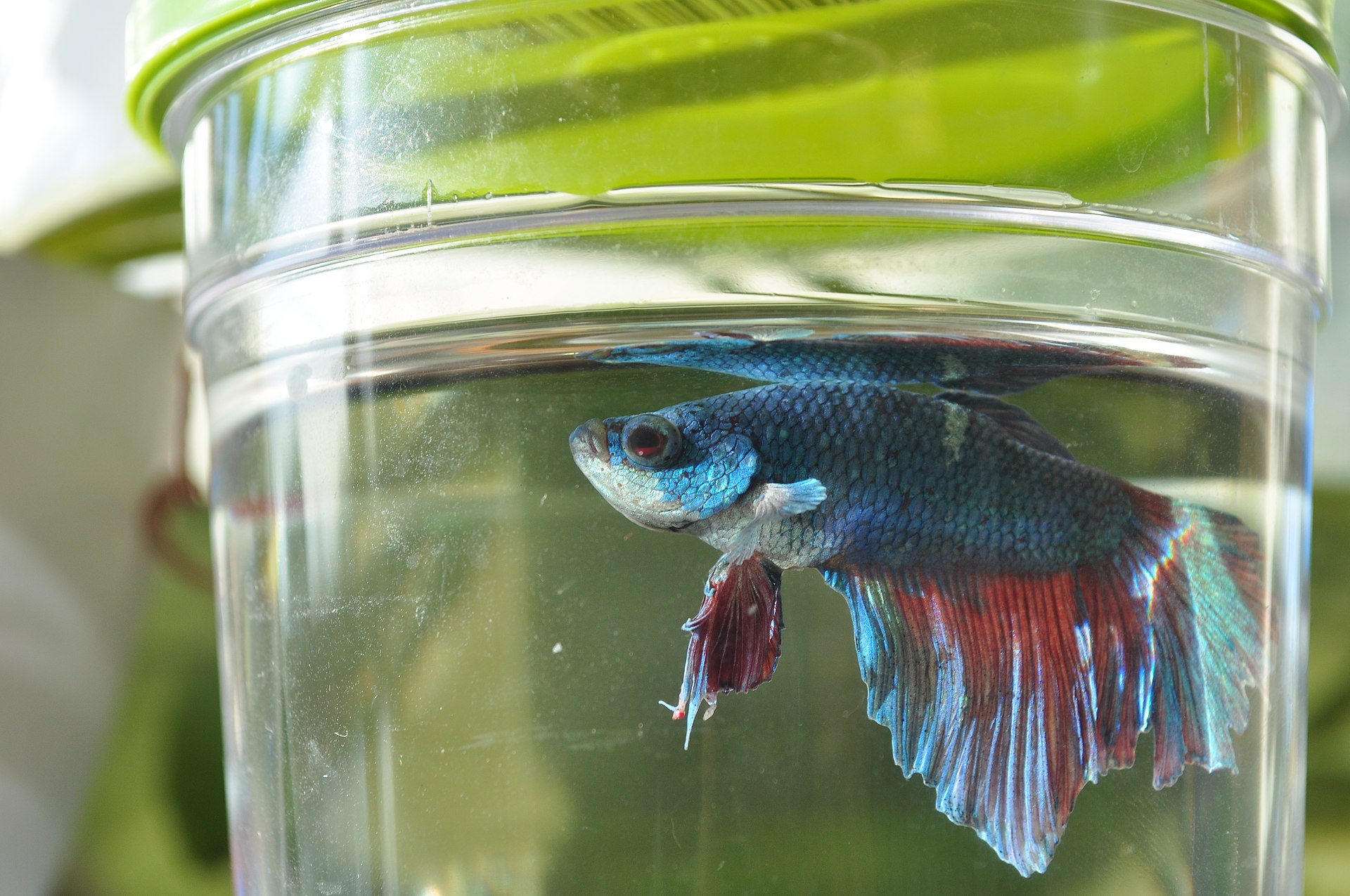
The correct temperature range for Betta splendens in captivity is 76–82°F (24–28°C). Within that range, the fish’s immune system, metabolism, and respiratory function all operate normally. Outside it, problems compound quickly.
The Merck Veterinary Manual, which is the standard clinical reference for aquarium fish veterinary medicine, places the optimal range at 24–28°C. Wild habitat data from the 2022 Aceh survey documents natural temperatures of 22°C at dawn rising to 34°C by afternoon in rice paddy habitat — but that variation happens slowly across hours in a large thermal mass, not in a 5-gallon tank subject to room temperature swings.

What cold water does
Temperature controls every biochemical process in a fish’s body. Below about 72°F (22°C):
- The immune response slows significantly. White blood cell activity, which is the primary defense against bacterial and fungal infection, requires enzyme activity that is temperature-dependent.
- Bacteria and fungi that are minor threats at optimal temperature become pathogenic. Columnaris, Saprolegnia (fungus), and Ichthyophthirius (ich) are all more virulent in cold water.
- Velvet (Piscinoodinium) reproduces faster at lower temperatures, making a small infection explosive in a cold tank.
- Metabolism slows enough that bettas stop eating, then become lethargic, then begin failing.
A fish that looks fine at 74°F today is running its immune system at a fraction of capacity. It will be visibly sick before many keepers realize the temperature was the cause.
What hot water does
The upper boundary is harder and faster. Above 86°F (30°C), dissolved oxygen in the water drops below the threshold the fish can sustain aerobically. Signs of heat stress are immediate: gasping at the surface, rapid gill movement, erratic swimming.
Above 90°F (32°C), bettas typically die within hours in a sealed tank.
The important distinction from cold-stress: heat stress produces visible emergency symptoms quickly. Cold stress is a slow accumulation of immune failure that looks like “the fish just got sick” when the real cause was weeks of marginally cold water.
Why stability matters more than precision
A tank that holds a steady 78°F is safer than one that swings between 74°F and 82°F daily. Temperature swings — even within the acceptable range — are physiological stressors. Each swing requires the fish’s body to adjust enzyme activity, which has an energy cost and a stress hormone cost.
Small tanks (5 gallons) are especially vulnerable to temperature swings. A 5-gallon tank has minimal thermal mass. Sunlight through a window can raise it 6°F in an afternoon. An air conditioning vent can drop it 5°F overnight. A 55-gallon tank in the same room would barely register either event.
Practical steps to hold stability:
- Use a heater with a thermostat (adjustable or preset — see the heater guide).
- Keep the tank away from windows, exterior walls, and HVAC vents.
- A thermometer in the tank is not optional — check it daily until you trust the heater.
- In summer in a warm house: the heater may not be needed, but temperature still needs monitoring. Overheating is a summer problem.
Heaters for small tanks
A 25-watt heater is typically appropriate for a 5-gallon tank. A 50-watt heater may overshoot in a small tank if it cycles on and off frequently. Match heater wattage to tank size — heater packaging lists recommended tank volumes.
Preset heaters (factory-set to around 78°F) are fine for bettas. Adjustable heaters give more flexibility if the ambient room temperature is very warm or very cold.
See best betta heaters for specific options.
Temperature and disease treatment
Several disease treatments require elevated temperature:
- Ich heat treatment runs the tank to 86°F for at least 10 days to accelerate the parasite’s life cycle through the vulnerable free-swimming stage.
- Velvet treatment may similarly use mild heat elevation.
These are deliberate, short-duration elevations with specific therapeutic purposes — not normal husbandry. See ich and velvet for full protocols.
Related on this site
- Tank Setup
- Water Chemistry
- Best Heaters
- Ich: Heat Treatment Protocol
- Velvet: Darkness and Copper Protocol
Frequently asked
- What temperature is too cold for a betta?
- Sustained temperatures below 72°F (22°C) suppress the immune system and slow metabolism enough to cause serious health problems. Below 65°F (18°C), bettas can go into temperature shock. Room-temperature tap water in a cool house is typically too cold — always use a heater.
- Can bettas tolerate 70°F?
- Short exposure, yes. Prolonged, no. At 70°F a betta's immune response is suppressed, making bacterial and fungal infections significantly more likely. Ich and velvet parasites are also more virulent at lower temperatures. 70°F is a risk zone, not a safe setpoint.
- What happens if betta water is too warm?
- Above 86°F (30°C), dissolved oxygen drops sharply and the fish's metabolic rate exceeds what its respiratory system can support. Signs of overheating include gasping at the surface, lethargy, and rapid gill movement. Temperatures above 90°F are likely fatal within hours.
- Do bettas need a heater?
- Yes, in almost all cases. Tropical fish rooms maintained at 80°F+ don't require heaters for individual tanks. Everywhere else — any room that drops below 76°F at night, or in winter — a submersible heater is required. Small tanks (5 gallons) lose heat faster than large ones.
- How do I stabilize temperature in a 5-gallon tank?
- Use a 25–50 watt preset or adjustable heater matched to the tank size. Keep the tank away from windows (temperature fluctuation from sunlight), exterior walls (cold conduction), and air conditioning vents. Insulating the sides and back with a tank background reduces thermal loss.