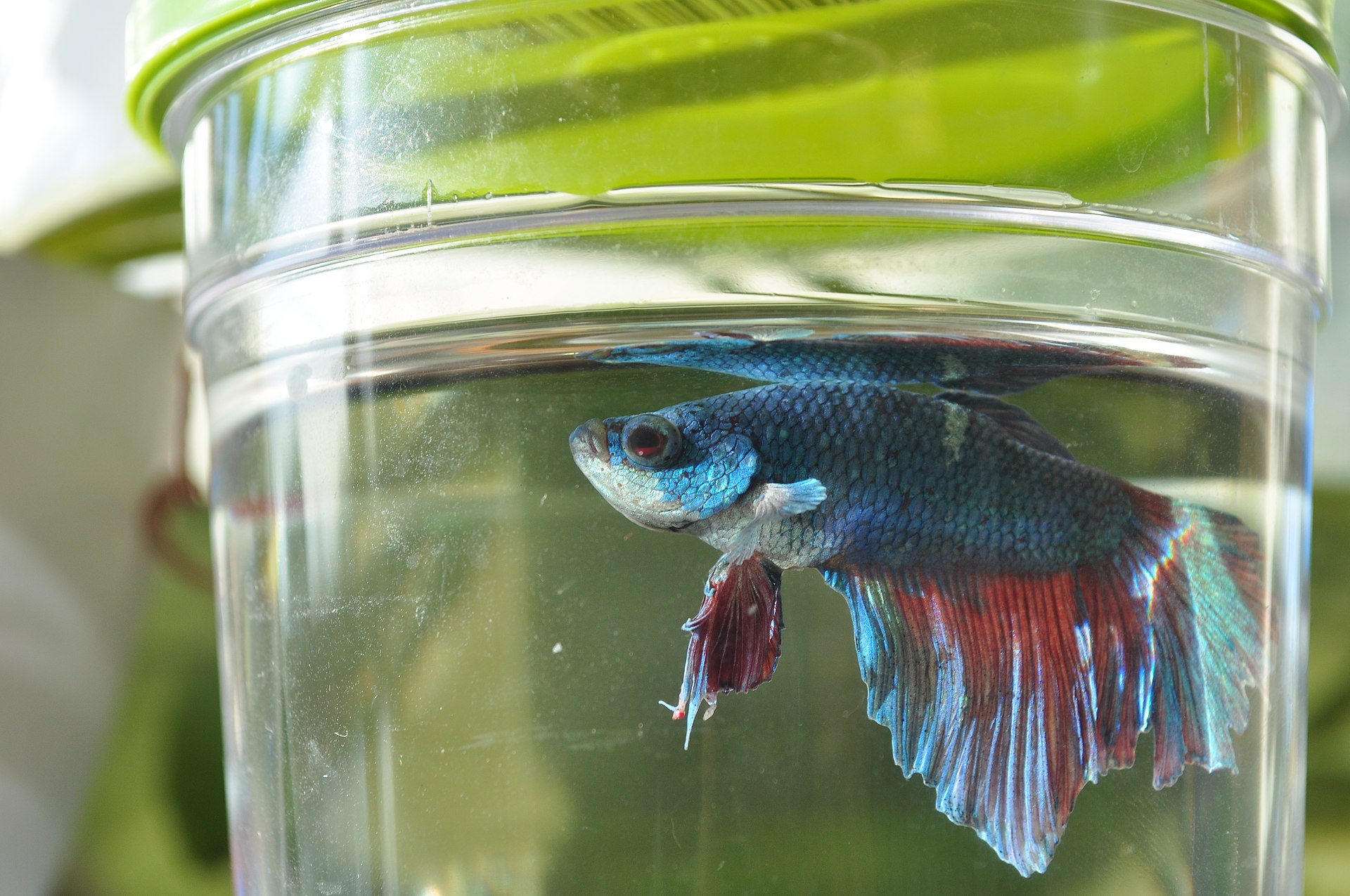
The risk of leaving a betta alone is not starvation — it is water quality deterioration, equipment failure, and temperature loss. A healthy adult betta survives 10–14 days without food. It does not survive 3 days in a tank where the heater failed and the temperature dropped to 60°F.
Plan for the equipment risks, not the hunger.
What breaks down over time
| What fails | When it matters | Prevention |
|---|---|---|
| Temperature drop (heater failure) | Any absence | No prevention — just risk. A second heater as backup in a valued tank is worth it. |
| Ammonia buildup | Noticeable from 7–10 days in typical setup | Feed lightly, do water change before leaving |
| Nitrate climb | Weeks, not days | Weekly water change for long absences |
| Uneaten food decomposition | Within 24–48 hours | Calibrated auto feeder or no feeding at all for short absences |
| Algae bloom (continuous light) | 5–7 days with continuous light | Timer for lights |
| Filter failure | Any absence | Check the filter runs well before leaving |
Protocol by absence length
1–3 days: no action needed for feeding
A healthy adult betta does not need food for 3 days. Missing a few meals causes no harm.
What to do:
- Confirm heater and filter are running
- Do a routine 20–25% water change the day before, if you are due for one
- Set a light timer if you do not already have one
- Do nothing else
What not to do:
- Do not feed extra before leaving (“top up” feeding). Extra food before you leave means extra ammonia while you are gone.
- Do not add a vacation block.
4–7 days: auto feeder or trusted caretaker
After 3 days, maintaining feeding becomes beneficial — not to prevent starvation, but to maintain the fish’s feeding behavior and prevent any weight loss in younger fish.
Auto feeder:
- Buy a drum-wheel auto feeder (Eheim Everyday Automatic Fish Feeder or equivalent)
- Load with pellets — not flake food, which clogs wheel feeders
- Run a 48-hour calibration test over the tank while you are still home — confirm that the portioned amount drops into the water and is eaten, not built up on the surface
- Set to dispense once per day, small portion (2–3 pellets)
- Do the water change before departure
Trusted caretaker:
- Write the exact feeding instruction: “One pinch of pellets (5–6 pellets), once daily, remove anything not eaten after 3 minutes.” Never leave a container of food without specific portion guidance — well-meaning overfeeding by caretakers kills more fish than vacations do.
Also do:
- 25–30% water change the day before
- Light timer set
1–2 weeks: caretaker required for water change
At 10–14 days, nitrate is climbing and the tank is accumulating organic material from a week of feeding. The biological filter handles the ammonia and nitrite, but nitrate requires a water change.
Requirements:
- Auto feeder or caretaker feeding daily (small portion)
- A caretaker to do a 25% water change at the midpoint — day 6–8 of a 2-week absence
- Write the water change instructions: water temperature to match (use a thermometer), dechlorinator dose, how much to remove, and where the equipment is
If finding a caretaker willing to do a water change is not possible, the alternative is accepting elevated nitrate and doing a large water change (50%) on return. Bettas tolerate elevated nitrate in the 40–80 ppm range for short periods; it is not ideal but is survivable.
3+ weeks: full caretaker arrangement
Beyond 2 weeks, you need someone capable of full care: feeding, water changes, and monitoring the fish and equipment. This means:
- A detailed written care guide, not just “feed it once a day”
- First emergency contact (a veterinarian or experienced betta keeper) if something looks wrong
- A check-in system (a photo of the tank at the start of the week)
- An emergency euthanasia option if the fish becomes critically ill and you cannot return — a responsible caretaker should know the clove oil protocol before you leave
Equipment check before any absence
Before leaving for any duration, verify:
- Heater reads correct temperature (not “the heater is on” — check the thermometer)
- Filter is running, not clogged, producing visible water flow
- Tank has a tight lid (bettas jump; an unlidded tank during your absence is a death sentence)
- Light timer is set and working
- Auto feeder (if used) has been tested and has enough food loaded
On return
Do a water test (ammonia, nitrite, nitrate) and a water change before doing anything else. Two weeks of accumulation needs dilution before normal feeding resumes. Resume normal feeding schedule — do not “make up” for the skipped meals with extra food.
Related on this site
Frequently asked
- How long can a betta fish go without food?
- A healthy adult betta can survive without food for 10–14 days. The fish does not immediately suffer from missing a few days of feeding — it is the tank conditions that deteriorate over time, not starvation, that creates risk. Fry and juveniles cannot fast this long and require daily feeding; this guide covers adult bettas only.
- Can I use vacation feeding blocks for my betta?
- No. Vacation feeding blocks (slow-dissolving chalky food blocks) release food inconsistently, cloud the water, cause ammonia spikes, and are frequently ignored by bettas. They are one of the more reliable ways to kill a fish while away. Do not use them.
- What is the best auto feeder for betta fish?
- A drum-wheel auto feeder from brands like Eheim or Zacro, calibrated before departure to dispense a small measured amount — typically 1–3 pellets per feeding — on a once or twice daily schedule. Calibration requires a test run over the empty tank before you leave to confirm portion size.
- Do I need to do a water change before leaving?
- Yes, for absences of 4 days or more. A fresh 25–30% water change the day before departure starts the clock on good water quality. This gives the tank the cleanest possible baseline before you lose the ability to intervene.
- Should I leave the lights on or off while I'm away?
- Neither continuously. Use a timer. 8–10 hours on, 14–16 hours off maintains the fish's normal diurnal rhythm and prevents algae from overgrowing due to continuous light. A timer costs a few dollars and eliminates the problem entirely.