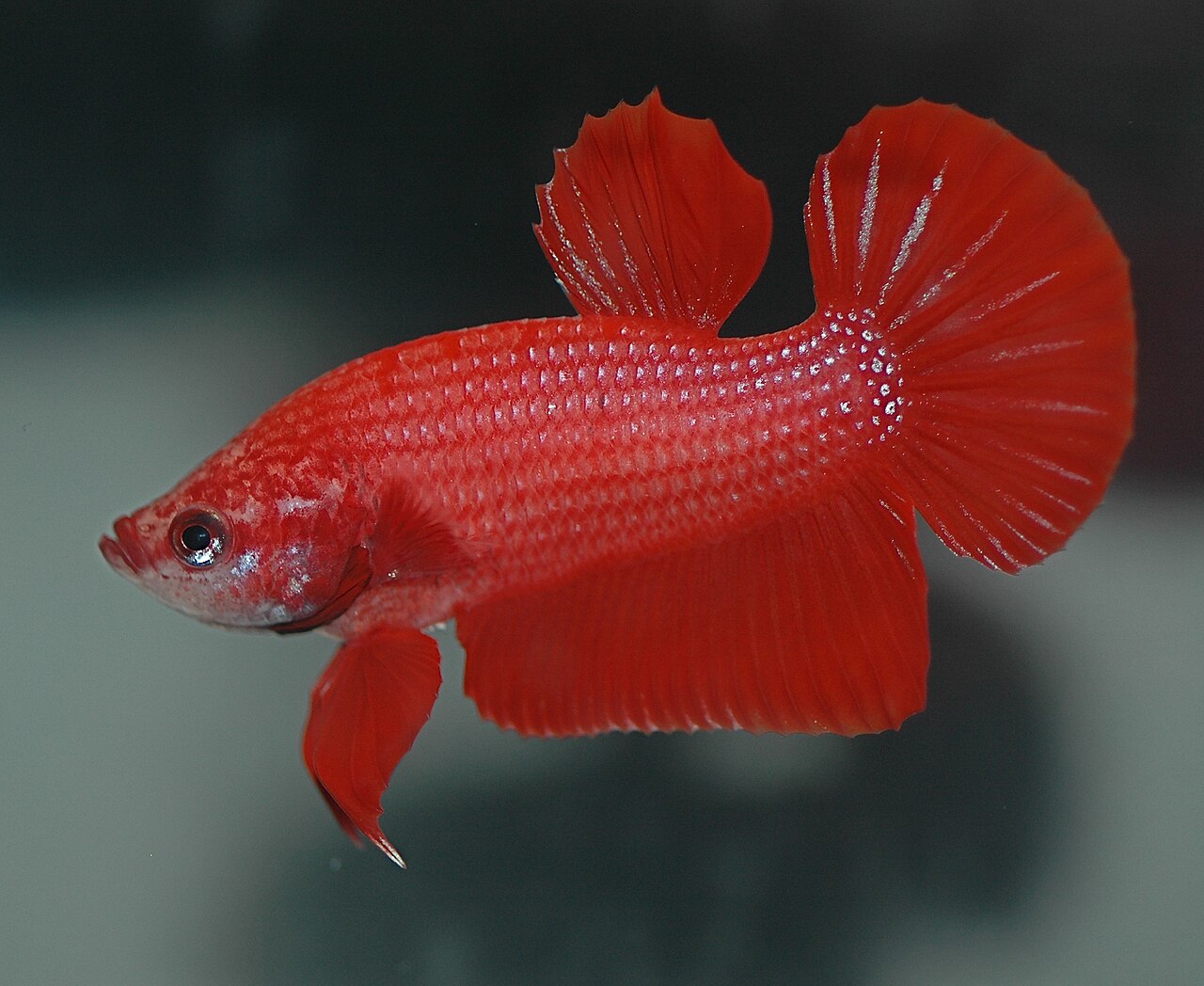
Columnaris is Flavobacterium columnare, a Gram-negative rod bacterium that produces rapid necrotic lesions on mouth, head, gills, and skin. It kills within 3 to 7 days of first symptoms. Some hyper-virulent strains kill within 48 hours. The treatment window is narrow. Start kanamycin plus nitrofurazone immediately at a lowered temperature (24 °C), not raised like ich (Merck Veterinary Manual, Bacterial Diseases).
How to recognize it
First signs: small white or pale patch on the mouth, jawline, or head. Within 12 to 24 hours: the patch expands, gains a cotton-wool or fuzzy edge, and tissue beneath starts to necrose. By 48 hours: visible ulceration, gill flaring, lethargy, refused food.
Columnaris is often called “cotton mouth disease” because of the characteristic mouth-area white patch, but it can present anywhere:
- Mouth and lips (most common).
- Gill covers and gill filaments.
- Head and forehead.
- Back, near the dorsal fin base.
- Less often, body flanks.
The rapid progression is the diagnostic. Fungus grows slowly over weeks. Columnaris grows visibly overnight.
Why it kills fast
F. columnare produces extracellular proteases that liquify host tissue. Adhesion to gill filaments is particularly deadly because gill damage causes respiratory failure independent of the bacterial load. A fish can look mildly sick at 9 a.m. and be dying at the surface at 9 p.m. This is why the 48-hour rule matters.
Three factors drive outbreaks:
- Temperature above 28 °C. The bacterium grows faster in warm water.
- High organic load. Overfeeding, uneaten food, poor filtration.
- Stress. New fish, transport, parameter swings.
Treatment protocol
Move fast. Don’t wait “to see if it gets worse.”
Setup
- Hospital tank, 2 to 5 gallons, seeded sponge filter, no substrate.
- Lower temperature to 24 °C over 12 hours. Not raise. Columnaris accelerates at higher temps.
- Remove activated carbon from hospital filter.
- Remove invertebrates.
- Main tank: observe other fish daily for 10 days. Consider a precautionary 25% water change.
Medication
Kanamycin plus nitrofurazone combination:
- Seachem Kanaplex, 1 measure per 5 gallons (≈180 mg kanamycin / 5 gal).
- API Furan-2, 1 packet per 10 gallons (≈250 mg nitrofurazone / 10 gal).
- Dose simultaneously.
Aquarium salt adjunct: 1 tablespoon per 5 gallons, dissolved. Salt inhibits F. columnare at low concentrations.
Daily
- Day 1: set up, dose both medications, dissolve salt.
- Day 3: 50% water change, redose kanamycin and nitrofurazone.
- Day 5: 50% water change, redose.
- Day 7: 50% water change, redose.
- Day 10: 100% water change. Activated carbon 48 hours.
- Raise temperature back to 26 °C over 24 hours.
- Return to main tank if main tank is clear.
Do not extend treatment beyond 10 days. Kanamycin kidney toxicity accumulates with prolonged exposure.
Columnaris vs fungus vs bacterial fin rot
| Feature | Columnaris | True fungus | Fin rot |
|---|---|---|---|
| Speed | 2-5 mm/day | Slow, weeks | 0.5-2 mm/day |
| Location | Mouth, head, gills | Healing wounds | Fin edges |
| Appearance | Cotton-wool patch | Discrete tuft | Ragged edges |
| Typical progression | Systemic in days | Local, limited | Gradual recession |
| Correct first drug | Kanamycin + Furan-2 | Antifungal + salt | Kanamycin |
Many “fungus” cases reported online are actually columnaris. The tell is speed. If a white growth was visible yesterday and bigger today, assume columnaris.
What not to do
Don’t raise temperature. This is the biggest beginner error, because heat is the ich protocol and people confuse them. For columnaris, 24 °C slows the bacterium. Higher temperature accelerates death.
Don’t treat with antifungals alone. Methylene blue or similar products don’t touch F. columnare. Fish dies while the antifungal works through the wrong target.
Don’t use Melafix. Tea tree oil is insufficient for columnaris and irritates the labyrinth organ.
Don’t wait to see if it worsens. It will. Start treatment within 24 hours of first symptoms.
Don’t skip the hospital tank. Columnaris is highly contagious; treating in the main tank exposes every other fish.
Prevention
- Quarantine every new fish 14 days.
- Avoid temperature spikes above 28 °C in summer. Use a small fan on the tank surface for evaporative cooling.
- Keep bioload moderate. Don’t overstock.
- Don’t overfeed. Uneaten food is a columnaris vector.
- Test water weekly. Catch parameter issues before they stress the fish.
Columnaris is the disease that punishes hesitation. Survival rate when treatment starts on day 1 of symptoms is 70 to 90%. Survival rate when treatment starts on day 3 drops to 30 to 50%. Start early, dose correctly, run the full 10-day course, and most cases clear.
Related on this site
- Betta Disease: Diagnosis and Treatment, Evidence-Based
- Betta Fin Rot: Bacterial Cause, Medication Protocol, Prevention
- Betta Dropsy: Bloat, Pineconing, and a Terminal Prognosis
- Betta Euthanasia Protocol: When Treatment Isn’t the Right Answer
- Betta Ich (White Spot Disease): Heat Treatment Protocol
Frequently asked
- How fast does columnaris kill?
- 3 to 7 days from first symptoms without treatment. Some strains kill within 48 hours. Columnaris is the fastest common bacterial disease in pet bettas.
- Is this fungus or columnaris?
- If it's on mouth, head, or gills and advancing rapidly: columnaris. If it's on a healing wound, slow, and tuft-like: fungus. Most cotton-wool-looking growths in bettas are actually columnaris, and treating as fungus loses the window.
- Does temperature matter?
- Yes. Columnaris is more aggressive at higher temperatures (above 28 Celsius). Lower the tank to 24 Celsius during treatment to slow bacterial growth. This is the opposite of ich protocol. Don't confuse them.
- What medications work?
- Kanamycin plus nitrofurazone (Seachem Kanaplex plus API Furan-2) combined. Neither alone is reliable for aggressive strains. Erythromycin can work but Gram-negative targeting is weaker.
- Can columnaris spread to other fish?
- Yes. Highly contagious. Quarantine the affected fish immediately. Disinfect nets and equipment. Observe other fish in the tank daily for 10 days.