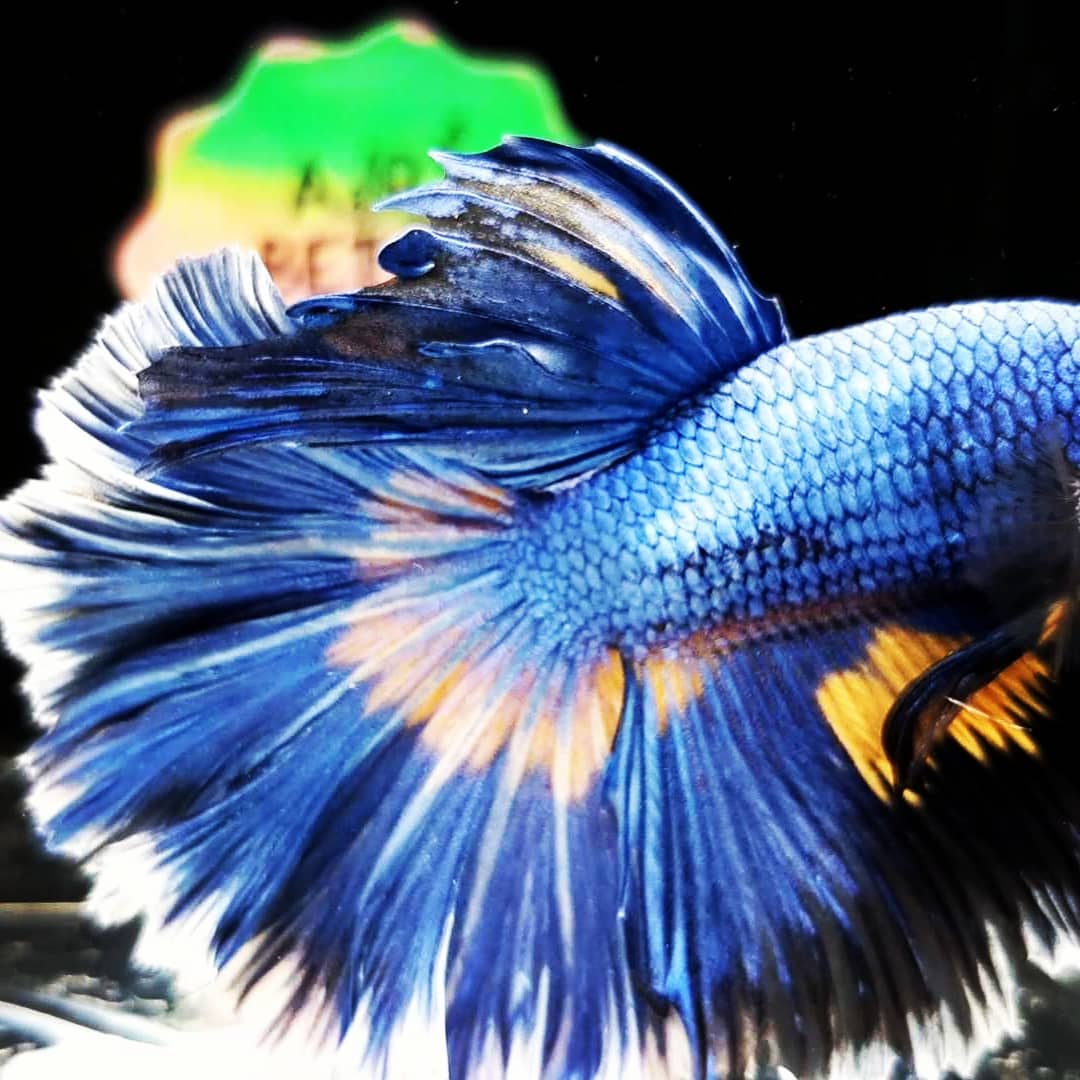
Fin rot is the most common condition in pet bettas. It’s caused by Gram-negative bacteria (Aeromonas hydrophila and Pseudomonas species) colonizing fin tissue that’s been damaged or compromised by cold water, ammonia stress, or physical injury. Mild cases clear with water quality correction alone. Moderate cases need kanamycin. Severe cases need Furan-2 plus kanamycin. Water quality matters more than medication choice; the bacteria are ubiquitous and only become pathogenic on weakened fish (Merck Veterinary Manual, Bacterial Diseases).
How to recognize it
| Severity | What you see | Treatment |
|---|---|---|
| Mild | Slightly ragged fin edges, possible darkening at tips, no tissue recession, fish otherwise normal | Water quality correction + optional aquarium salt |
| Moderate | Visible tissue recession toward body, dark or red streaks in fin rays, some fin clamping | Hospital tank + kanamycin (KanaPlex) 10-day course |
| Severe | Large sections missing, exposed fin rays, body involvement, lethargy, not eating | Hospital tank + kanamycin + Furan-2 combined |
Mild. Fin edges slightly ragged. Possible darkening or dulling at the tips. No visible recession toward the body. Fish otherwise behaving normally.
Moderate. Visible tissue loss working toward the body. Dark or red streaking in the fin rays. Some clamping. Fish may skip a meal but still generally active.
Severe. Large sections of fin missing. Exposed fin rays. Body scale edge irritation. Lethargy, refusal to eat, resting on the substrate.
Fin rot is sometimes confused with columnaris. The differentiator: columnaris hits mouth, head, and gills first and moves fast (2 to 5 mm per day). Fin rot starts at the fin edges and moves slowly (0.5 to 2 mm per day).
The two-variable cause
The bacteria are always there. Every aquarium water column contains Aeromonas and Pseudomonas. They’re not removed by water changes, they don’t die in clean water, they’re a permanent resident.
What changes is the fish’s immune defense. Three factors suppress the immune response enough to let bacterial colonization succeed:
- Water quality. Ammonia above 0.25 ppm, nitrite above 0.1 ppm, or nitrate above 40 ppm. Any of these chronically stresses the fish.
- Temperature. Below 24 °C the betta’s immune function declines sharply. Cold tanks are a fin rot breeding ground.
- Physical damage. Nipped fins from tank mates, damage from sharp décor, or torn fins from a mirror-flaring session become infection entry points.
Fix the cause, treat the symptom. Medicating a fish back to health in an uncycled tank is a reset, not a cure. The fin rot comes back in six weeks.
Treatment by severity
Mild (slight fraying, no recession)
- Test water. Correct anything off-target.
- Ensure temperature is 25 to 27 °C.
- Clean water: 50% water change, Seachem Prime.
- Optional: dose 1 tablespoon aquarium salt per 5 gallons (dissolve in a cup first). Leave for 7 to 10 days.
- Optional: add one Indian almond leaf per 10 gallons for tannin-driven stress reduction.
- Expect fins to stop regressing within 5 to 7 days. Regrowth starts at day 10 to 14.
Moderate (visible recession, red streaking)
- Move the fish to a 2 to 5 gallon hospital tank. Seeded sponge filter, heater at 26 °C, no substrate.
- Remove activated carbon from the hospital filter.
- Dose Seachem Kanaplex: 1 measure per 5 gallons. Kanaplex dosage is 1/4 teaspoon per 20 gallons, which works out to about 180 mg kanamycin per 5 gallons.
Seachem KanaPlex on Amazon Affiliate link — see our disclosure.
- Day 1: no feeding.
- Day 3: 50% water change, redose.
- Day 5: 50% water change, redose.
- Day 7: 50% water change, redose.
- Day 10: 100% water change, run activated carbon for 48 hours.
- Return fish to main tank if main tank is now parameter-correct.
Severe (heavy recession, body involvement, lethargy)
Combine Kanaplex with Furan-2:
- Same hospital tank setup as above.
- Dose Seachem Kanaplex at 1 measure per 5 gallons (180 mg kanamycin per 5 gal).
- Simultaneously dose API Furan-2 at 1 packet per 10 gallons (250 mg nitrofurazone per 10 gal).
API Furan-2 on Amazon Affiliate link — see our disclosure. 4. 50% water change every 48 hours, redose both. 5. 10-day course. Do not extend beyond 14 days. 6. Activated carbon after completion, 48 hours, then return to main.
Severe cases have about a 40-60% survival rate even with optimal treatment. Catch it earlier if possible.
What doesn’t work
Melafix (tea tree oil / Melaleuca). Irritates the labyrinth organ in bettas. Label markets it for minor fin damage; anabantoid keepers avoid it. Don’t use.
Maracyn (erythromycin). Targets Gram-positive bacteria. Aeromonas and Pseudomonas are Gram-negative. Wrong drug. Kanamycin is the right choice.
“Aquarium antibiotic” combination packs dosed into the main tank. Kills beneficial bacteria, crashes the cycle, compounds stress. Hospital tank or medicated-food dosing.
Higher doses than labeled. Kanamycin is already strong. Overdosing can cause kidney damage in fish. Follow the label.
Heat. Increasing temperature to 30 °C is an ich protocol, not a fin rot protocol. Too warm stresses the fish further.
Prevention
- Keep ammonia and nitrite at zero. Test weekly.
- Keep temperature 25 to 27 °C, stable.
- Remove sharp décor. Silk plants over plastic.
- Don’t house with fin-nippers.
- Don’t over-flare the fish. Mirror for 60 seconds a day maximum.
- Quarantine new fish for 2 weeks in a separate tank before adding to a community. Most fin rot introductions happen this way.
A well-run tank almost never produces fin rot. The fish you’re treating is almost always a fish you can trace back to a care lapse. Fix the lapse, treat the fish, and the condition rarely recurs.
Related on this site
- Betta Disease: Diagnosis and Treatment, Evidence-Based
- Betta Columnaris: Fast-Moving Bacterial Disease with a 5-Day Window
- Betta Dropsy: Bloat, Pineconing, and a Terminal Prognosis
- Betta Euthanasia Protocol: When Treatment Isn’t the Right Answer
- Betta Ich (White Spot Disease): Heat Treatment Protocol
- Betta Septicemia: Red Streaks and the Treatment Window
- Tail Biting: Why Bettas Do It
Frequently asked
- What causes fin rot?
- Opportunistic Gram-negative bacteria, usually Aeromonas hydrophila or Pseudomonas species. These are present in every aquarium; they only colonize fish whose immune system is suppressed by poor water quality, cold, or stress. The bacteria are the symptom; the environment is the cause.
- How fast does fin rot progress?
- Mild cases (minor fraying) plateau once water quality is corrected. Moderate to severe cases lose 1 to 3 mm of fin per day untreated. If you see daily visible regression, treat with antibiotics, don't wait.
- Do fins grow back?
- Yes, usually. Fresh tissue grows clear and then pigments in over 4 to 8 weeks. Heavy scarring or black edges on regrowth are common and cosmetic. Full color and shape return is the exception on heavily damaged fins.
- Is Melafix safe for bettas with fin rot?
- No. Melafix is tea tree oil (Melaleuca). It irritates the labyrinth organ in bettas and other anabantoids. Don't use it. Kanamycin is the better answer at all severities.
- Can I treat with aquarium salt alone?
- For mild cases yes. One tablespoon per 5 gallons for 7 to 10 days. Salt bath supports slime coat, mild antimicrobial. For moderate cases with visible recession, salt alone is not sufficient; use kanamycin.