Most betta disease traces back to a water-quality failure, a temperature drop, or an immune-suppressed fish picking up an opportunistic pathogen. Before you medicate, test parameters and check temperature. Ninety percent of “sudden illness” resolves at that step. For the other ten percent, this page lists the eleven conditions that actually hit pet bettas, organized by how commonly you’ll see them, with treatment protocols cited to the Merck Veterinary Manual, Bacterial Diseases of Fish and peer-reviewed sources, including PMC9334006 (Care and Use of Siamese Fighting Fish, 2022).
The diagnostic sequence, every time
- Test ammonia, nitrite, nitrate, temperature. Record numbers.
- Correct any issue: water change if ammonia above zero, temperature to 26 °C if cold, remove uneaten food.
- Observe 24 hours. Many fish recover from this alone.
- If the fish is still symptomatic, match the pattern below.
- Treat one condition at a time. Never combine medications without specific pairing instructions.
The differential table
| Condition | First signs | Progresses to | Days from first sign to death without treatment |
|---|---|---|---|
| Fin rot | Fin edges ragged, dull | Tissue recedes toward body | 30 to 60 days |
| Columnaris | White fuzzy patch on head/mouth | Rapid tissue loss | 3 to 7 days |
| Ich (white spot) | White pinhead spots on body + fins | Spots multiply, flashing | 14 to 21 days |
| Velvet | Gold/rust dusting on body | Scale loss, lethargy | 7 to 14 days |
| Fungus | White cotton tufts | Secondary infection | Variable |
| Dropsy | Bloat, pineconing scales | Organ failure | 7 to 14 days |
| Swim bladder | Floating sideways or sinking | Depends on cause | Often resolves |
| Popeye | One or both eyes bulging | Eye loss, blindness | 14 to 30 days |
| Mycobacteriosis | Wasting, ulcers, spinal curve | Systemic, chronic | Months |
| External parasite (gill flukes) | Flashing, rapid gilling | Gill damage | 7 to 21 days |
| Ammonia poisoning | Red streaks, clamped fins, surface gasping | Gill damage, secondary infection | Variable |
Full details on each condition at the linked articles below.
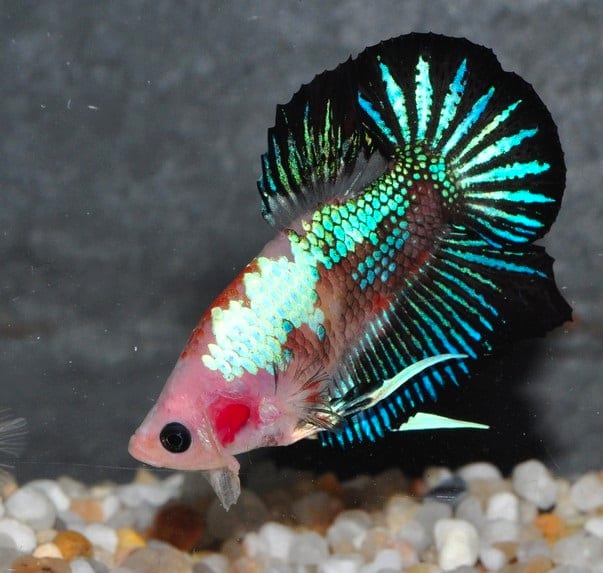
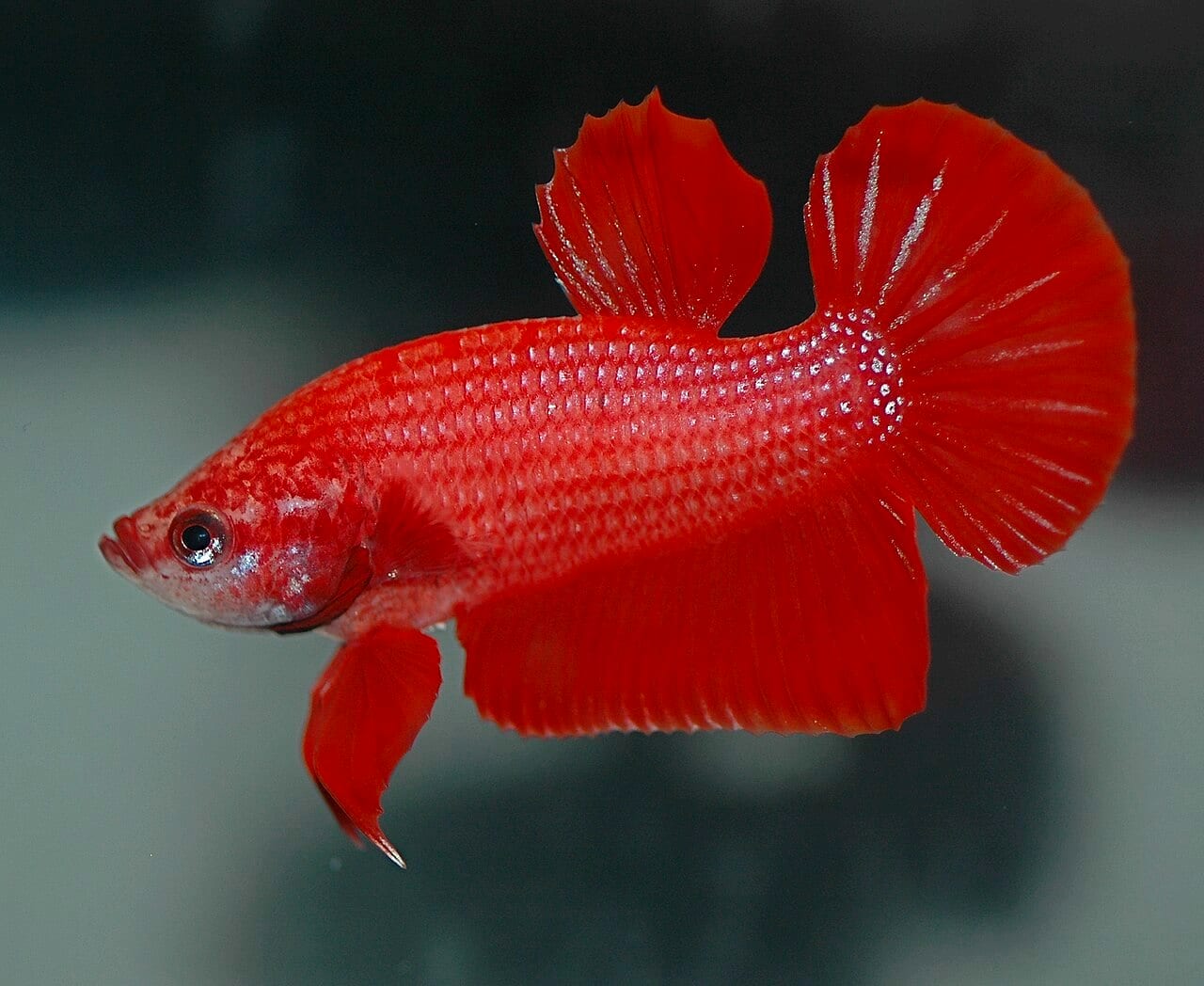
Conditions covered
Bacterial:
- fin rot, the most common condition in the hobby. Aeromonas or Pseudomonas colonizing stressed fins.
- Columnaris, Flavobacterium columnare, aggressive, fast-moving.
- Dropsy, terminal in most cases. Aeromonas internal infection or organ failure.
Parasitic:
- ich, Ichthyophthirius multifiliis. Heat treatment protocol.
- velvet, Piscinoodinium/Oodinium. Darkness + copper treatment.
Atypical bacterial:
- mycobacteriosis, fish TB. Untreatable, chronic, zoonotic. The 2023 peer-reviewed literature is alarming.
Physiological / secondary:
- swim bladder disease, often dietary or constipation-driven.
Protocol:
- the euthanasia protocol, cross-link to the care-side protocol.
The medication shortlist
Keep these on hand if you plan to keep bettas past the first year:
- Seachem NeoPlex (neomycin). Moderate bacterial infections, columnaris.
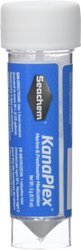
- Seachem KanaPlex (kanamycin). Gram-negative bacteria, advanced fin rot, severe infections.
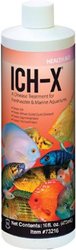
- Hikari Ich-X. Ich and velvet, the most reliable malachite green formulation available over the counter.
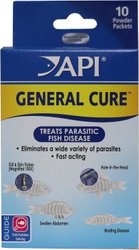
- API General Cure. Internal parasites, hole in the head, Hexamita.
- Aquarium salt (not table salt, not marine salt). Mild external infection support.
- Indian almond leaves. Mild antimicrobial, tannin-driven stress reduction.
Do not keep these:
- Melafix, Pimafix, Bettafix. Tea tree oil-based. Bettas are labyrinth breathers, and tea tree oil irritates the labyrinth organ. Use for other fish or not at all.
- Broad-spectrum “prophylactic” treatments dosed into a healthy tank. Medication without a diagnosis is how drug-resistant bacteria arise. Don’t.
The hospital tank
A hospital tank is a 2 to 5 gallon bare-bottom tank with a sponge filter, preset heater, and no substrate. You keep it cycled by seeding with a sponge from the main tank filter. When a fish needs medication, you move the fish into the hospital tank and treat there.
Why:
- Medication kills beneficial bacteria. Treating the main tank crashes the cycle.
- Meds kill invertebrates (copper kills shrimp, kanamycin kills snails).
- Bare bottom makes it easy to see and siphon waste during treatment.
- Small water volume cuts medication costs dramatically.
How:
- Keep a second sponge filter in the main tank at all times, running.
- When needed, move the seeded sponge and the fish to the hospital tank.
- After treatment (usually 7 to 14 days), return the fish.
When medication isn’t the answer
Water changes. Fresh, warm, temperature-matched water fixes more problems than any single medication. If you’ve forgotten everything on this page, daily 50% water changes for a week with Prime-treated water is a valid treatment for 60% of presentations. Boring, unglamorous, works.
Every article linked above covers the specific pathogen, specific medication, specific dosage. But the underlying discipline is: test first, fix environment first, then diagnose, then medicate, then hospital-tank, then evaluate. Keep that order and you won’t lose many fish.
Related on this site
- Betta Columnaris: Fast-Moving Bacterial Disease with a 5-Day Window
- Betta Dropsy: Bloat, Pineconing, and a Terminal Prognosis
- Betta Septicemia: Red Streaks, Hemorrhagic Disease, and the Treatment Window
- Betta Popeye (Exophthalmia): Unilateral vs Bilateral
- Hole in the Head Disease: Hexamita, Pitting, and Metronidazole
- Lumps and Bumps: Lymphocystis, Cysts, and Tumors
- Tail Biting: Why Bettas Do It and How to Stop It
- Fungal Infection: Saprolegnia vs Columnaris vs Ich
- Anchor Worms: Mechanical Removal and Treatment
- Constipation: Fasting Protocol and the Daphnia Fix
- Betta Euthanasia Protocol: When Treatment Isn’t the Right Answer
- Betta Fin Rot: Bacterial Cause, Medication Protocol, Prevention
- Betta Ich (White Spot Disease): Heat Treatment Protocol
- Fin Damage vs Fin Rot: The Visual Differential
- Quarantine Tank Setup: Preventing Imported Disease
Frequently asked
- My betta is sick. What do I do first?
- Test water parameters. Ninety percent of 'sudden illness' is a spiked ammonia or a dropped temperature. Only after ruling out environmental causes should you consider a specific disease.
- Should I use aquarium salt?
- For mild external infections and stress reduction, yes. One tablespoon per 5 gallons, dissolved first, for a treatment course of 7 to 10 days. Not for fish with advanced disease. Not as prevention.
- Is a hospital tank necessary?
- For treating one fish, yes. A 2 to 5 gallon bare-bottom tank with a sponge filter seeded from the main tank, a heater, and no substrate. Keeps medication costs down and protects plants and beneficial bacteria in the main tank.
- What's the most commonly misdiagnosed illness?
- Fin rot and columnaris. Both produce deteriorating fin edges. Columnaris is more aggressive, kills faster, and needs different medication. Fin edges turning white and fuzzy with visible receding tissue: columnaris. Fin edges turning black or red with slower recession: fin rot.
- When do I euthanize?
- When the fish can no longer swim upright, no longer eats, and shows no improvement after 72 hours of corrected water and appropriate medication. See /care/humane-euthanasia/ for the protocol.