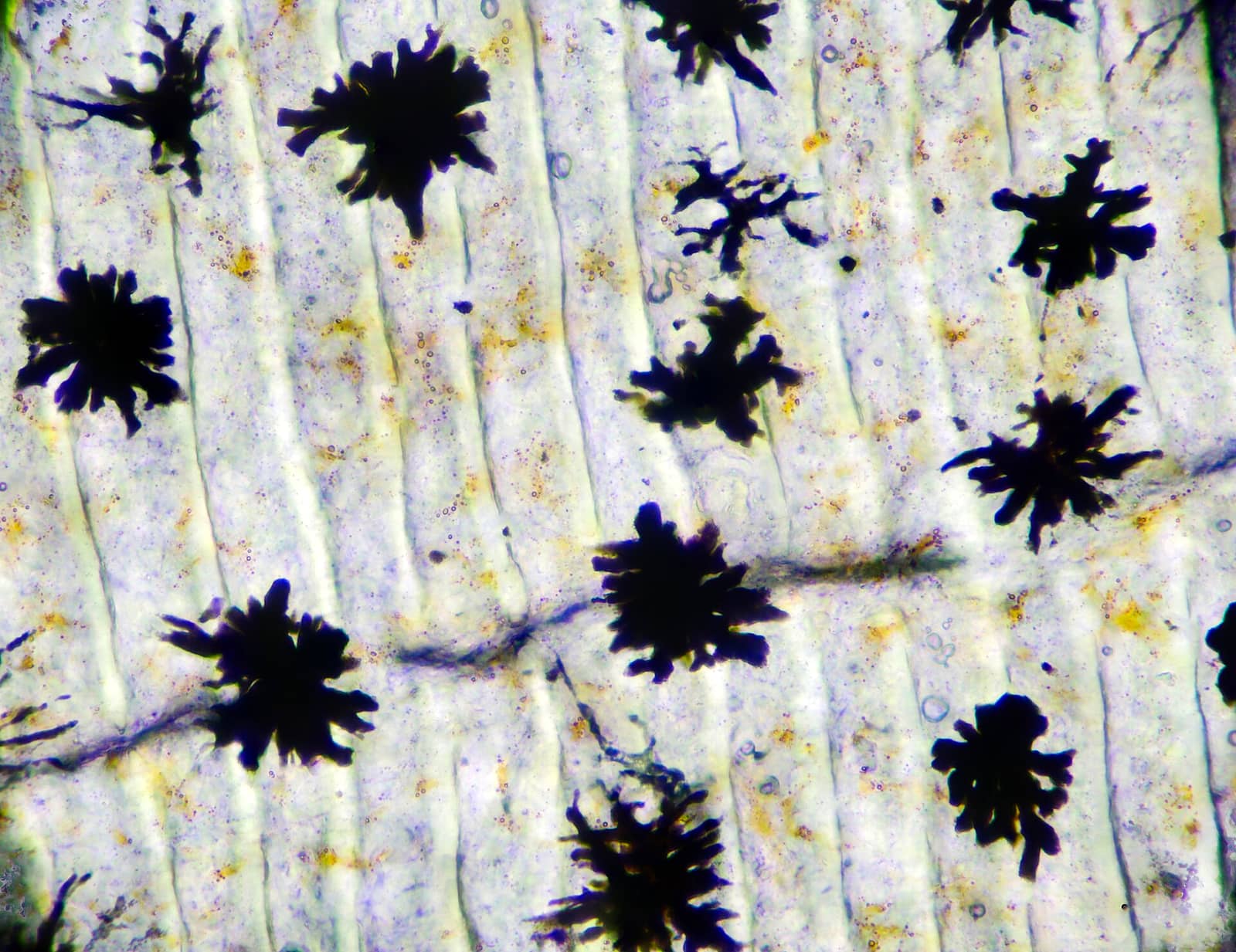
Black melano is the deepest black betta phenotype, produced by homozygous expression of the bl allele (bl/bl). Males are stunning and fertile. Females in the same genotype are infertile: eggs don’t develop properly, no viable spawn is possible. This is one of the best-documented genetic traps in the hobby, known since the 1960s. The workaround: breed heterozygous carriers (bl/+), producing 25% bl/bl offspring per spawn without ever needing a homozygous female.
The genetics
- bl recessive melano allele.
- BL (or +) dominant normal allele.
- bl/bl homozygous: deep black phenotype. Males fertile. Females infertile.
- bl/+ heterozygous: normal or slightly melanistic phenotype. Both sexes fertile.
- +/+ homozygous normal: normal phenotype.
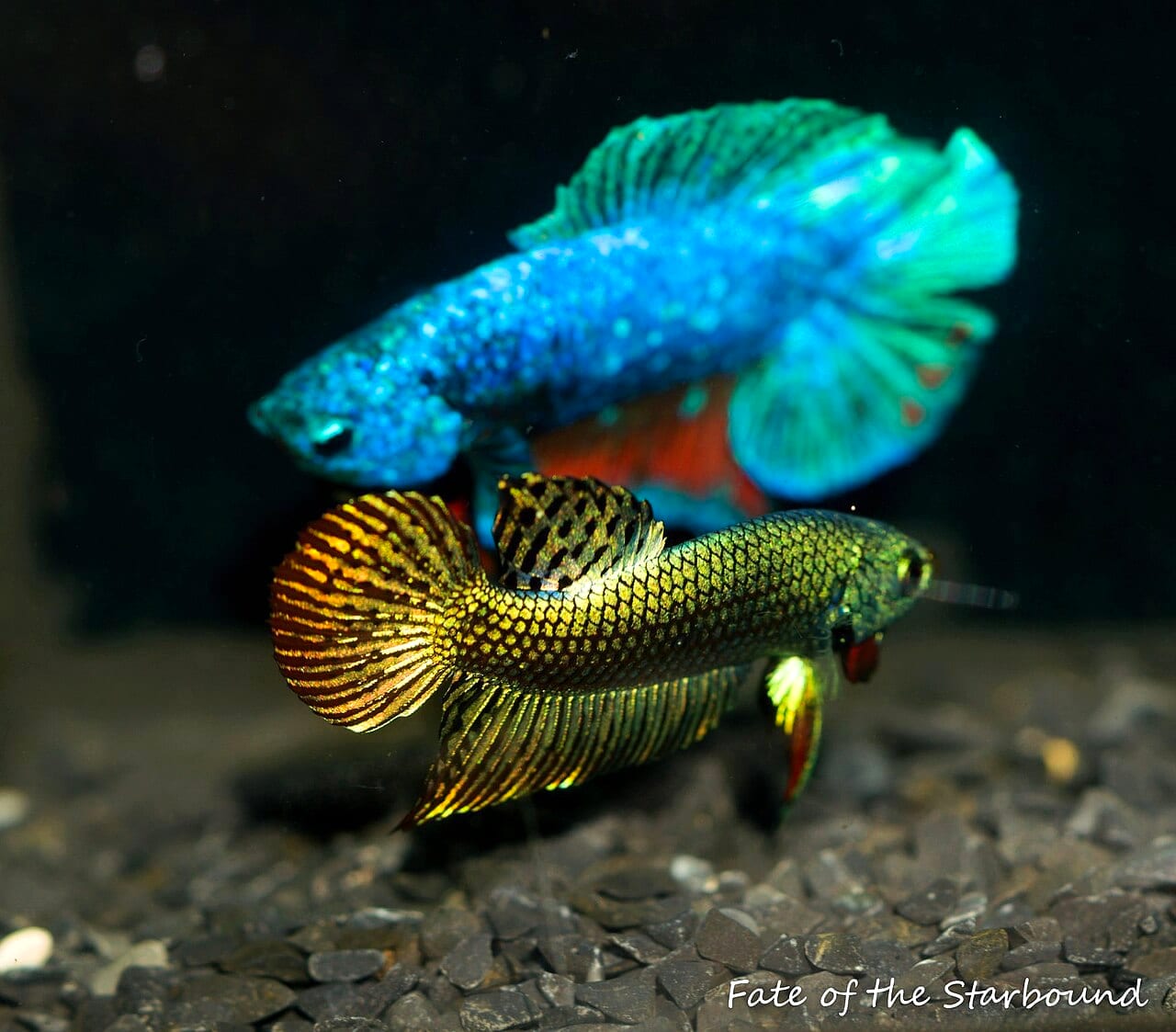
Why females are infertile
Documented since the 1960s in hobbyist literature and catalogued in current IBC genetics resources, the mechanism was never fully molecularly characterized, but the phenotype is reproducible. Homozygous bl/bl females produce eggs that either fail to develop yolk or are expelled at an immature stage. Spawning attempts look normal externally but produce no viable fry.
The 2022 genetic-architecture paper (PubMed 36129976) catalogued the melano locus but didn’t resolve the infertility mechanism. Likely candidate: pleiotropy between melanin synthesis pathways and ovarian yolk deposition. Further research welcome.
The breeding workaround
Standard protocol to produce melano fry without infertile female trap:
- Breed a bl/bl male to a +/+ female (any non-melano).
- All F1 offspring are bl/+. All phenotypically normal or slightly darker.
- Sibling cross or F1 × F1: produces 25% bl/bl, 50% bl/+, 25% +/+.
- The 25% bl/bl portion: about half are males (fertile, usable), half are females (infertile, culled or kept as ornamental non-breeders).
Net yield of melano males per spawn from F1 × F1 cross: about 12% of fry. For a 200-fry spawn, that’s 24 melano males. Respectable for a line-building project.
Alternative: breed bl/+ to bl/+ indefinitely
Some breeders keep a pool of heterozygous carriers and breed them against each other. This produces occasional homozygous males (keep and sell) and occasional infertile females (cull or keep as ornamentals). The line is maintained through heterozygous crosses.
Identifying carriers
Heterozygous bl/+ fish are hard to distinguish from +/+ by sight. Some carriers are slightly darker; most are indistinguishable. Test breeding is the only reliable identifier:
- Breed to a known bl/bl male. If 50% of fry show melano, the tested fish was bl/+. If 0%, it was +/+.
- Better: breed two suspected carriers. If ~25% of fry are melano, both are carriers.
Related black phenotypes
Melano (bl/bl): deepest black, infertile females. Discussed above.
Black lace: a similar-looking black pattern from different genetic causes, typically involving iridophore suppression. Females fertile. Not as extreme a black as melano but much easier to maintain.
Super black / black copper: melano plus iridescent overlay (copper iridophores on the black base). Combines the melano allele with opaque intensification.
Black orchid: complex phenotype with black base, fin extensions, iridescent tips. Hobbyist strain name, not a single gene.
Blond: NOT a black phenotype. The b (blond) allele reduces melanophore density, producing lighter fish overall.
The ethics of knowingly breeding to produce infertile fish
This is a real ethical question in the hobby. By breeding bl/+ to bl/+, you guarantee 12 to 13% of fry will be females who are doomed to infertile status. They can live as pets but can never reproduce.
Mitigations:
- Keep infertile females as tank ornamentals; they live normal lives in every other respect.
- Prefer line-breeding methods that minimize infertile output. Some breeders cross bl/bl male × bl/+ female, producing 50% bl/bl (half fertile males, half infertile females). Net infertile ratio is the same but the spawning pair cost is lower.
- Accept that melano breeding is a niche with this structural cost. If you find it objectionable, breed black lace instead.
Stabilizing a melano line
Long-term melano line-building:
- Year 1: acquire bl/bl male from a named breeder (AquaBid, IBC member). Breed to 2-3 non-melano females.
- Year 1-2: from F1 bl/+ offspring, cross-breed to establish a heterozygous pool of ~20 carriers.
- Year 2+: F1 × F1 crosses to produce homozygous melano males. Select best phenotype.
- Year 3+: refine by crossing best melano males back to best F1 bl/+ females.
Expect 3 to 5 years to establish a stable melano line producing show-quality males at a good yield.
What the 2022 paper added
The phenotypic-architecture paper confirmed the melano locus as a major-effect gene on one specific linkage group. It mapped the haplotypes carrying the bl allele across modern show strains. Most melano lines trace to a few 20th-century founder fish; the narrow genetic base is consistent with the hobbyist pattern.
Future work: molecular characterization of the infertility mechanism could allow for CRISPR rescue of fertility without losing the black phenotype. That’s speculative and not currently feasible in hobbyist settings.
The takeaway
Melano is one of the most iconic betta colors and one of the clearest examples of a genetic trap in selective breeding. Understanding it lets you produce stunning fish without breeding doomed females. Stick to heterozygous carrier crosses, accept the per-spawn infertile-female ratio, keep good records. Conditioning quality affects pigmentation depth in melano lines; New Life Spectrum Betta Formula (affiliate) is the standard high-protein staple for active breeding programs.
Every deep black male you produce traces back to the bl/bl genotype. The females in his generation paid a price. Breed deliberately.