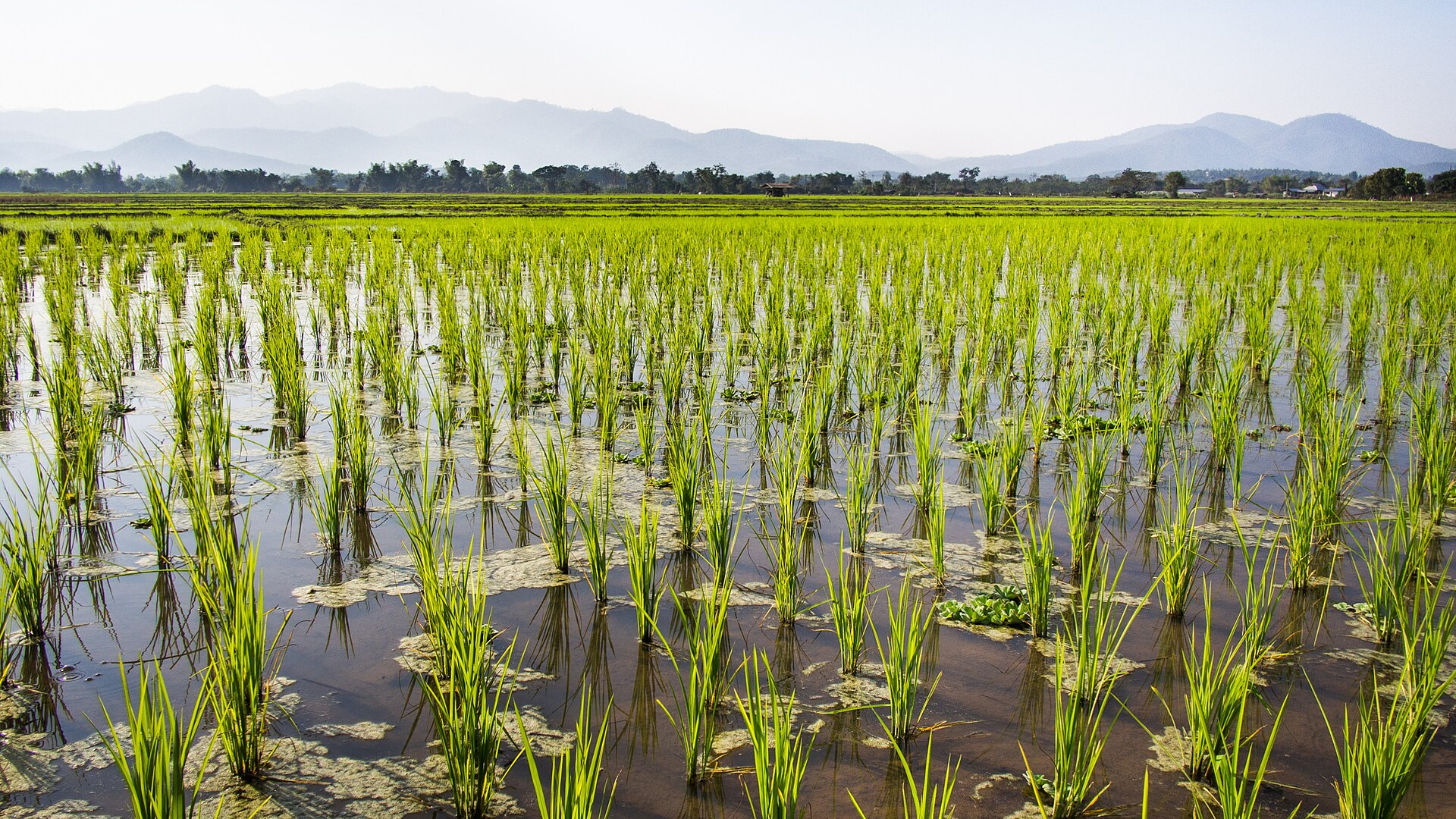
Wild Betta splendens lives in rice paddies and adjacent canals across Southeast Asia. These are not puddles. They are shallow but large water bodies, measured in cubic meters, connected seasonally to larger drainage networks. The 2022 Aceh biodiversity survey (Taylor & Francis) documented actual habitat dimensions, putting to rest the pet-trade “puddle” justification for small tanks. This spoke is the habitat correction every captive-care guide needs.
The puddle myth
The story goes: “Wild bettas live in puddles, so they don’t mind small containers.” Variations: “They live in the hoofprints of water buffalo.” “They thrive in tiny bodies of water.” “Native habitat is basically a fish bowl.”
All wrong. Used to justify pet-store bowls and minimalist marketing.
What the research actually documents
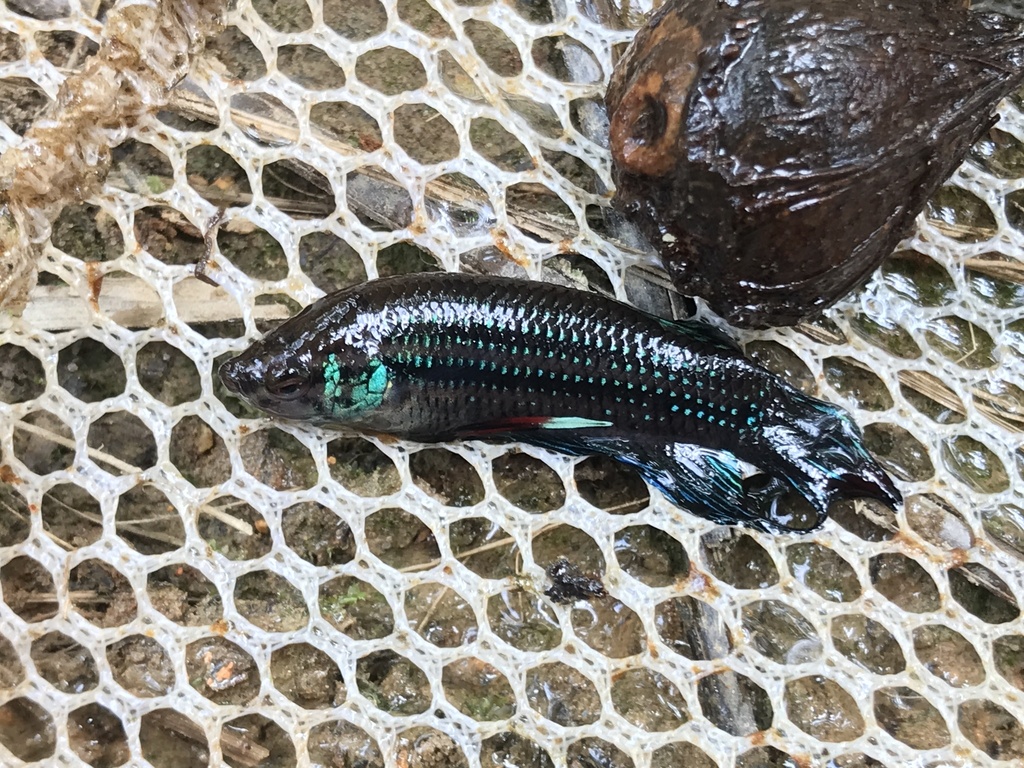
The 2022 Aceh Betta diversity survey in Sumatra documented:
- Stretches of habitat up to 30 m long.
- Water depth 10 to 50 cm typical.
- Connected drainage networks spanning hectares in wet season.
- Multiple co-occurring betta species in the same habitats.
- Habitat complexity: emergent and submerged vegetation, variable current.
Wild betta splendens in Central Thailand (the type locality) inhabits similar rice paddy habitats. Seriously Fish’s species profile summarizes the habitat: “shallow, slow-moving or stagnant freshwater environments,” including rice paddies, canals, and wetland margins.
The 30 m stretches of the 2022 Aceh Betta diversity survey (Taylor & Francis) are not unusual. A rice paddy plot is often 100 m² or more. Connected paddies in a single drainage can cover 10+ hectares.
Seasonal habitat dynamics
Southeast Asian rice paddy systems have strong seasonal rhythm:
- Wet season (monsoon). Paddies flood to 10-30 cm. Canals and connected streams full. Fish move extensively, breed, disperse.
- Dry season (non-monsoon). Paddies dry partially or fully. Fish aestivate in remaining wet spots or concentrate in canals. Localized mortality.
This seasonal pattern drives the species’ biology:
- Labyrinth organ enables survival in stagnant low-oxygen water during dry season.
- Surface-gulping supplements hypoxic conditions.
- Bubble-nesting in flooded paddies reproduces the species during monsoon.
- Local populations bottleneck in dry season, rebound in wet.
The species is adapted to seasonal extremes, not to steady minimal habitat.
What this means for captive care
Wild habitat references shouldn’t justify bad captive husbandry:
- “They live in puddles” is wrong. Wild habitat is orders of magnitude larger than a 5-gallon tank in area and often comparable in volume.
- Dry-season stress is a survival adaptation, not a preference. Fish aestivating in a muddy pool are stressed, not comfortable.
- Cycles matter. Wild bettas experience flooding, drying, temperature swings, and food scarcity. Captive fish benefit from stability, not simulated stress.
The correct translation from wild to captive:
- Give them more space than a puddle (5+ gallons, 10+ is better).
- Stable temperature (no “dry season” heat stress).
- Stable water parameters (no ammonia, unlike a drying pool with concentrated waste).
- Steady food supply (wild bettas often eat sporadically; captive fish benefit from regular feeding).
The real wild habitat picture
A wild male Betta splendens in a Thai rice paddy during the wet season:
- Roams a territory that may span tens of square meters.
- Encounters several conspecific males with whom he fights or avoids.
- Feeds on mosquito larvae, daphnia, bloodworms, cyclops as they drift by or emerge.
- Builds bubble nests in protected corners near plant cover.
- Spawns multiple times over the wet season.
- Moves to canals or persistent wet spots as the paddy dries.
- May survive multiple seasons or may die in dry-season bottleneck.
Wild lifespan is probably 2 to 5 years, with significant predation and seasonal mortality truncating most individuals.
What the habitat tells us about behavior
Territoriality: bettas claim small territories with good nest sites (vegetation cover, slow water) and defend against conspecific males. In captivity this manifests as the tank-mate and sorority challenges covered at tank mates.
Aggression: evolved for defending mate access in wet-season breeding. In a cup, there’s nothing to defend, so the aggression directs at reflection or irrelevant tank mates.
Labyrinth breathing: evolved for stagnant paddy conditions with low dissolved oxygen. Makes the species sturdy but does not mean they prefer unoxygenated water.
Jumping: wild bettas occasionally jump between water bodies. Captive bettas jump for the same reflex. Requires a lid.
The photo bettas don’t have
Hobby aquarium photos rarely show actual wild habitat. Most “wild betta” photos are of wild-type fish in clean captive tanks. Genuine in situ photos from Thailand, Malaysia, and Indonesia show murky, tannin-stained water with rice stalks, debris, submerged vegetation, and limited visibility.
The pet-store image of a saturated betta in a crystal-clear small vase is double-aesthetic-fiction: the water isn’t like the wild, and the tank isn’t like adequate captive care.
Why the myth persists
Three reasons:
- Pet-trade marketing. Small tanks sell. “They live in puddles” lets retailers justify bowl setups.
- Tourist stereotype. Short-term observation of a dry-season paddy shows a small stressed habitat. Gets misread as species preference.
- Contrarian framing. “The experts say 5 gallons but they live in puddles” is a common defense of inadequate housing, citing a myth to overrule actual science.
Correct the myth whenever you see it. The 2022 Aceh survey and the Seriously Fish profile are primary sources anyone can cite. Say the words: wild bettas do not live in puddles. They live in complex seasonal water bodies measured in hectares.
The practical takeaway
Wild habitat is a useful reference for:
- Understanding species biology and behavior.
- Informing captive care decisions.
- Highlighting conservation threats (rice paddies are changing with agricultural modernization).
Wild habitat is not a justification for:
- Small tank sizes.
- Skipping heaters.
- Skipping filtration.
- Calling bowl care “natural.”
A fish species’ adaptations to survive suboptimal conditions do not mean suboptimal conditions are preferred. Your captive fish is a small tropical vertebrate that deserves better than a simulated dry-season puddle.
The real wild habitat is bigger, more complex, and more seasonal than any captive tank can replicate. The response is not to replicate the worst season. The response is to provide a stable abundance that wild fish rarely experience.
Related on this site
- Wild Bettas: The 70+ Species Beyond Betta splendens
- Betta Tank Setup: A 5-Gallon Minimum Build, Step by Step
- Betta channoides: The Red-Orange Mouthbrooding Miniature
- Wild Betta Conservation: Palm Oil, Peat Swamps, and the Pet Trade
- Betta hendra: First Captive Breeding Reported in 2026
Frequently asked
- Do wild bettas really live in puddles?
- No. The puddle myth is used to justify small tanks in captivity. Wild Betta splendens live in rice paddies, canals, and ditches that are shallow but measured in cubic meters of water volume with seasonal connections to larger networks.
- What did the 2022 Aceh survey find?
- The Taylor and Francis 2022 survey documented wild betta populations in Aceh, Sumatra, in stretches of water up to 30 meters long with flowing connections to larger drainage networks. Species included in the survey were multiple betta lineages, with Betta splendens' relatives in splendens complex habitats.
- How big is a rice paddy habitat?
- A single rice paddy plot is often 10 to 100 square meters with 10 to 30 cm of water depth during the wet season. Connected paddies in a single drainage can span hectares. Wild bettas move through these networks during wet season.
- What about the dry season?
- Many rice paddies dry partially or fully. Bettas aestivate in remaining wet spots or move to connected canals with year-round water. Severe dry seasons cause local population crashes, but the species is adapted to this seasonal pattern.