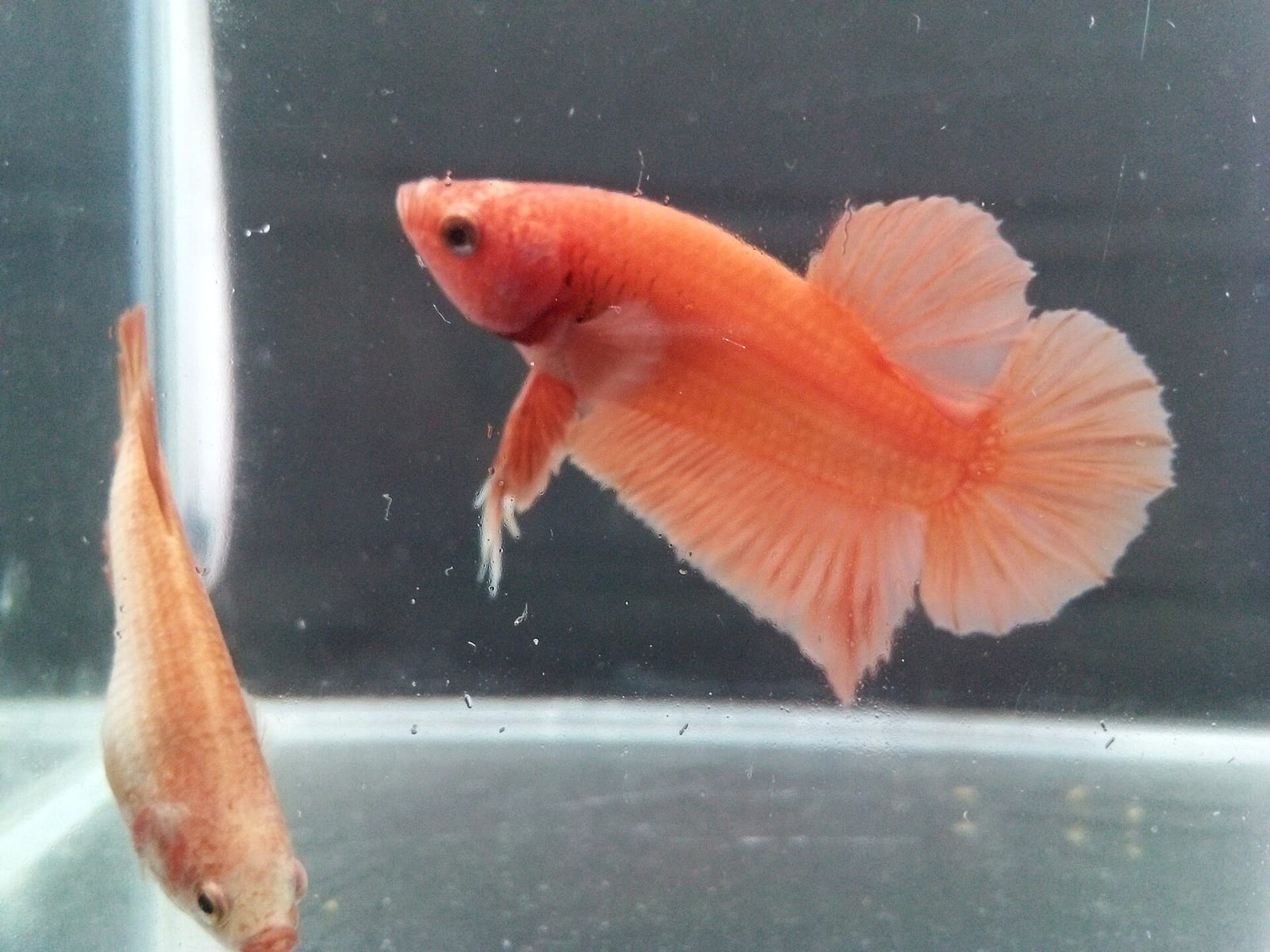
Velvet disease is caused by Piscinoodinium pillulare, a photosynthetic dinoflagellate parasite that attaches to the fish’s skin and gills. It presents as a fine gold or rust-colored dusting across the body, best seen by shining a flashlight against the tank glass at an angle. Velvet kills faster than ich (7 to 14 days untreated) and spreads faster. The treatment protocol combines complete darkness (to block the parasite’s photosynthesis), copper or Ich-X medication, and elevated temperature, for 10 to 14 days (Merck Veterinary Manual, Protozoal Diseases).
How to recognize it
The defining sign is a fine gold-to-rust dusting that catches the light. Better seen with a flashlight held flat against the glass in a dark room than in normal daylight. Other signs:
- Clamped fins, lethargy, loss of appetite.
- Rapid gilling. Velvet damages gills first.
- Flashing against décor (itchiness).
- Dulled color under the parasite coating.
- In advanced cases: skin sloughing, visible ulcers.
Hard to distinguish from early ich without the flashlight test. Under a flashlight, ich appears as discrete pinhead-sized spots, velvet as a continuous fine coating.
| Feature | Velvet (Piscinoodinium) | Ich (Ichthyophthirius) | Fungal (Saprolegnia) |
|---|---|---|---|
| Appearance | Fine gold/rust dust, continuous coating | Discrete white pinhead spots | White fluffy/cottony patches |
| Best seen | Flashlight at angle in dark room | Normal lighting | Normal lighting |
| Location | Whole body, gills especially | Body and fins | Wounds, fin edges, mouth |
| Progression speed | Fast (7–14 days untreated, fatal) | Moderate (life cycle 4–7 days at 78°F; untreated infection typically fatal in 14–21 days) | Moderate (days to weeks) |
| Gills affected early? | Yes (causes rapid gilling) | Less so at early stage | Rarely |
| Treatment | Darkness + copper or Ich-X + heat | Heat treatment or copper/formalin | Antifungal (Victoria Green, Paraguard) |
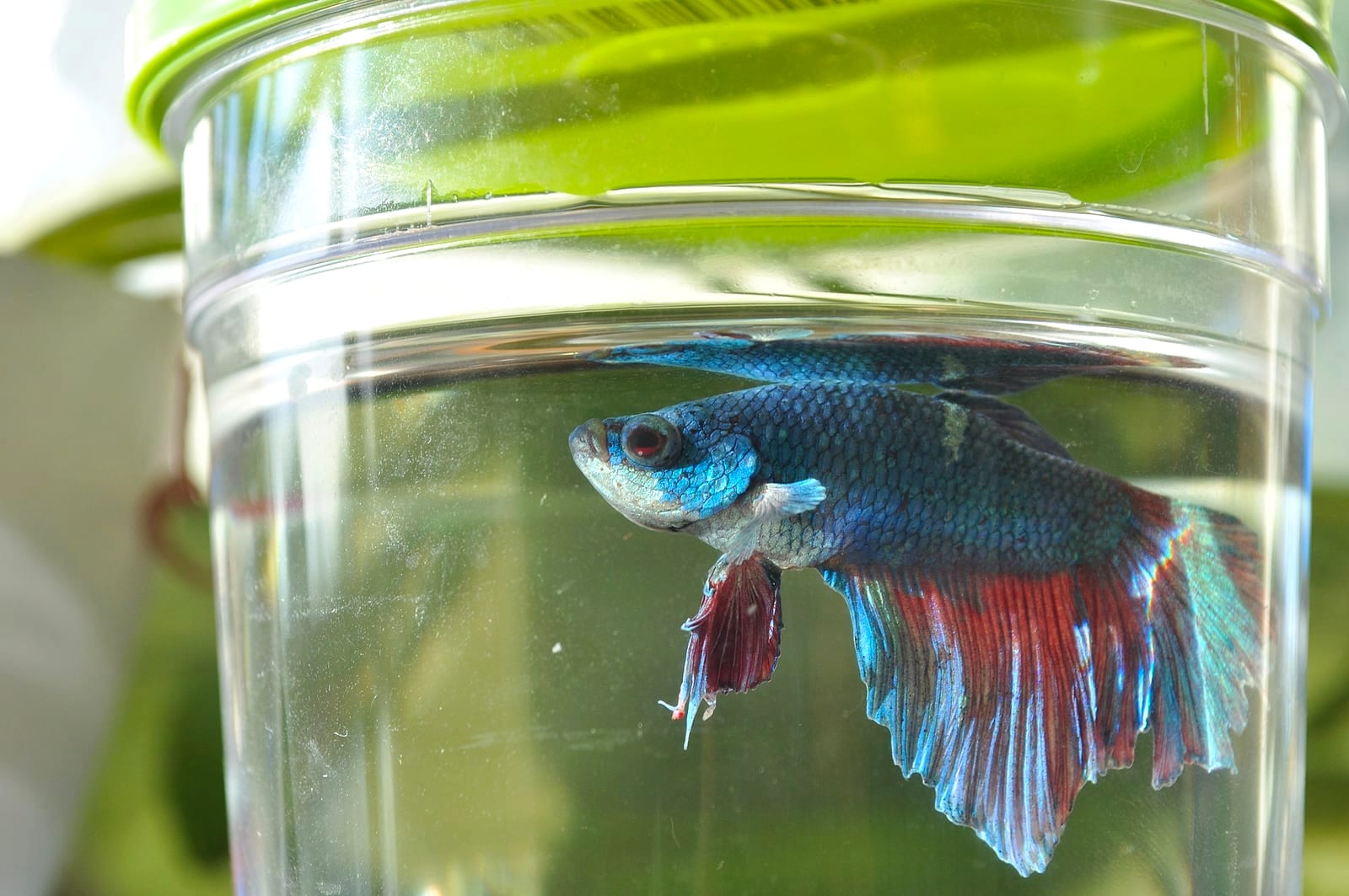
The life cycle and why darkness matters
Piscinoodinium is a dinoflagellate with chloroplasts. Its life cycle:
- Trophont stage. Attached to the host, photosynthesizing and feeding on skin cells. Protected under skin.
- Dinospore stage. Drops off, forms a cyst on the substrate, divides into hundreds of free-swimming dinospores.
- Dinospores swim in search of a host. Must find one within 24-48 hours or die.
This is why velvet spreads so fast: a single wave of free-swimming dinospores can find and infect every other fish in the tank within days, not just the fish that showed symptoms first. Treat the whole tank, not just the fish with visible dusting.
Photosynthesis during the trophont stage contributes to the parasite’s energy budget (Journal of Fish Diseases, Piscinoodinium pillulare biology). A completely dark tank for the full treatment course weakens the parasite and makes medication more effective. Darkness means completely dark; no lights, cover the tank with a towel if room light reaches it, no lamps near the tank.
Treatment protocol
Setup
- Remove activated carbon from the filter.
- Remove snails, shrimp, and any invertebrates to a separate container.
- Cover the tank completely (towel or blanket over the top and sides).
- Raise temperature 1 °C per day to 29 °C. Higher is stressful for bettas.
- Increase aeration; velvet damages gills, and higher temperature holds less oxygen.
Medication
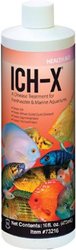
Hikari Ich-X is labeled for both ich and velvet, its malachite green formulation works against both parasites, dosed at 5 ml per 10 gallons daily with a 25% water change before each redose. 10 to 14 days.
Hikari Ich-X on Amazon Affiliate link. See our disclosure.
Or Copper-based medication (CopperSafe, Cupramine): label dose. Test copper levels daily with a copper test kit; target 0.15-0.25 ppm. Overdose kills fish.
Aquarium salt adjunct at 1 tablespoon per 5 gallons. Reduces parasite mobility.
Daily protocol
Day 1: Remove carbon, inverts. Cover tank fully. Begin heating. First dose. Day 2 to 14: 25% water change daily, redose. Keep tank fully dark throughout. Only uncover briefly to feed (optional; some keepers skip food for the first 3 days).
Day 14: 50% water change. Lower temperature 1 °C per day. Uncover gradually over 24 hours to avoid light shock. Activated carbon 48 hours.
What goes wrong
Treating without darkness. Velvet keeps photosynthesizing, treatment takes longer, often fails.
Stopping early. Dinospore cysts on the substrate can persist past a 7-day course. Treat the full 14 days.
Copper overdose. Lethal. Use a test kit.
Returning fish to a contaminated main tank. If the main tank had other fish that were also infected but not obviously so, returning the treated fish re-exposes him. Treat the whole tank or confirm the main tank is clear.
Exposing bettas to sudden bright light after treatment. Uncover gradually. A fish kept in complete darkness for 2 weeks has temporary light sensitivity.
Prevention
- Quarantine new fish 14 days in a separate tank.
- Don’t buy from pet stores with visibly sick fish anywhere on the system.
- Don’t share nets or equipment between tanks without 24-hour drying.
- Bleach-dip new plants, or quarantine plants for a week before adding.
- Strong immune systems prevent colonization. Stable parameters, warm tank, varied diet.
Velvet is less common overall than fin rot or ich, and rare in well-sourced pet bettas, but most cases trace back to fish that spent time in crowded, overseas holding vats before ever reaching a pet-store tank, a betta bought directly from a reputable breeder almost never carries it. It’s common enough in pet-store imports that every serious keeper should still recognize it. Caught early with the flashlight test, the 14-day darkness protocol has a high survival rate. Caught late, when gills are visibly damaged, survival drops below 50%. The flashlight habit is the single best prevention tool.
Related on this site
- Betta Disease: Diagnosis and Treatment, Evidence-Based
- Betta Ich (White Spot Disease): Heat Treatment Protocol
- Betta Columnaris: Fast-Moving Bacterial Disease with a 5-Day Window
- Betta Dropsy: Bloat, Pineconing, and a Terminal Prognosis
- Betta Euthanasia Protocol: When Treatment Isn’t the Right Answer