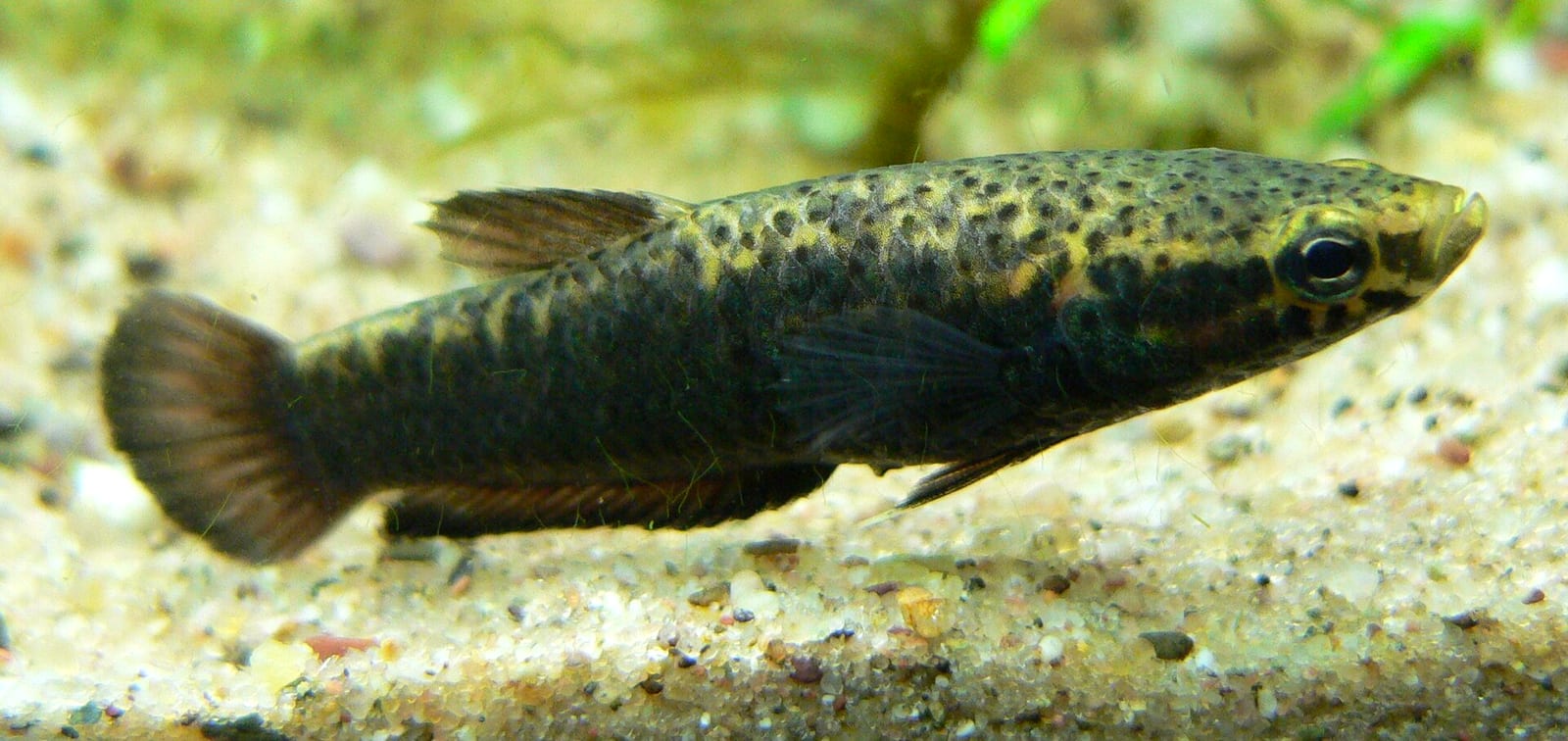
The pet-trade betta is one species out of seventy-plus, and the count keeps climbing as taxonomists work through undescribed populations across Thailand, Malaysia, Indonesia (Sumatra, Borneo, Java), Cambodia, Vietnam, and southern Myanmar; current estimates put the real total above 100. The genus Betta contains bubblenesters and mouthbrooders, tropical lowland species and peat-swamp specialists, species kept casually by beginners and species that have never been bred in captivity. Many face habitat loss from palm oil, peat drainage, and pet-trade overharvest. This section maps what species exist, where they live, which can be kept, and the conservation context. Wild bettas are a serious ichthyological topic, not a decorative afterthought.
Species groups
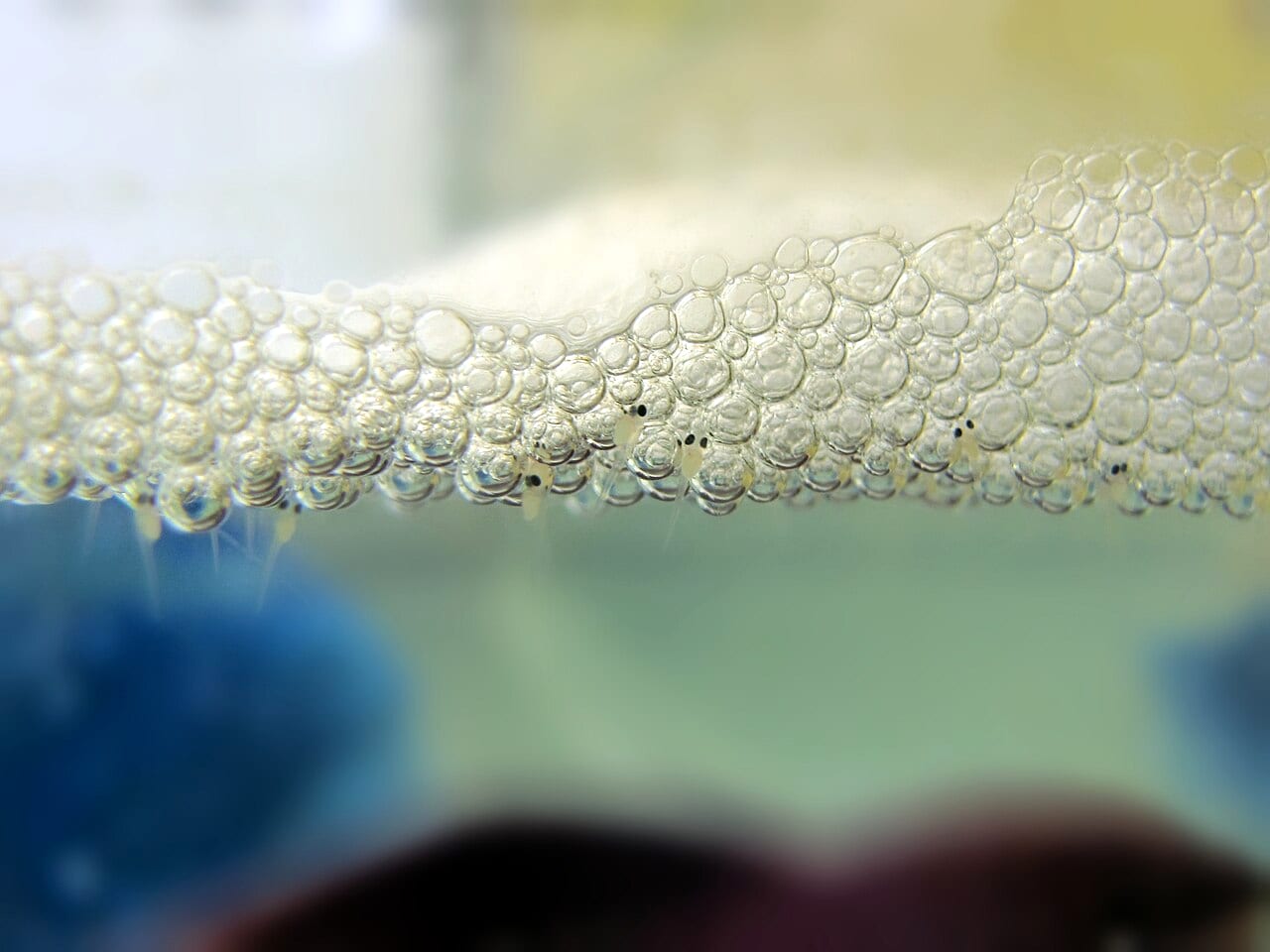
Betta species cluster into species complexes sharing morphology, reproduction, and habitat. Reproduction splits the genus into two camps. Bubblenesters build a floating raft of mucus-coated bubbles at the surface and the male guards the eggs there, the strategy familiar from any pet-store splendens. Mouthbrooders skip the nest entirely: the male catches the fertilized eggs in his mouth and holds them, without feeding, for 10 to 14 days until the fry are developed enough to swim free. The two strategies demand different tanks, different water stability, and different patience from a keeper.
- Splendens complex: B. splendens, B. imbellis, B. smaragdina, B. mahachaiensis, B. siamorientalis, B. stiktos. Mostly bubblenesters, lowland tropical habitats, flaming colors.
- Coccina complex: B. coccina, B. brownorum, B. burdigala, B. persephone. Small blackwater specialists from Southeast Asia.
- Macrostoma complex: B. macrostoma, B. ibanorum, B. akarensis. Mouthbrooders, Borneo blackwater streams.
- Picta complex: B. picta, B. falx. Mouthbrooders from Java and Sumatra.
- Bellica complex: B. bellica, B. simorum. Large bubblenesters.
- Unimaculata complex: B. unimaculata, B. ocellata, B. patoti, B. compuncta. Big mouthbrooders from Borneo.
- Pugnax complex: B. pugnax, B. taeniata, B. schalleri. Peninsular Malaysia, Borneo.
- Edithae complex: B. edithae. Rare, small.
- Albimarginata complex: B. albimarginata, B. channoides. Smallest mouthbrooders, striking red-orange.
- Waseri complex: B. waseri, B. hipposideros, B. tomi. Peat-swamp giants.
Each complex has its own keeping requirements.
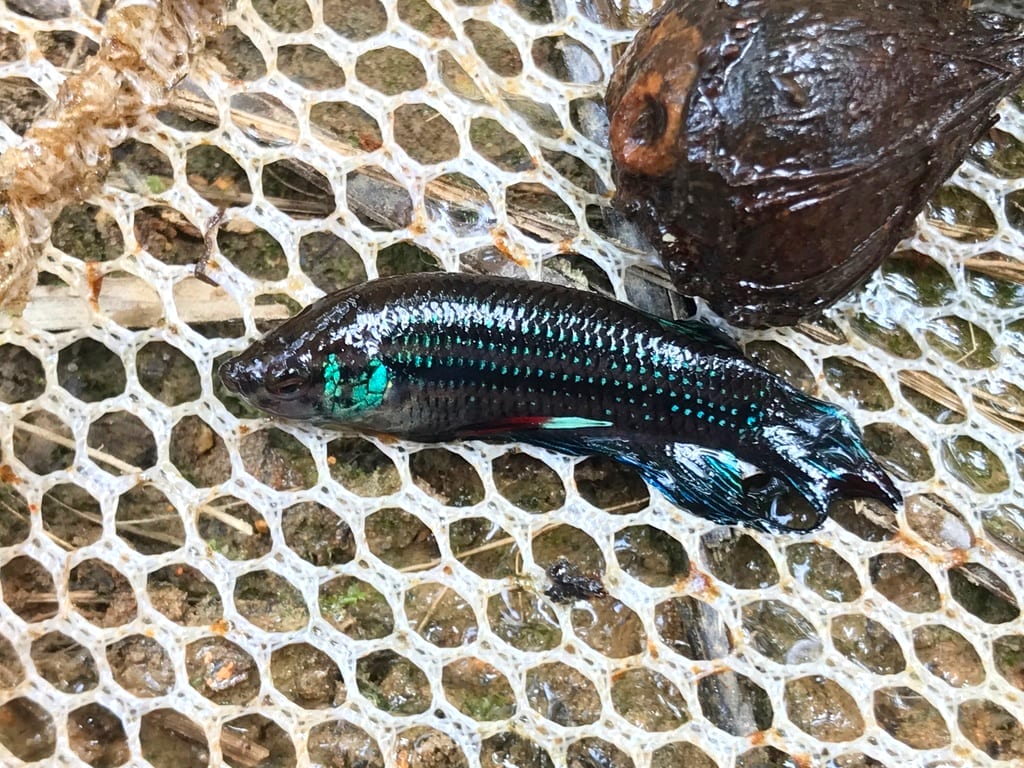
Species articles
- wild species list, full enumerated list with IUCN status column.
- Betta macrostoma, the Brunei Beauty, mouthbrooder, advanced keeping.
- Betta channoides, the red-orange miniature, soft-water specialist.
- Betta hendra, critically endangered Borneo species; first captive breeding 2026.
- Krabi endemics, IUCN August 2025 feature on Krabi’s endemic bettas.
- wild betta habitat, the habitat mythology vs. the actual 2022 Aceh Betta diversity survey (Taylor & Francis).
- wild betta conservation, palm oil, peat drainage, pet-trade pressure.
Wild vs. domesticated: a comparison
| Feature | B. splendens (pet trade) | Typical wild betta |
|---|---|---|
| Finnage | Elaborated, 100+ years of selection | Short, wild-type |
| Colors | Saturated, diverse morphs | Muted, species-specific |
| Temperament | Selected for display aggression | Variable, often less aggressive |
| Water preference | Adapts to neutral pH | Often soft acidic blackwater |
| Reproduction | Bubblenester, tolerates captive conditions | Species-specific, often harder to breed |
| Diet | Accepts pellets | Often requires live food |
| Temperature | 25-27 °C | Usually 23-26 °C, cooler for highland species |
Wild bettas are not “easier splendens.” They’re different animals with specific needs. A splendens-experienced keeper can move to imbellis relatively easily, and to smaragdina with some adjustment. Mouthbrooders are a bigger jump.
Why keep wild bettas
Conservation awareness. Captive breeding programs help safeguard species whose wild habitats are disappearing. See the 2026 Betta hendra captive breeding report (Wiley).
Behavioral interest. Mouthbrooding behavior is fascinating and completely different from bubble-nest care.
Natural coloration. Wild-type bettas have muted, jewel-like natural beauty that the pet-trade hypersaturated colors can obscure.
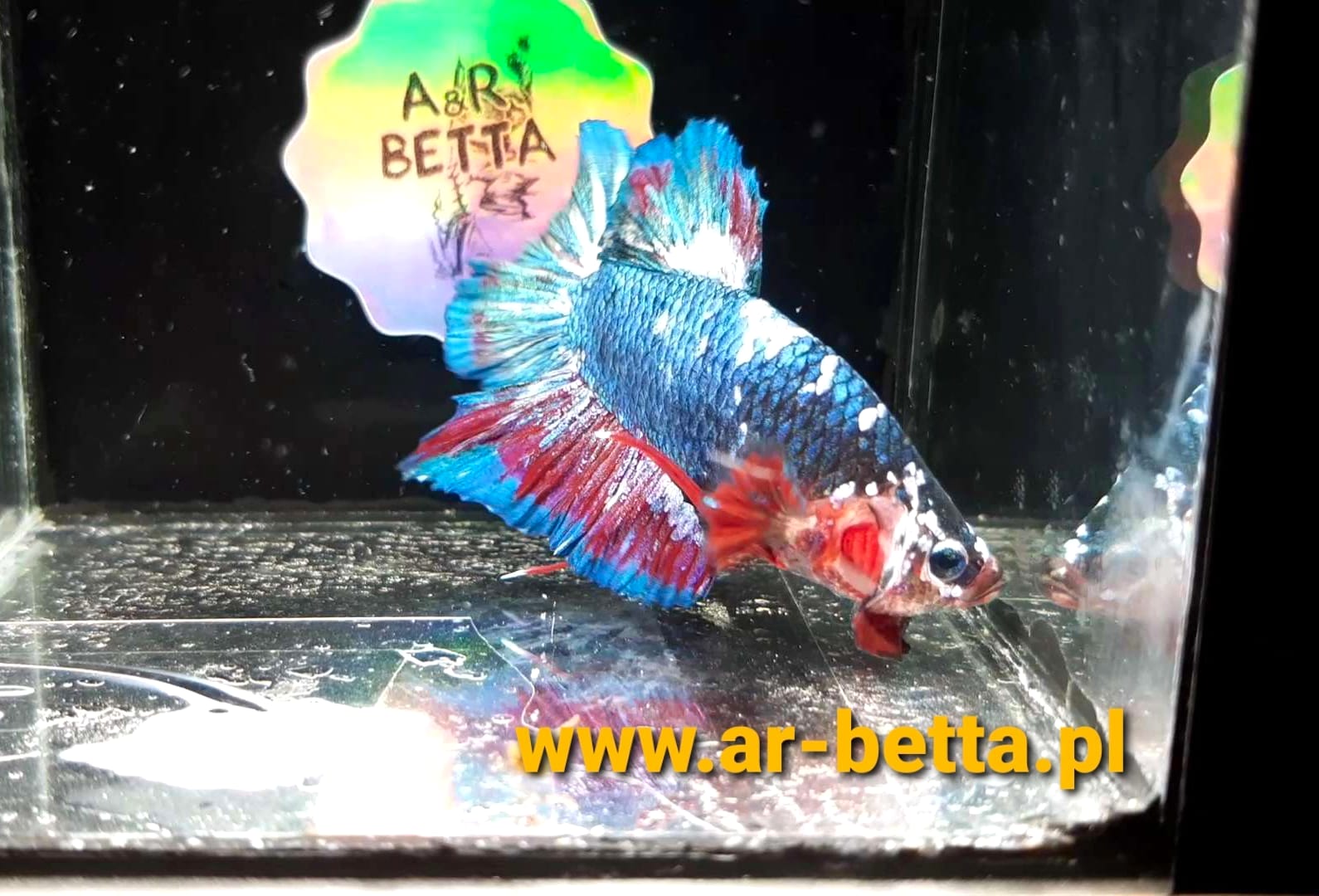
Hobby depth. Wild betta keeping is a distinct sub-hobby with its own communities, forums, and breeding goals.
The beginner wild betta path
If you’re new to wild bettas and want to start:
- Start with Betta imbellis, Betta smaragdina, or Betta mahachaiensis. All three stay close to splendens in care while giving you wild-type behavior and coloration, and all three turn up at specialty fish stores or on AquaBid. Betta macrostoma and Betta channoides, both mouthbrooders, ask for tighter water control and more patience; save them for after a beginner species.
- Get softer water if your tap is hard. RO with remineralization, or indian almond leaf acidification.
- Run a 10-gallon planted tank at 25 °C, neutral to slightly acidic pH.
- Quarantine any imports; wild-caught fish often carry parasites.
- After 6 months of successful imbellis keeping, consider moving to something more specialized (channoides, macrostoma).
The conservation dimension
Many wild bettas are critically endangered or endangered on the IUCN Red List. Betta persephone, Betta hendra, and several of Krabi’s endemic species carry that designation right now, not as a future risk. Causes:
- Palm oil conversion: Indonesian and Malaysian peat swamps, the primary habitat for many blackwater species, are being drained and converted to palm plantations at extraordinary rates.
- Pet trade overharvest: wild-caught fish for the ornamental trade depletes small populations.
- Water pollution: agricultural runoff, mining contamination.
- Climate change: seasonal rainfall disruption affects seasonal habitats.
See wild betta conservation for the detail.
Start with the species list for breadth, or jump to a specific species profile if you already have a target in mind.
Wild bettas typically require blackwater conditions, tannin-stained, slightly acidic, soft water. The easiest way to achieve this in a home aquarium: Indian almond leaves (affiliate). One large leaf per 5 gallons, replaced every 2 to 3 weeks as it breaks down. Pairs well with a tight lid, wild bettas are better jumpers than B. splendens. See tank setup for the baseline.
Related on this site
- Betta channoides: The Red-Orange Mouthbrooding Miniature
- Betta imbellis: The Peaceful Betta
- Betta smaragdina: The Emerald Betta
- Betta mahachaiensis: The Mahachai Fighting Fish
- Betta simplex: Mouthbrooder of Krabi’s Limestone Streams
- Wild Betta Conservation: Palm Oil, Peat Swamps, and the Pet Trade
- Betta hendra: First Captive Breeding Reported in 2026
- Krabi’s Endemic Bettas: The IUCN August 2025 Feature
- Betta macrostoma: The Brunei Beauty