These are the gear decisions that determine whether a betta tank works or slowly fails. This section has affiliate links, see our disclosure.
The non-negotiable four
A betta tank needs four things regardless of budget:
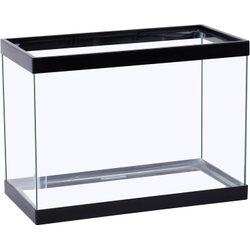
- Tank, minimum 5 gallons. Smaller means faster ammonia accumulation, less thermal stability, less room for biological filtration to establish. No bowl, no vase, no “betta cube” under 5 gallons. Shape matters too: a rectangular footprint with a lid beats a rounded or bowl shape, which loses surface area, and beats a very tall tank, which makes surface breathing harder. Products marketed specifically as “betta tanks” are frequently undersized or badly shaped for exactly that reason; a standard rectangular tank from a general-purpose aquarium brand is the safer bet. See best 5-gallon tanks for actual picks.
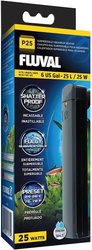
- Heater. Bettas are tropical. Room temperature in a heated house is not enough. A 25–50 watt preset heater matched to tank volume is the standard. See best heaters.
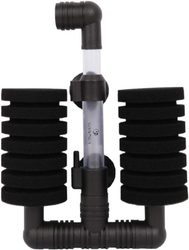
- Gentle filter. Bettas need biological filtration but not current. Sponge filters are the standard. HOB filters need flow baffles. See best filters.
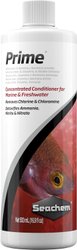
- Water conditioner. Tap water contains chlorine or chloramine that kills the biological filter and stresses fish. Seachem Prime at standard dose neutralizes both.
A functional 5-gallon setup covering all four runs $50 to $100 total: tank ($20–40), heater ($15–25), sponge filter plus air pump ($10–20), thermometer ($5), and water conditioner ($8–12). After setup, ongoing cost is small, roughly $5 to $10 a month for conditioner and food.
The rest (substrate, plants, decorations, thermometer, light) matters, but nothing on that list kills a fish in 48 hours. The four above can.
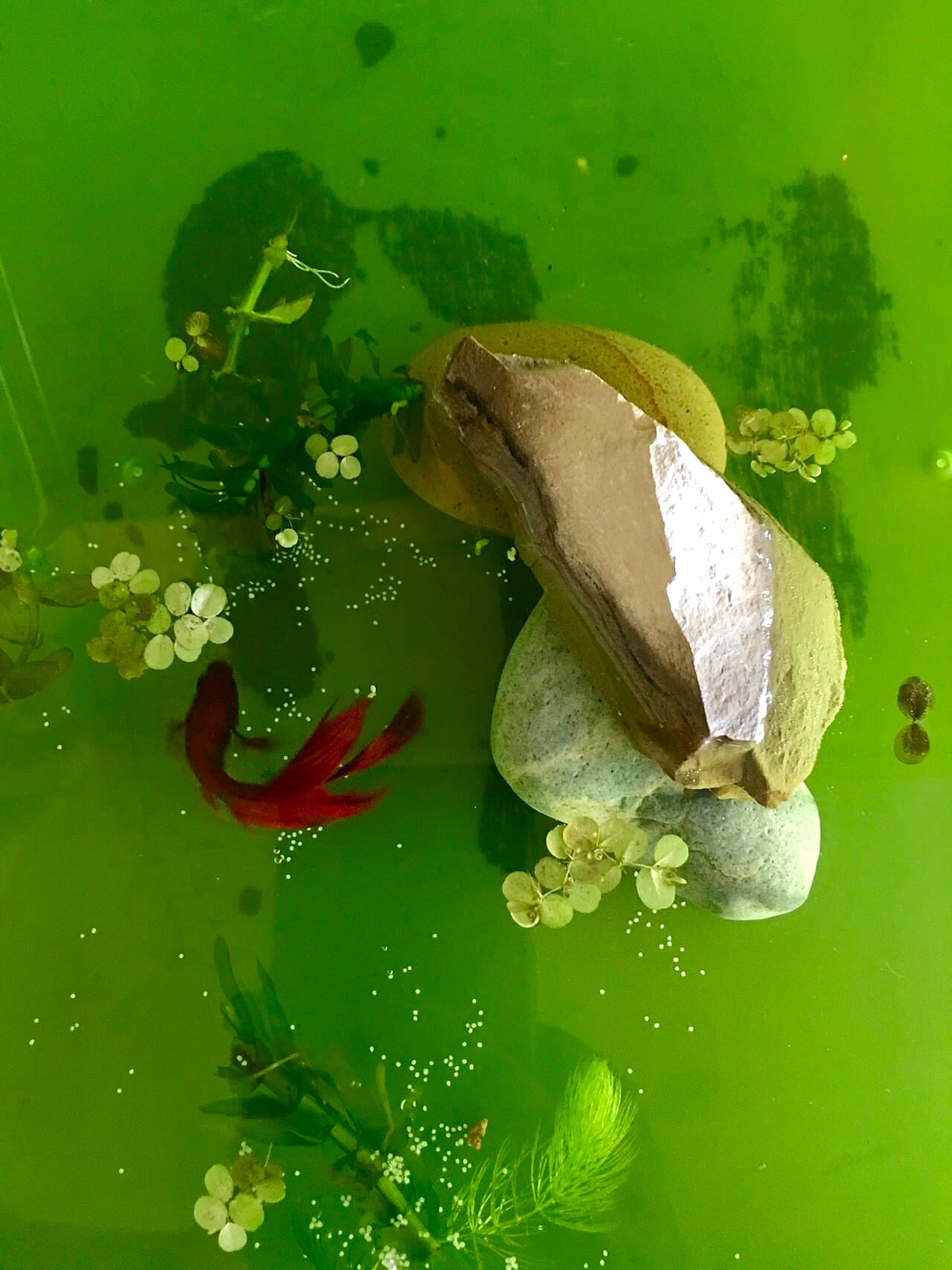
Of that “rest” category, live plants are the best place to invest first. They’re not required, but they absorb nitrate, give the fish cover, and measurably reduce stress behavior. Java fern, anubias, and floating species like frogbit or water sprite are the most forgiving choices for a low-light, no-CO2 5-gallon setup. If live plants aren’t for you, silk artificial plants are a reasonable substitute; skip plastic ones with sharp-edged leaves, they tear fins.
Adequate filtration and stable temperature are not optional. The Merck Veterinary Manual aquarium-fish reference documents the direct connection between poor environmental control and infection susceptibility. A 2022 peer-reviewed study on Betta splendens husbandry (PMC9334006) quantifies how tank volume, temperature stability, and filtration quality affect fish longevity.
What this guide covers
Nine buyer’s guides, one per major equipment or sourcing category:
- Best 5-gallon betta tanks: four builds that meet the minimum floor, with honest price-to-value comparison
- Best heaters: preset vs. adjustable, how to size by tank volume, and which cheap ones fail stuck-on
- Water conditioners, which bottle to buy and why chloramine changes the answer.
- Best filters: why sponge filters dominate, and how to modify an HOB if you prefer one
- Best betta pellets: four staple foods with protein percentages and first-ingredient analysis
- Best live plants: five low-light species that thrive without CO2 in a 5-gallon setup
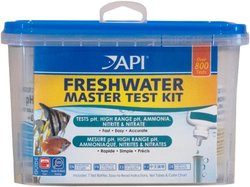
- Best water test kits: the API Master Kit is the standard, here’s why liquid beats strips
- Best medications: six to stock before you need them, because disease moves faster than shipping
- Where to buy show-quality bettas: named breeders, AquaBid, IBC, and what pet-store fish actually cost you
- What not to buy: the products that look appropriate and aren’t, with honest failure modes listed
What not to buy
The what not to buy page covers the products that appear prominently in pet stores and cause consistent harm: undersized tanks marketed as “betta habitats,” peace-lily vases, unheated “betta bowls,” and several other products with documented failure modes.
If you are setting up a first tank and someone suggests a product not on the buy list, check the avoid list before purchasing.
The same buy-once logic applies to the fish. A pet-store betta in a cup has usually already been stressed by cold, cramped, low-flow holding conditions and may be carrying disease that only shows up weeks later. A named breeder with documented lineage and health history, shipped in an insulated box with oxygen, is the standard recommendation for anyone who wants a healthy start. See where to buy show-quality bettas.