Buy medications before you need them. Ich progresses through its life cycle in 4–7 days at 78°F. Velvet can kill in 7–14 days untreated. Shipping takes 2–7 days. If you wait until the fish shows symptoms to order medication, you may be treating an advanced case instead of an early one.
This page has affiliate links. See our affiliate disclosure.
The six medications below cover the disease scenarios that kill bettas most often. Bacterial disease (fin rot, septicemia, popeye) and protozoan parasites (ich, velvet) account for the majority of captive betta deaths according to the Merck Veterinary Manual on bacterial diseases of fish. Nutritional deficiencies that suppress immune response are a second-tier cause documented in PMC9334006, which is why Prime and a high-protein diet belong in this toolkit alongside antibiotics.
Treat in a dedicated hospital tank, not the display. Medicating a filtered, planted, or invertebrate-stocked main tank kills the biological filtration, harms or kills shrimp and snails (copper-based treatments kill shrimp; kanamycin kills snails), and makes it far harder to pull medication back out if a fish reacts badly. A bare 2.5–5 gallon tank with a pre-seeded sponge filter, set up before you need it, is as much a part of a betta medicine cabinet as the bottles themselves. See quarantine tank setup for how to build one.
The core six
| Medication | Treats | Form | Notes |
|---|---|---|---|
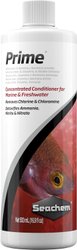
| Seachem Prime | Ammonia detox, chloramine removal | Liquid | Buy this first; use at every water change |
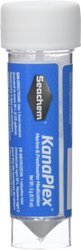
| Seachem KanaPlex | Gram-negative bacterial disease | Powder | Fin rot (moderate/severe), popeye, septicemia |
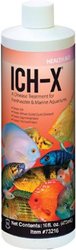
| Hikari Ich-X | Ich, velvet | Liquid | First-choice for both protozoan parasites |
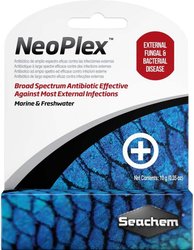
| Seachem NeoPlex | External bacterial infections (neomycin) | Powder | Severe fin rot, columnaris; combine with KanaPlex for worst cases |
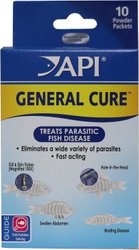
| API General Cure | Internal parasites, HITH, hole-in-head | Powder packets | Contains metronidazole + praziquantel |
| Epsom salt (Magnesium sulfate) | Osmotic support | Granules | Popeye, constipation, bloat; not a cure alone |
1. Seachem Prime
The water conditioner that covers more emergencies than anything in this list.
Prime dechlorinates and dechloramines tap water for use in water changes. Beyond that: it detoxifies ammonia, nitrite, and nitrate for 24–48 hours, making them temporarily non-toxic to fish while the nitrogen cycle processes them. In any water quality emergency (new tank cycling, ammonia spike after medication crashed the cycle, overdue water change), Prime is the first response.
Dose: 1 cap (5 ml) per 50 US gallons for standard use. Double dose (2 caps per 50 gallons) for emergency detox. Safe at 5× normal dose.
Check price on Amazon Affiliate link. See our disclosure.
2. Seachem KanaPlex (kanamycin)
The first-line antibiotic for gram-negative bacterial disease in bettas.
Covers: fin rot (moderate and severe), popeye (exophthalmia), septicemia (red streaks), and most bacterial infections caused by Aeromonas and Pseudomonas, the two most common opportunistic pathogens in betta tanks.
Can be dosed in tank water or mixed with food (using Seachem Focus as a binder). Food dosing is more effective for systemic infections because the antibiotic is delivered directly to the bloodstream rather than absorbed through the gills and skin.
Does not affect biological filtration significantly at therapeutic doses. That’s one of KanaPlex’s advantages over some other antibiotics.
Check price on Amazon Affiliate link. See our disclosure.
3. Hikari Ich-X
The current standard of care for ich and velvet.
Active ingredients: malachite green and formalin at therapeutic concentrations. Effective against Ichthyophthirius multifiliis (ich) and Piscinoodinium pillulare (velvet). Also labeled for other external protozoan parasites.
Dose: 5 ml per 10 gallons, daily, with a 25% water change before each redose. Run for 10–14 days minimum. Ich and velvet have life cycles that must complete before the parasite is eliminated.
For velvet specifically: combine Ich-X with complete darkness (cover the tank) for the duration of treatment to block the parasite’s photosynthesis.
Check price on Amazon Affiliate link. See our disclosure.
4. Seachem NeoPlex (neomycin)
The second-tier bacterial antibiotic for cases that require more firepower than KanaPlex alone, or that show columnaris (which responds to the neomycin–kanamycin dual-antibiotic approach).
Seachem NeoPlex (neomycin) has minimal impact on biological filtration at therapeutic doses, but treat in a hospital tank for accurate dosing and to protect invertebrates.
The most effective protocol for severe fin rot or septicemia is KanaPlex + NeoPlex combined, hitting gram-negative bacteria with two different mechanisms simultaneously. See fin rot for the dosing protocol.
Check price on Amazon Affiliate link. See our disclosure.
5. API General Cure (metronidazole + praziquantel)
Covers internal parasites and hole-in-the-head disease.
Metronidazole targets flagellate protozoa (Hexamita, causing hole-in-head disease) and some anaerobic bacteria. Praziquantel covers trematodes (flukes) and cestodes. The combination makes API General Cure a useful catch-all for internal parasite presentations.
Also effective for betta constipation when dietary modification alone is insufficient. Metronidazole has limited use here but the praziquantel addresses any parasitic component.
Check price on Amazon Affiliate link. See our disclosure.
6. Epsom salt (magnesium sulfate)
Not a disease treatment on its own, but an essential osmotic support tool.
Popeye: 1 teaspoon per gallon in the hospital tank reduces fluid pressure behind the affected eye while antibiotics address the infection. See popeye treatment.
Constipation and bloat: 1/4 teaspoon per gallon acts as a mild laxative by drawing fluid into the intestinal tract. Use after a 2–3 day fast, alongside daphnia feeding.
Standard pharmacy Epsom salt (unscented, no additives) is identical to aquarium-branded versions at 1/10th the price. Buy it at a pharmacy.
What to avoid
Melafix / Bettafix: marketed as mild treatments for fin damage and bacterial disease. Both are tea tree oil (Melaleuca) at concentrations too low to do the job, and the tea tree oil itself irritates the labyrinth organ bettas and other anabantoids use to breathe surface air. Ineffective and actively harmful. Do not use.
Aquarium salt as a treatment for everything: aquarium salt (sodium chloride) has limited legitimate use as an adjunct in mild fin rot treatment (1 tbsp per 5 gallons, 7–10 days). It does not treat ich, velvet, bacterial infection, or internal parasites. It is not a substitute for any of the medications above.
Broad-spectrum “cure-all” products: medications marketed to treat “all fish diseases” typically contain inadequate concentrations of active ingredients and encourage guessing a diagnosis rather than confirming it. Treat specifically.
Expired medications: check dates. Degraded malachite green (in Ich-X) breaks down to less effective compounds. Degraded neomycin (NeoPlex) loses potency. Date your bottles when you open them.
Storage
Keep all medications in a cool, dark location, a cabinet away from the tank (heat and light degrade liquid medications faster). Powder medications (KanaPlex, Seachem NeoPlex) last longer than liquids after opening: figure 1–2 years for an opened liquid medication stored properly, and 2–3 years for KanaPlex powder sealed, dropping to about a year once opened. Epsom salt lasts indefinitely if kept dry. Check the expiration date before treating regardless of storage time; degraded medication can be ineffective or, with some breakdown products, actively harmful.
A basic disease kit in a shoebox under the tank stand takes 30 seconds to access when you need it.