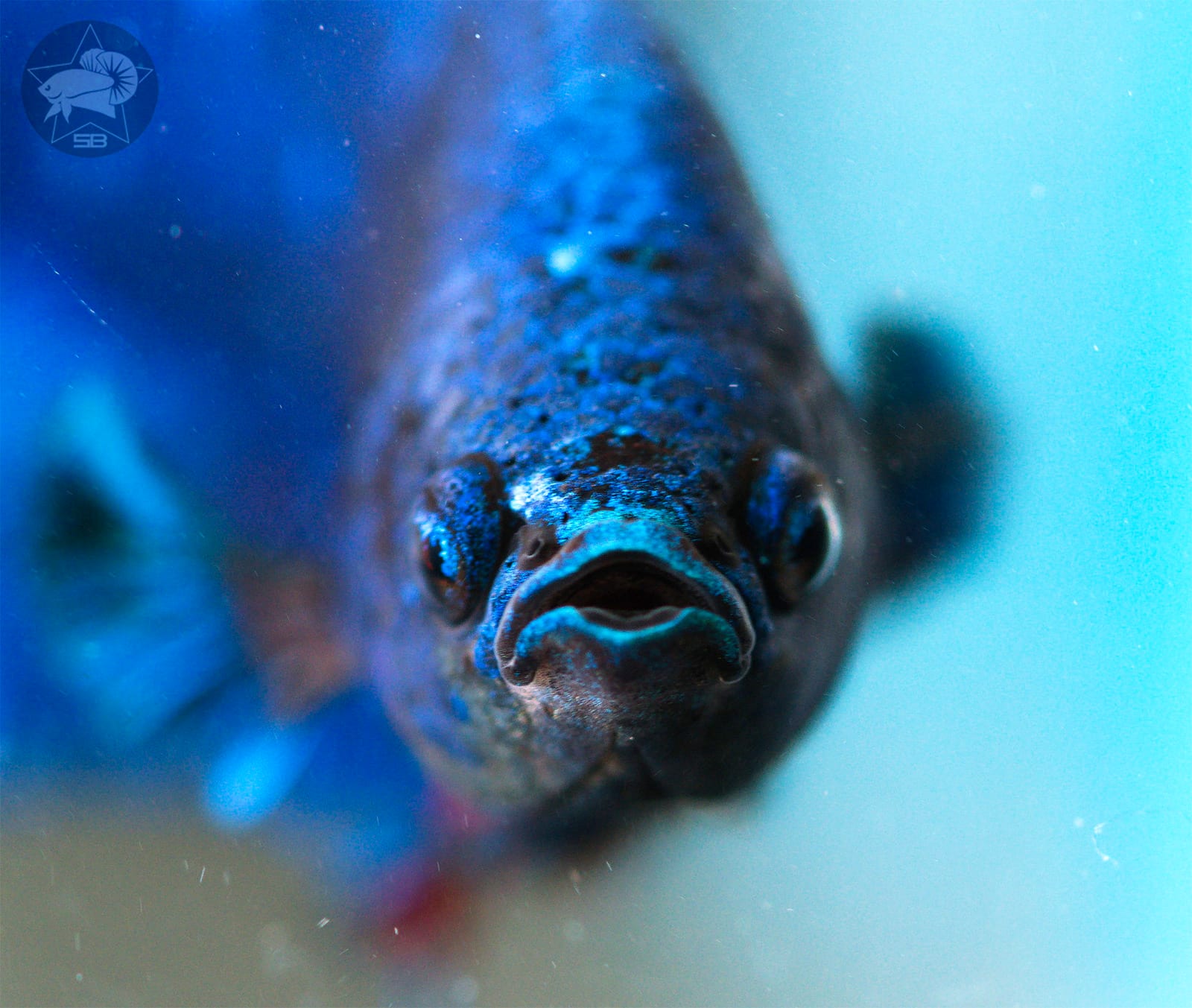
Giant bettas are large. That is the entire distinction. Same species, same behavior, same disease susceptibilities, same care requirements, with every parameter scaled up by the body size. They cross freely with standard bettas and produce fertile offspring, one more confirmation that this isn’t a separate species, just a size-selected line of B. splendens. Giants regularly reach 8 to 12 cm in standard length, with the largest documented hobbyist specimens exceeding 14 cm, against 5 to 7 cm for a standard betta.
What “giant” means genetically
The giant trait in Betta splendens is recessive and polygenic: multiple loci, each with a recessive allele that increases growth. A fish that is homozygous for these alleles reaches giant size. A fish heterozygous at some of these loci may be slightly larger than standard without reaching the full giant phenotype (sometimes called “super male” or “over-halfmoon” in size references, though this terminology is inconsistent).
The genetics have not been precisely mapped to specific identified genes in peer-reviewed literature as of this writing. The inheritance pattern observed by breeders is consistent with recessive polygenic control of the growth hormone axis, likely affecting GH receptor signaling or IGF-1 pathway regulation, similar to size genetics in other selectively bred fish species.
Breeding giants: Crossing two giants produces giants (both parents homozygous for the alleles). Crossing a giant with a standard betta produces offspring that are larger than standard but not fully giant (the heterozygous state). Selective breeding from these offspring over multiple generations, selecting the largest individuals each generation, eventually produces a line that breeds true for giant size.
Origin: where the giant lines came from
The giant phenotype in modern hobbyist stock traces primarily to Southeast Asian breeding programs, most prominently those in Thailand. The breeding line colloquially called the “Idoo giant” or “Brunei giant” is one of the founding populations documented in IBC-associated records from the early 2000s. Brunei breeders working with naturally occurring large-bodied individuals from the local B. splendens population selectively bred for size over multiple generations before exporting breeding pairs to Thai and European hobbyists. The Thai breeders, already experienced with plakat line selection, accelerated the process by applying the same rigor used in fighting-line and show-line work. By the mid-2000s, captive-bred giants reaching 10 to 12 cm were achievable in controlled spawns rather than occasional large outliers. The IBC established formal size criteria (IBC Exhibition Standards) to distinguish true giants from large-standard bettas in competition classes, providing a measurable threshold that guided subsequent breeding goals. The 2022 genetic-architecture paper (PubMed 36129976) noted inbreeding signatures in selected show strains; giant lines are no exception, making outcrossing to non-giant B. splendens periodically important.
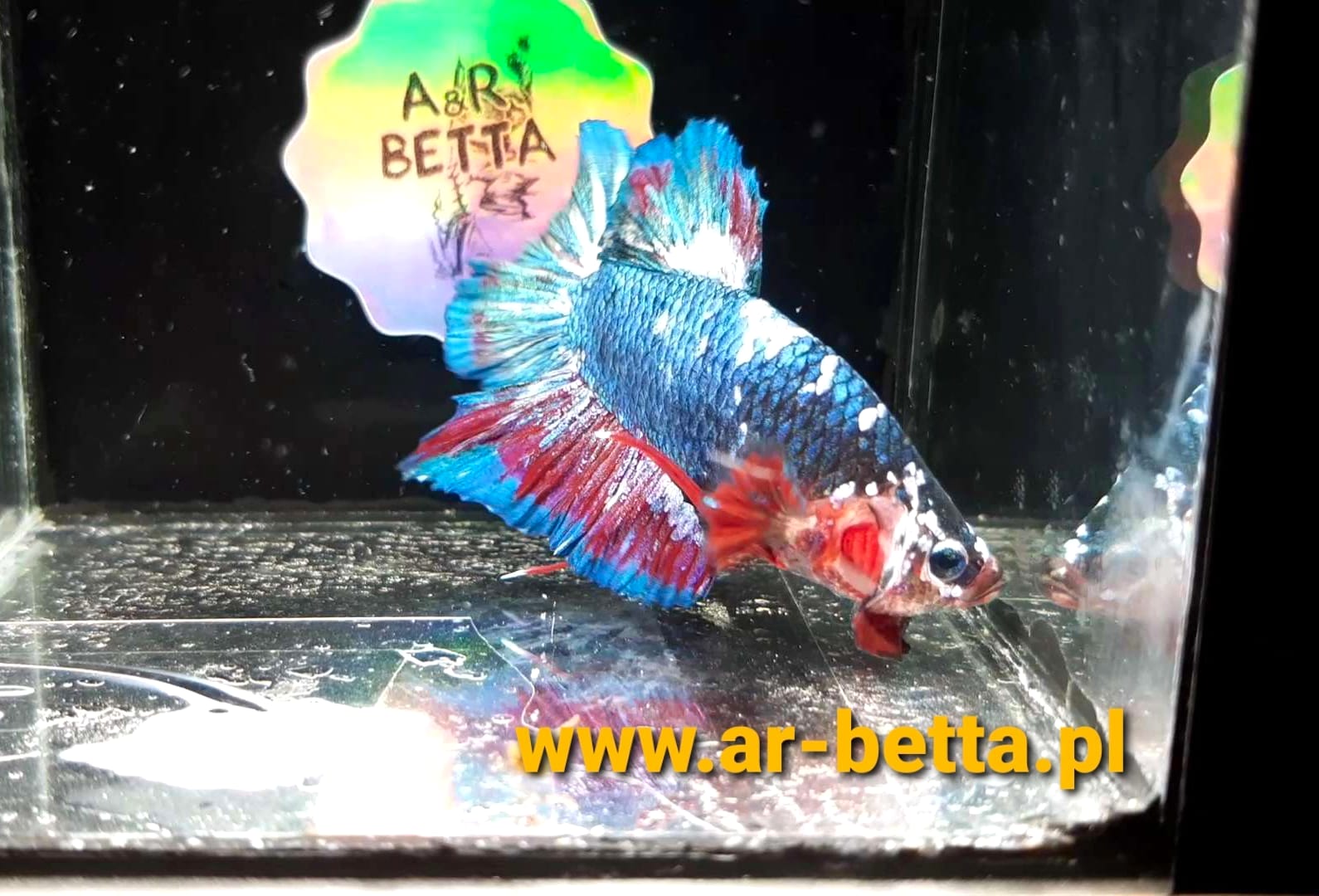
Every fin type exists in giant form
Giant bettas have been produced across every major IBC fin type:
- Giant halfmoon (GHM)
- Giant plakat (GPK)
- Giant halfmoon plakat (GHMPK)
- Giant crowntail (GCT)
- Giant double-tail (GDT)
The fin-form genetics are independent of the size genetics. A giant halfmoon carries both the recessive giant alleles and the halfmoon spread selection: they are separate traits crossed together. See fin types for the full fin-form classification.
Care: what changes
Tank size
Minimum 10 gallons (38 liters). A 12-cm betta in a 5-gallon tank cannot move freely. The reduced activity from a cramped environment produces worse fin condition, higher stress, and shorter lifespan.
For giant bettas with elaborate long fins (giant halfmoon), 15–20 gallons is more appropriate. The fin surface area of a giant halfmoon is substantial: more drag, more susceptibility to fin deterioration in tight spaces.
Water changes
A giant betta produces more ammonia than a standard betta, as body mass scales with metabolic waste output. In a 10-gallon tank with a giant betta, water changes may need to be more frequent than the standard weekly 25% to keep nitrate below 20 ppm. Test and adjust based on your readings.
Filter sizing
Size the filter to the waste load, not just the tank volume. A 10-gallon with a giant betta benefits from a double sponge filter or a larger-capacity HOB filter than the minimum recommended for a 10-gallon community tank.
Feeding
Giant bettas eat more. The same pellet-portion guidance for standard bettas (2–4 pellets per feeding) is undersized for a 12-cm fish. Feed to the fish’s size. A larger fish can consume 6–8 pellets per feeding without overfeeding, provided the fast day is maintained and the fish is active. New Life Spectrum Betta Formula (affiliate) works well for giants: high protein density means fewer pellets for equivalent nutrition versus filler-heavy alternatives.
Care: what stays the same
- Temperature: Same 76–82°F range
- Filtration flow: Still gentle. Giant bettas are still bettas, still affected by strong current.
- Aggression: Same male-versus-male dynamic; still cannot cohabit adult males. The larger body does more damage in a confrontation, though, so treat cohabitation risk as equal or worse, never lower, than with standard bettas.
- Disease susceptibility: No increased or decreased disease resistance from size alone
- Fin types and welfare notes: Rosetail giants still carry the excess fin welfare burden that rosetail standard bettas carry, amplified by the larger body and greater fin mass.
The “King betta” marketing problem
The term “King betta” is used by mass-market pet chains for fish that range from moderately large standard bettas to actual small giants. A “King betta” at a pet store may be 7 cm (a large standard) rather than 12 cm. The term is marketing, not a biological classification.
The IBC uses “Giant” as the classification term with specific size criteria. If you want a true giant, source from a breeder who works with giant lines and can document the size of parent fish.