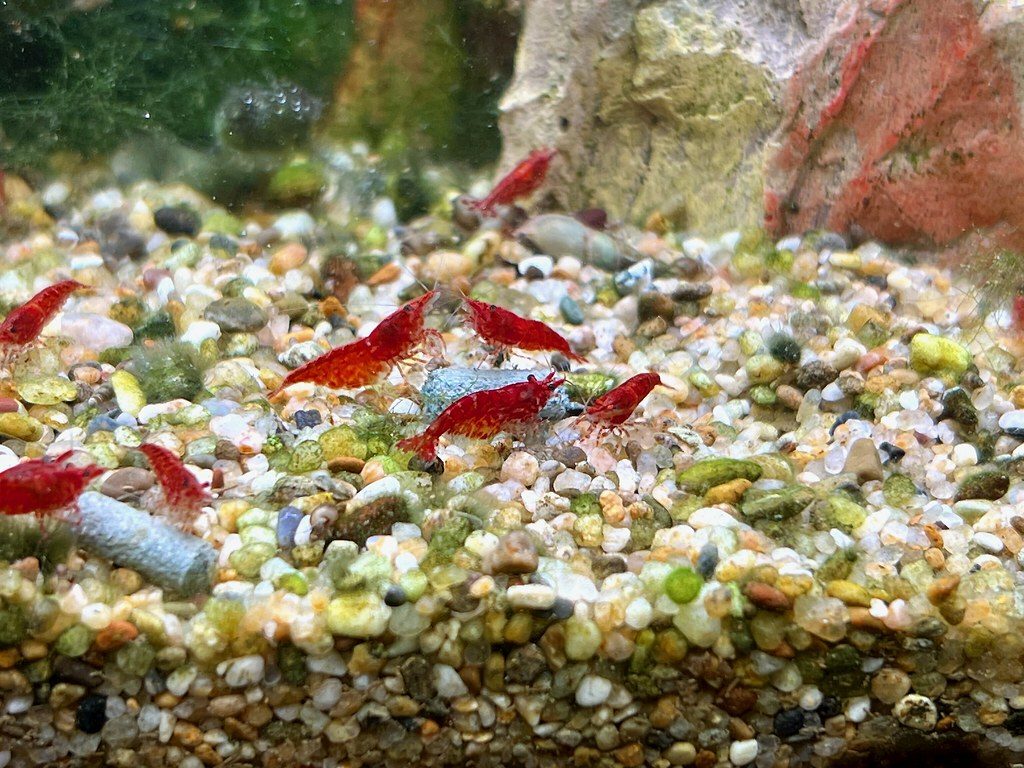
Amano and ghost shrimp usually survive an adult betta in a heavily planted tank. Cherry shrimp survive as a colony rather than as individuals, because the betta crops the young as they appear. Nothing survives copper. Ten gallons, dense planting, and a hospital tank for any medication are the conditions that make the whole thing work.
This page has affiliate links. As an Amazon Associate we earn from qualifying purchases. See our affiliate disclosure.
The tank mates page covers fish. Invertebrates are a different question with a different failure mode, because a fish that loses to a betta gets chased and nipped, while a shrimp that loses gets eaten and leaves no evidence at all.
Will a betta eat shrimp?
Some will, some won’t, and you cannot tell which you have until you try. That is the honest answer and no amount of research replaces it.
What you can do is stack the odds. A betta hunts what moves in front of him at a size he can swallow. So the three things that decide the outcome are the shrimp’s adult size, how much cover there is between the shrimp and the fish, and the individual temperament of that particular betta. Only the first two are under your control.
The reliable rule is unglamorous: if it fits in the mouth, it is food. An adult Amano at 3 cm does not fit. A newly released cherry shrimplet at 2 mm fits easily, and it is the same colour as a pellet.
Two warnings before the table. First, temperament genuinely varies, which the behaviour page covers in more detail. A fish that ignored his shrimp for a year can start hunting them the week you rescape the tank, because you removed the cover that was making the shrimp invisible. Second, keep a spare cycled tank running. If the betta turns out to be a hunter, the plan has to be somewhere else for someone to live, not hope.
Which shrimp actually survive a betta?
Adult size does most of the work, and the species also differ in whether they can replace their own losses. Both columns matter, so both are here.
| Species | Adult size | Survives an adult betta | Breeds in a freshwater tank | Parameters vs a betta tank |
|---|---|---|---|---|
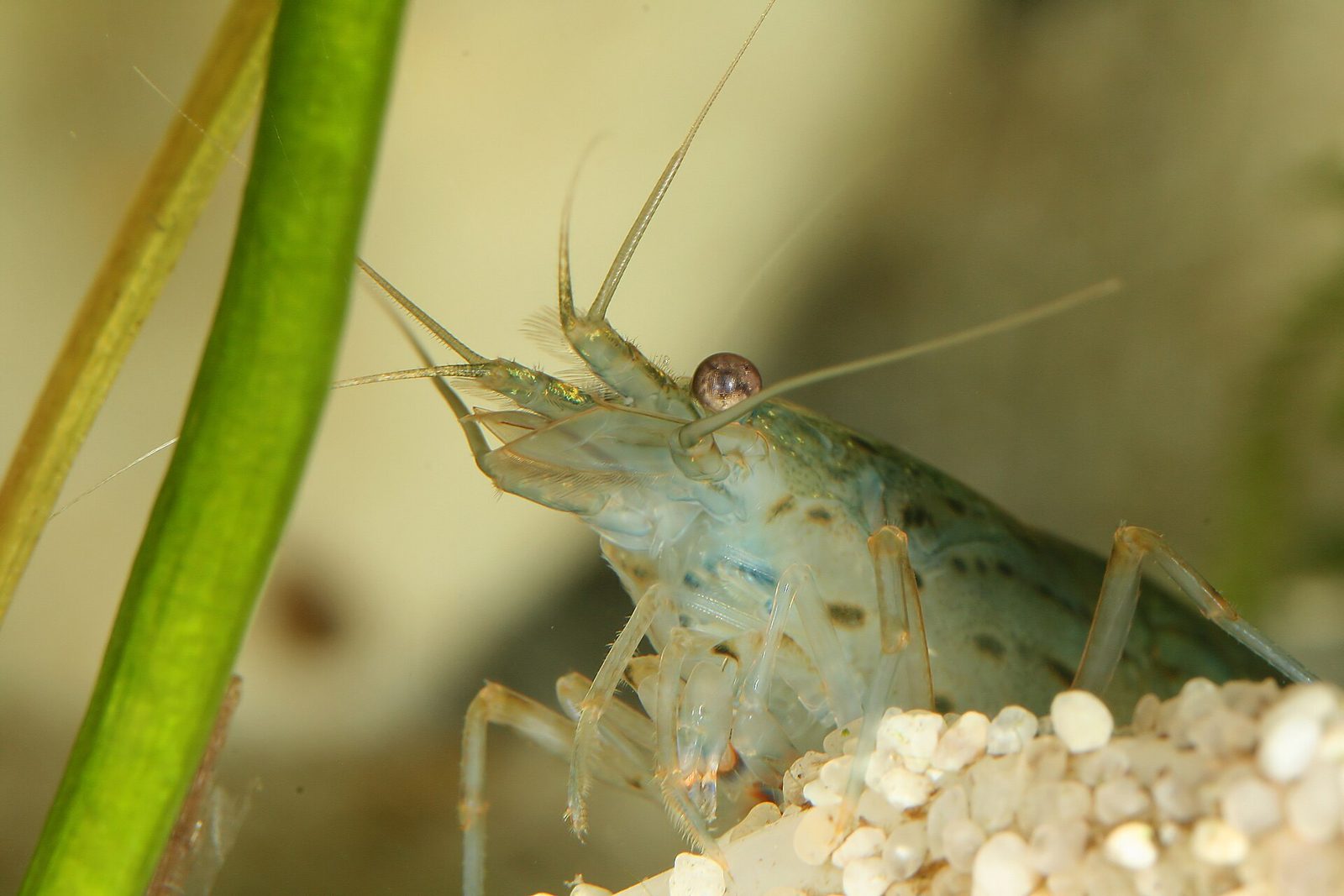
| Amano (Caridina multidentata) | 25 to 35 mm | Usually, in a planted tank | No, larvae need saltwater | Good overlap |
| Ghost / glass (Palaemonetes paludosus) | Up to about 50 mm | Usually, and it may hunt back | Rarely, larvae need brackish | Good overlap |
| Cherry and its colour morphs (Neocaridina davidi) | 25 to 30 mm | Adults usually, young rarely | Yes, readily | Good overlap |
| Crystal red and bee shrimp (Caridina cf. cantonensis) | 25 to 30 mm | Adults usually | Yes, but demanding | Poor, wants cooler and softer water |
| Bamboo / vampire (Atyopsis moluccensis) | Up to 100 mm | Yes, too large to bother | No, larvae need saltwater | Needs flow a betta dislikes |
Sizes for C. multidentata are the 25 to 35 mm range recorded in the species account; the rest are the sizes the trade actually ships at.
Three notes the table cannot hold.
Amano is the default recommendation and deserves it. At 3 cm with a hard shell and a fast reverse, an adult reads to a betta as an inconvenience rather than a meal. They are also the best algae grazers in the hobby by a wide margin.
Ghost shrimp are a mixed bag by identification, not by species. The genuine Palaemonetes is peaceful and cheap. The problem is that the feeder tanks these come from routinely include larger Macrobrachium species sold under the same label, and a Macrobrachium will eventually take a nip at a sleeping fish. Look at the claws before you buy. If the front pair are noticeably long and heavy rather than tiny and tweezer-like, put it back.
Bee shrimp are the wrong animal for this tank, and the reason is water, not the betta. That is the next section but one.
Why a cherry colony outlives any single cherry shrimp
This is the distinction that decides whether you are happy with the result, and almost nobody makes it before buying.
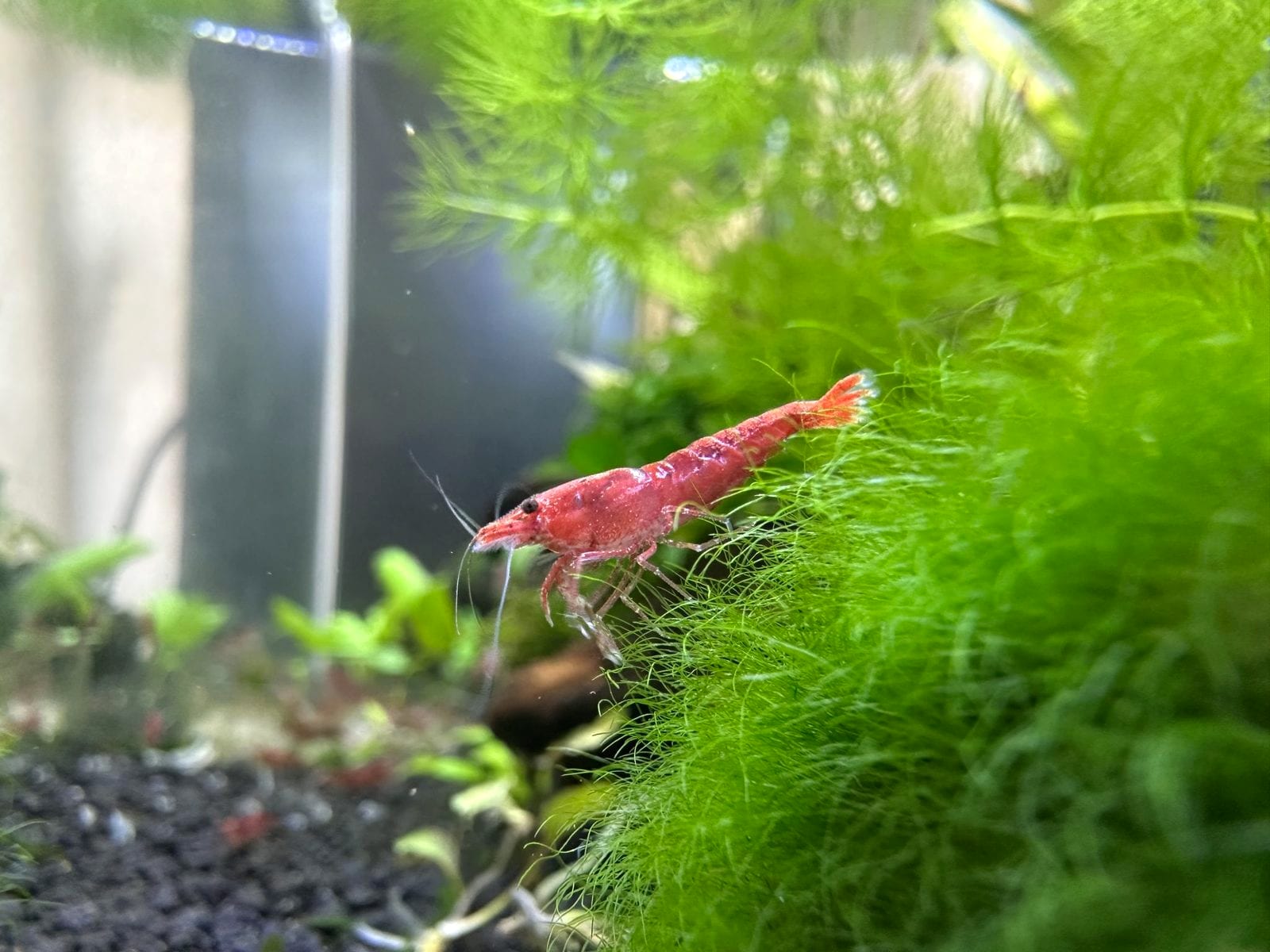
Neocaridina davidi breeds in ordinary freshwater. The female carries eggs under her abdomen for about three to four weeks, then releases miniature shrimp that skip a larval stage entirely and start grazing at about 2 mm. Those 2 mm shrimp are exactly what a betta eats. So in a betta tank the population does not grow the way it does in a species tank. It reaches an equilibrium: adults persist behind the plants, a fraction of each brood survives to reach a size the fish ignores, and the colony holds its number instead of exploding.
That equilibrium is a real, working outcome. It is just not the outcome people picture, which is usually a tank of a hundred shrimp.
Amano shrimp cannot do this at all. They are amphidromous: hatching happens in freshwater, then the larvae drift to saltwater and develop there before returning upstream as juveniles. In a home aquarium the female will berry up and release larvae, and every one of them dies within days. So an Amano population only ever declines. Whatever you buy is what you have, minus attrition, and replacement means buying more.
The practical consequence is a buying decision, not a care decision:
- Want algae control and do not care about breeding? Buy 5 or 6 Amanos, expect to top up every couple of years, and accept that this line item never stops.
- Want a self-sustaining population? Buy 10 or more cherries, plant the tank properly, and judge success by whether the count holds rather than by whether individual shrimp go missing. They will.
- Want both? Run both. They ignore each other completely.
What copper does, and where it comes from
This is the most important paragraph on the page, so it gets stated flatly: a single dose of a copper-based medication will kill every shrimp and every snail in the tank, and the tank may stay lethal for a month afterwards.
The manufacturers say so themselves, in their own words, which is worth more than any hobby forum consensus:
- Seachem’s Cupramine instructs you to “remove all invertebrates” because they are “extremely sensitive to copper and will not tolerate treatment with a copper-based medication.” Its freshwater therapeutic level is 0.25 mg/L.
- Fritz’s Coppersafe states that “copper treatments are not safe for invertebrates and may be harmful to plants,” and advertises that it “maintains therapeutic level up to 30 days.”
Read those two together. The second one is the part people miss. Chelated copper is engineered to stay active, which is a feature when you are treating a parasite with a long life cycle and a catastrophe when you later decide you want shrimp in that tank. A tank dosed with a long-life chelated copper product is not shrimp-ready the following weekend.
Snails are molluscs, and copper is used deliberately as a molluscicide, so the same rule covers your nerites with no exceptions and no reduced dose.
Where copper actually shows up, ranked by how much it should worry you:
- Fish medications. Ich and velvet treatments especially. This is the real risk and it accounts for most wiped colonies. Check the active ingredient on every bottle before it goes near the tank, and see best medications for what each product contains.
- Snail-killing products. Sold to remove pest snails, and they do, along with the snails and shrimp you paid for.
- Old copper household plumbing, on a first draw of the morning after water has sat in the pipes overnight. Run the tap for thirty seconds before filling a bucket.
- Plant fertiliser, and this one is mostly a myth at label dose. Seachem’s own guaranteed analysis for Flourish lists copper at 0.0001 percent, and Seachem states plainly that Flourish is safe to use with shrimp. The trace copper in a comprehensive fertiliser is there because plants need it. Dose to the label and it is a non-issue. Eyeball a triple dose into a 5-gallon and it stops being one.
The rule that follows from all of this is simple and it is the same rule the quarantine tank page already argues for on other grounds: medicate the fish, never the display tank. A bare 5-gallon with a heater and a seeded sponge is cheaper than replacing a colony, and it also means you can dose the right amount without worrying about what else is in the water.
Check Seachem Flourish on Amazon Affiliate link. See our disclosure.
Do the water parameters actually conflict?
For Neocaridina, far less than the hobby claims. For Caridina, completely.
The received wisdom is that shrimp want it cool and bettas want it warm, so one of them has to compromise. Run that against the actual research and it does not survive. A 2015 study in PLOS ONE reared red cherry shrimp at 24, 28 and 32 degrees C and concluded that the optimum temperature for juveniles to grow, mature and breed is around 28 C, with the highest proportion of egg-carrying females at that temperature. The failure point was 32 C, where every female that matured and mated lost her eggs.
Twenty-eight degrees is 82 F. That sits at the top of the range on the temperature page and inside the 22 to 30 C that Seriously Fish gives for B. splendens. There is no conflict to manage. A stable 25 to 27 C suits both animals, and the reason to stay off 30 C has nothing to do with the shrimp.
Hardness is where the two genera part company:
| Betta tank, typical | Neocaridina | Caridina cf. cantonensis | |
|---|---|---|---|
| Temperature | 24 to 27 C | 24 to 28 C | 20 to 24 C |
| pH | 6.0 to 8.0 | 6.8 to 8.0 | 5.8 to 6.8 |
| GH | 3 to 12 | 6 to 12 | 4 to 6 |
| KH | 1 to 8 | 3 to 8 | 0 to 2 |
Neocaridina overlaps a betta tank on every row. Caridina wants cooler, softer, more acidic water than a betta tank normally runs, and hobbyists who keep them well are usually running remineralised RO water to a fixed recipe. You can build that tank. You should not build it around a betta.
One parameter deserves emphasis on its own. GH is not optional for shrimp the way it is for fish. Shrimp moult, and a moult needs calcium and magnesium out of the water column. A soft-water tank that a betta is perfectly comfortable in will produce failed moults, where the shrimp gets stuck halfway out of the old shell and dies. If you keep shrimp you need a GH reading, which the standard freshwater master kit does not give you.
Check the API GH and KH test kit on Amazon Affiliate link. See our disclosure.
How much cover does the tank actually need?
More than you think, and of a specific kind.
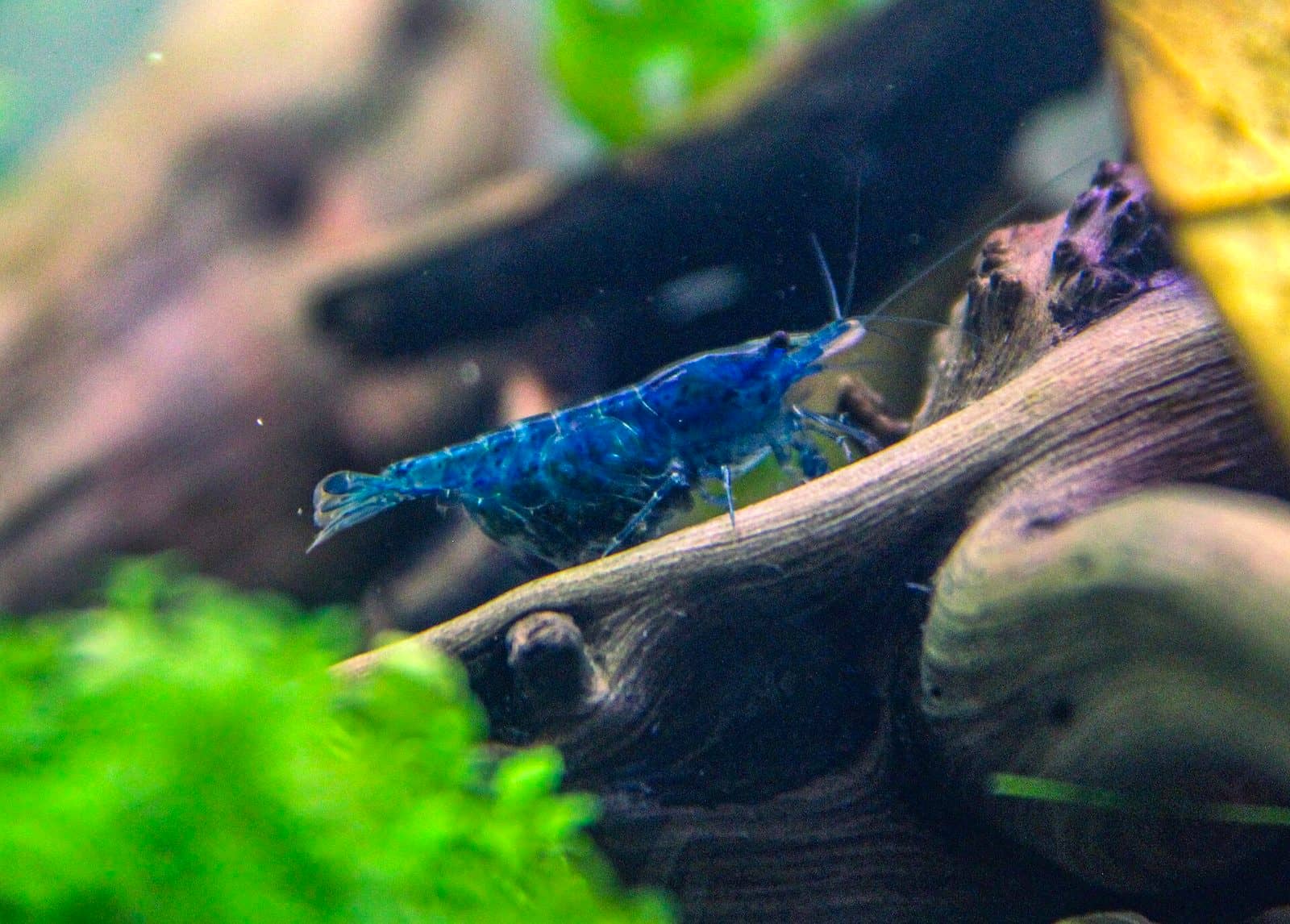
Open water with a few plastic plants is not cover. What shrimp need is complexity at a scale smaller than the fish: fine-leaved and mossy surfaces with gaps a 2 mm shrimplet fits into and a betta’s head does not. That is a different requirement from the tall stems and floating cover a betta wants for himself, and a good shrimp tank has both.
The materials that earn their place:
- Moss. Java moss, Christmas moss, any of them. This is the single highest-value item in the tank. A dense mat is a nursery, a grazing surface and a hiding place at once, and nothing else does all three.
- Cholla wood. Hollow tubes of dead cholla cactus. They grow biofilm across the whole surface, they are soft enough for shrimp to rasp at, and the hollow centre is a refuge sized for shrimp.
- Indian almond leaves. They break down into biofilm over weeks and shrimp graze the decomposing tissue directly. There is more on what else they do in Indian almond leaves.
- Fine-leaved stems. Hornwort, guppy grass, water sprite. Cheap, fast, and they turn open water into a thicket.
What that adds up to is roughly the back half of the tank being unswimmable for a fish. Species selection for the rest is in best live plants.
Check cholla wood tubes on Amazon Affiliate link. See our disclosure.
Check Indian almond leaves on Amazon Affiliate link. See our disclosure.
Check java moss portions on Amazon Affiliate link. See our disclosure.
Two pieces of equipment that are not optional
A filter that cannot eat the shrimp. Any powered intake in a shrimp tank will pull in shrimplets and hold them against the strainer. An air-driven sponge filter has no intake to speak of and is already the right filter for a betta anyway, for the flow reasons covered in best filters. If you insist on a hang-on-back, put a coarse foam sleeve over the intake tube and accept that you now have a part to clean.
A biofilm supplement, at least early on. A new tank has almost nothing on its surfaces for shrimp to graze, and the first six weeks are when a fresh colony fails. Powdered biofilm cultures fix that gap. Once the tank is mature you can stop.
Check the NEWKOSEA double sponge filter on Amazon Affiliate link. See our disclosure.
Check AQUANEAT pre-filter sponges on Amazon Affiliate link. See our disclosure.
Check GlasGarten Bacter AE on Amazon Affiliate link. See our disclosure.
How do you acclimate shrimp?
Slowly, and by a different method than you use for the fish.
Shrimp are far more sensitive to a sudden change in TDS and hardness than a betta is, and the standard float-the-bag routine on the acclimation page is too fast for them. Drip acclimate instead. Float the sealed bag for fifteen minutes to match temperature, then empty bag and shrimp into a small container, run a siphon of tank water into it through a knotted airline at two or three drips a second, and let it go until the volume has roughly tripled. Two hours is normal. Then net the shrimp across and discard the shipping water rather than pouring it in.
Do not skip the last part. Shipping water is where any copper, any medication and any pathogen from the seller’s system is sitting.
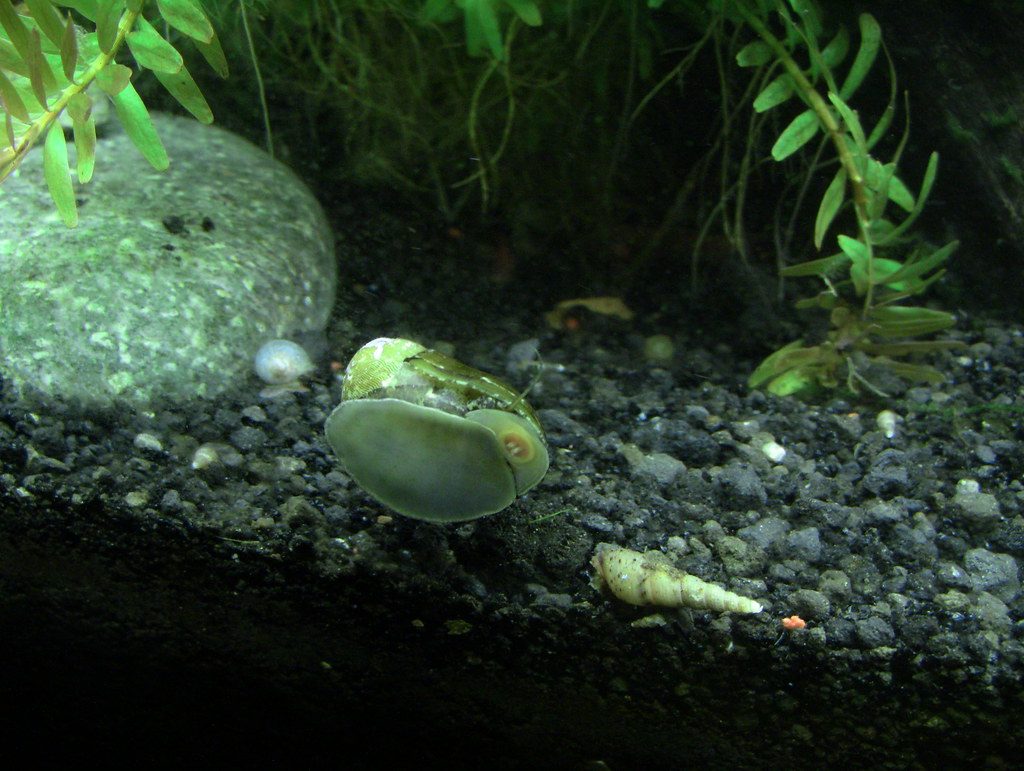
What about snails?
Snails are easier than shrimp on every axis except reproduction, where they split into two very different groups.
Nerites (Neritina and Vittina species) are the ones to buy. They graze algae hard, they stay put, they reach a size no betta can do anything about, and critically they cannot reproduce in freshwater. The female lays hard white eggs anyway, out of instinct, and the larvae need brackish water to develop, so nothing hatches. The eggs are the one real complaint: they are sesame-seed sized, cemented to hardscape and glass, and they do not come off easily.
Mystery snails (Pomacea bridgesii) also work, and unlike nerites they will breed in a freshwater tank. They lay above the waterline in a pink clutch you can simply remove, so the population is controllable if you pay attention. A betta occasionally picks at the antennae of a mystery snail, which is worth watching for in the first week.
Bladder, ramshorn and Malaysian trumpet snails arrive uninvited on plants and breed without limit. They are harmless and they process detritus, and the honest position is that the population tracks how much you overfeed. If you have a snail problem you have a feeding problem, which the feeding page covers. Do not reach for a chemical solution, because that means copper, and copper means the shrimp too.
One thing every snail needs and most betta tanks lack: carbonate and calcium in the water for shell growth. A snail in soft water develops a pitted, eroded shell from the apex down, and it is permanent. That is the same GH and KH reading the shrimp needed, which is convenient.
The order of operations
Sequence is most of the reason this works or doesn’t.
- Cycle the tank, then keep waiting. Cycled, per the nitrogen cycle page, is the floor. Mature is the target, and that means six to eight weeks running with plants in it so there is biofilm to graze. Shrimp added to a sterile new tank die and nobody ever finds out why.
- Plant it heavily first. Moss and fine-leaved stems go in before any animal does, and they need a few weeks to knit together.
- Add the invertebrates before the betta, if the betta is not already in there. Established shrimp that know the tank behave very differently from shrimp dropped into a stranger’s territory.
- Start with more than you think. Ten cherries, not three. A colony has to absorb early losses to reach a stable number, and three shrimp is a rounding error.
- Watch for two weeks, then count. If the count is holding, the tank works. If it is dropping steadily, you have a hunter, and the answer is a second tank rather than more plants.
If you are still deciding whether to add anything at all, the safest betta tank remains one betta and nothing else. That position has not changed on this site. What has changed, with shrimp specifically, is that the downside risk falls almost entirely on the shrimp rather than on the fish, which makes it a very different bet from adding a school of tetras.
Related on this site
- Betta Tank Mates: What Actually Works and What Doesn’t
- Betta Fish Water Parameters: The Complete Reference Table
- Betta Water Temperature: 76 to 82°F and Why Stability Wins
- Acclimating a New Betta: Float, Drip Method, and What to Skip
- Betta Quarantine Tank: Setup, Duration, and What to Watch For
- Best Live Plants for Betta Tanks in 2026
- Best Filters for Betta Tanks in 2026
- Betta Fish Medications: What to Keep on Hand Before You Need Them