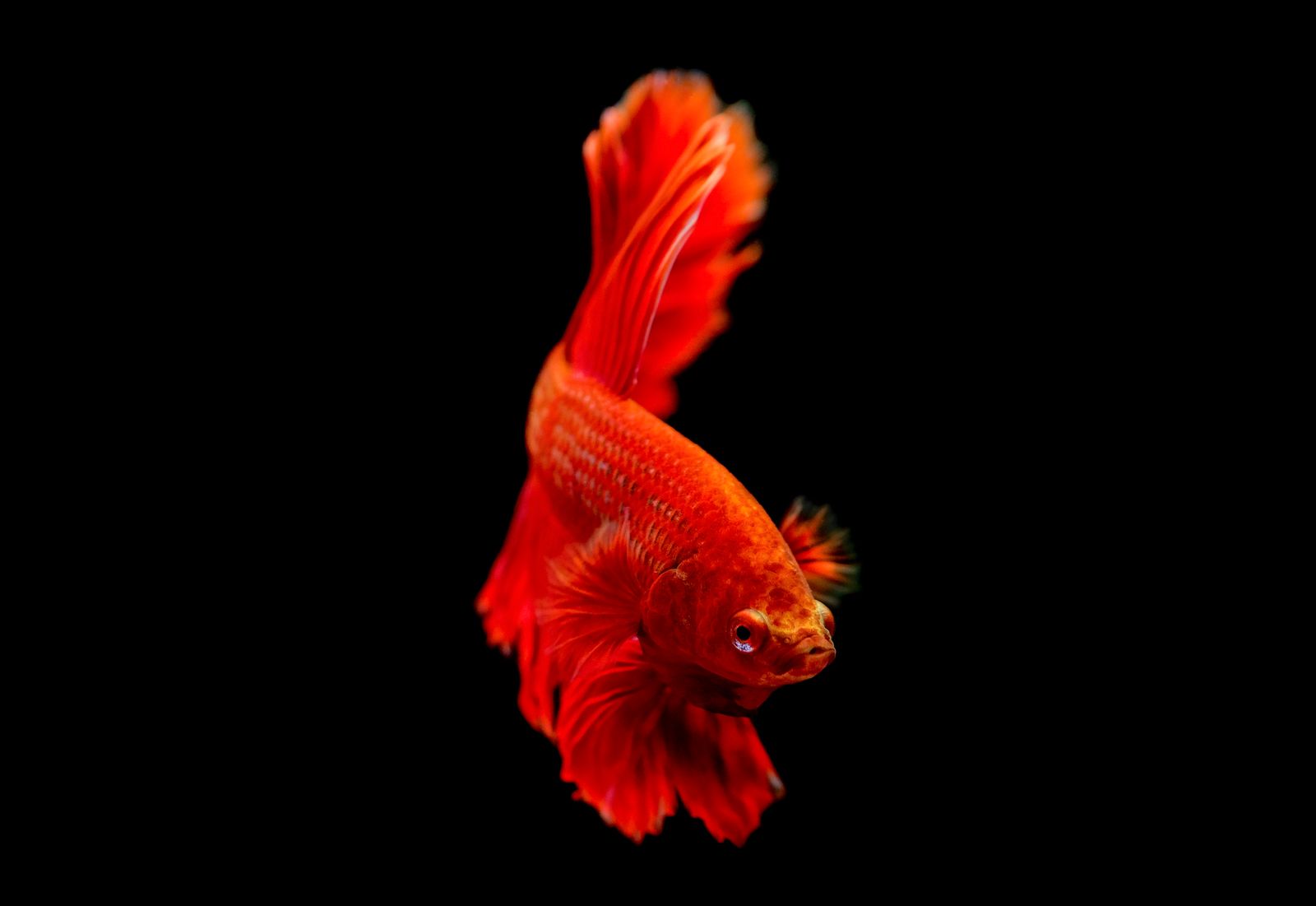
Twitching and shimmying are symptoms, not a diagnosis. A shimmying betta rocks side to side without moving forward, which means nerve and muscle control has failed somewhere. Water quality is the first cause to rule out, then temperature, then a chemistry swing, then external parasites. Test before you medicate.
This page has affiliate links. As an Amazon Associate we earn from qualifying purchases. See our affiliate disclosure.
What is the fish actually doing?
Four behaviours get called twitching and they point in different directions, so spend a minute at the glass before you spend money.
Shimmying is a fish rocking or vibrating side to side while holding roughly the same spot, fins working, going nowhere. Aquarium Science defines it as a symptom rather than a single disease, and an indication that a fish no longer has proper control of its nerves and muscles. That definition is the useful part: it tells you to look for a systemic cause rather than a skin one.
Flicking or flashing is a fish turning on its side and scraping against substrate, decor or the glass. That is itching, and the Merck manual lists flashing and rubbing the sides of their bodies against objects as a signature of external parasites.
Darting is sudden bursts of speed with no target, often into the glass or the surface. That is an escape response, and it usually means something in the water is burning.
Trembling while resting on the substrate or on a leaf is a different picture again, usually a fish too cold or too weak to hold station.
| What you see | What is usually behind it | First check |
|---|---|---|
| Rocking in place, no forward progress | Systemic: water quality, cold, chemistry swing, toxin | Ammonia, nitrite, temperature |
| Scraping against decor, then swimming off | Irritation: parasites, high nitrogenous waste | Body against a dark background, water test |
| Sudden darting, hitting the glass or lid | Something in the water: chlorine, aerosol, medication | What went into the room or the tank in 48 hours |
| Trembling on the bottom, fins clamped | Cold, or late-stage illness | Thermometer, then the disease differential |
| Rapid gill movement plus surface gulping | Low oxygen, or gill damage | Surface agitation, ammonia and nitrite |
| Twitching in one fin only | Mechanical: a snag, a tear, a ray injury | The fin itself, under good light |
That last row matters more than it looks. A single fin flicking repeatedly while the rest of the fish behaves normally is usually a physical problem with that fin, not a whole-body condition.
Why does water quality come first?
Because it is both the most common cause and the only one that can produce this picture through documented neurological damage.
Ammonia is the headline. The Merck manual states that acute ammonia toxicity presents with neurologic clinical signs such as spinning, disorientation, and convulsions. That is not a subtle description and it maps directly onto what people report as twitching. At lower concentrations the same source gives lethargy and poor appetite, with tissue damage beginning once un-ionized ammonia passes 0.05 mg/L. For this species the working ceiling is 0.25 ppm total ammonia, which is to say: any reading at all.
Nitrite does its damage differently and is easy to miss because the fish looks like it is suffocating in clean water. Above roughly 0.1 mg/L, nitrite crossing the gills forms methemoglobin, a condition referred to as brown blood disease, which cannot carry oxygen. The fish then behaves exactly as though the tank were oxygen-starved: congregating at the surface, gilling hard, erratic. There is a useful lever here, which is that chloride competes with nitrite at the gill and blunts the uptake, so a dose of plain aquarium salt buys time while the actual problem is fixed.
And low dissolved oxygen produces its own version. Merck flags below 5 mg/L as the stress point, with piping at the surface and flared gills.
The practical upshot is that three separate water failures all produce erratic, jerky, distressed swimming, and one test kit separates them from everything else on this page.
Check the API Freshwater Master Test Kit on Amazon Affiliate link. See our disclosure.
Check API Aquarium Salt on Amazon Affiliate link. See our disclosure.
Full target and emergency numbers live on the water parameters page, and the emergency sequence for a bad ammonia reading is on ammonia poisoning.
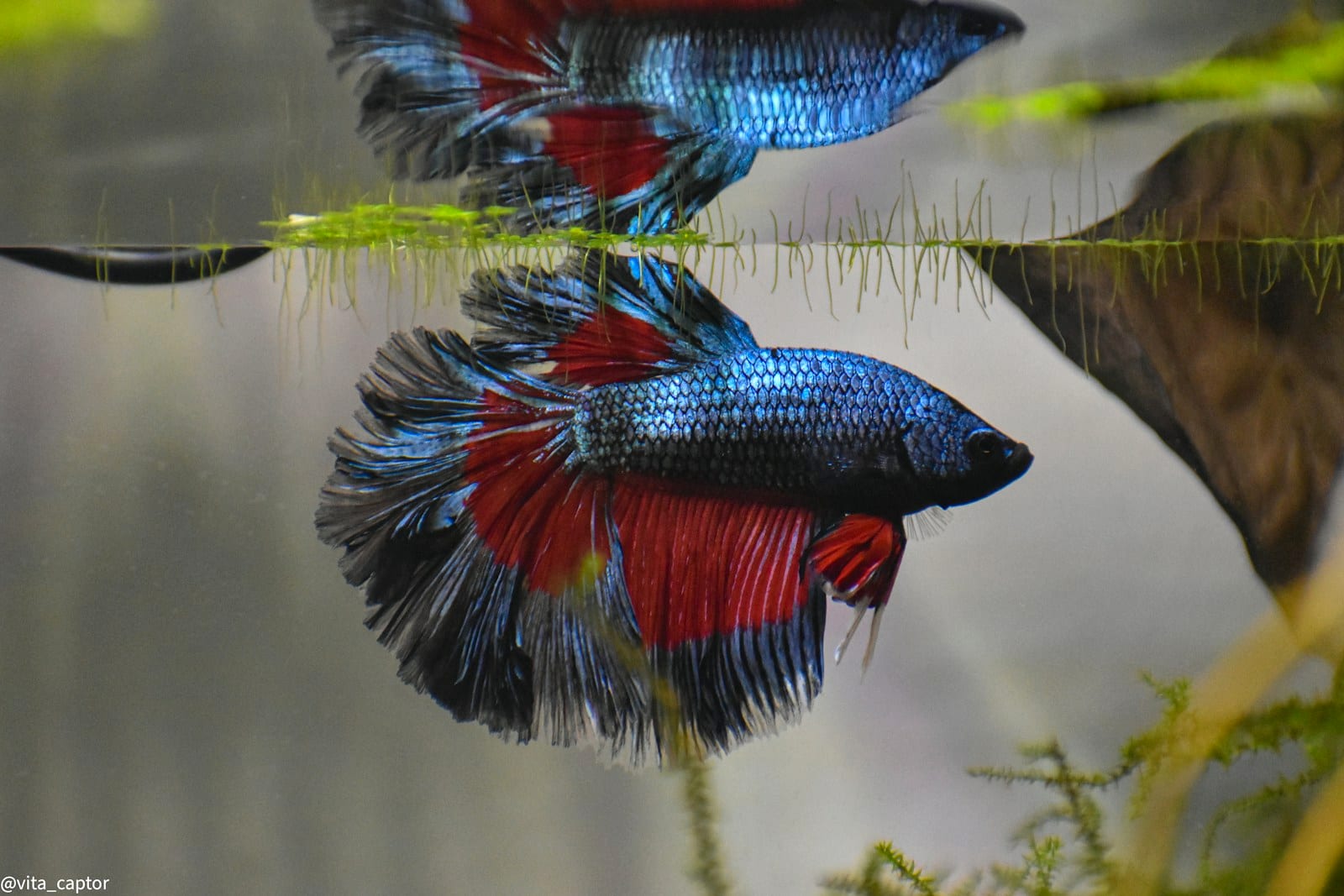
Did the temperature move?
Check this second, because it is the cause most likely to be invisible on a single reading.
The Merck manual gives a general rule of 1 degree Fahrenheit, or even 1 degree Celsius, per hour as a maximum change, and notes that sudden changes of even a few degrees compromise immunity. Three things breach that in ordinary households:
- A refill with cold tap water. A 50 percent change with water five degrees colder moves the whole tank in minutes. This is the single commonest cause of a betta that starts twitching on water change day and settles by evening.
- A heater that has failed on. Cheap preset heaters fail in both directions. Failed on, the tank climbs past 86 F, oxygen falls, and the fish goes erratic and surface-bound.
- A heater that has failed off in a cool room. Slower and more insidious. The fish gets sluggish first, then trembly, then picks up an infection two weeks later.
A betta wants stability in the 76 to 82 F band. What the fish is reacting to is usually the movement rather than the absolute number, and the temperature page has the physiology behind that.
Two readings a day for three days settles the question. A stick-on strip is not enough resolution for this job; you want a thermometer that reads the water rather than the glass.
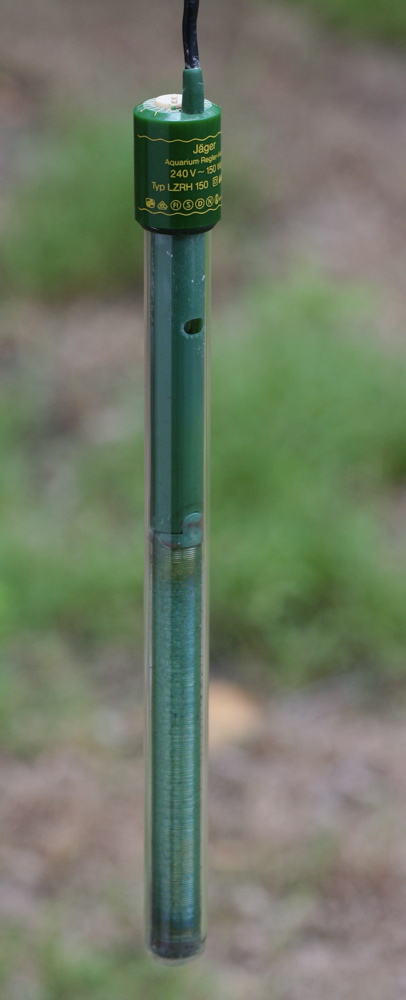
Check the Fluval P25 submersible heater on Amazon Affiliate link. See our disclosure.
Check the KEYNICE digital aquarium thermometer on Amazon Affiliate link. See our disclosure.
Can a pH or hardness swing do this?
A swing can. A steady value that happens to differ from an ideal chart usually cannot, and this is where most online advice goes wrong for bettas specifically.
Almost everything written about shimmying was written about mollies. Livebearer keepers correctly observe that mollies shimmy in soft, acidic water and recover in hard, alkaline water, and the standard explanation is that general hardness supplies the calcium and magnesium that nerve and muscle function depend on. Aquarium Science pushes back on even that, stating flatly that there is no science that backs this claim and attributing most molly shimmying to line-breeding damage instead.
Either way, a betta is not a molly. This species evolved in soft, warm, tannin-stained water. Seriously Fish gives ornamental strains a pH range of 6.0 to 8.0 and a hardness range of 18 to 268 ppm, and the laboratory review records tolerance from pH 5.0 to 9.0. Soft water is close to the natural condition here, not a deficiency to be corrected, so importing the molly protocol and dosing baking soda and crushed coral into a betta tank is a solution to somebody else’s problem.
What does matter is movement. A tank with almost no carbonate hardness has nothing buffering it, so pH can slide overnight, and a fish that wakes up in water a full point different from where it went to sleep is under real stress. The fix is not a target pH. It is enough KH to stop the value wandering, which is the argument laid out on the water chemistry page.
Check the API GH and KH Test Kit on Amazon Affiliate link. See our disclosure.
Is it an external parasite?
Possible, and it is third on the list rather than first because it is third in frequency.
The behaviour that points here is flashing rather than shimmying: a deliberate turn onto one side and a scrape along a surface, repeated. Merck’s summary of external parasite signs runs flashing, piping, clamped fins, lethargy and dark colouration, excess mucus, and loss of condition and appetite. Notice how many of those overlap with a water-quality case, which is the reason the test comes first.
Look for visible evidence before treating:
- Ich shows as white spots the size of a pinhead, distinct and raised, on body and fins. Protocol on the ich page.
- Velvet shows as a fine gold or rust dusting, best seen with a torch held at an angle in a dark room. Protocol on the velvet page.
- Flukes and the ciliate parasites show as nothing at all to the naked eye, which is why heavy flashing with a clean tank and no visible signs is the hard case rather than the easy one.
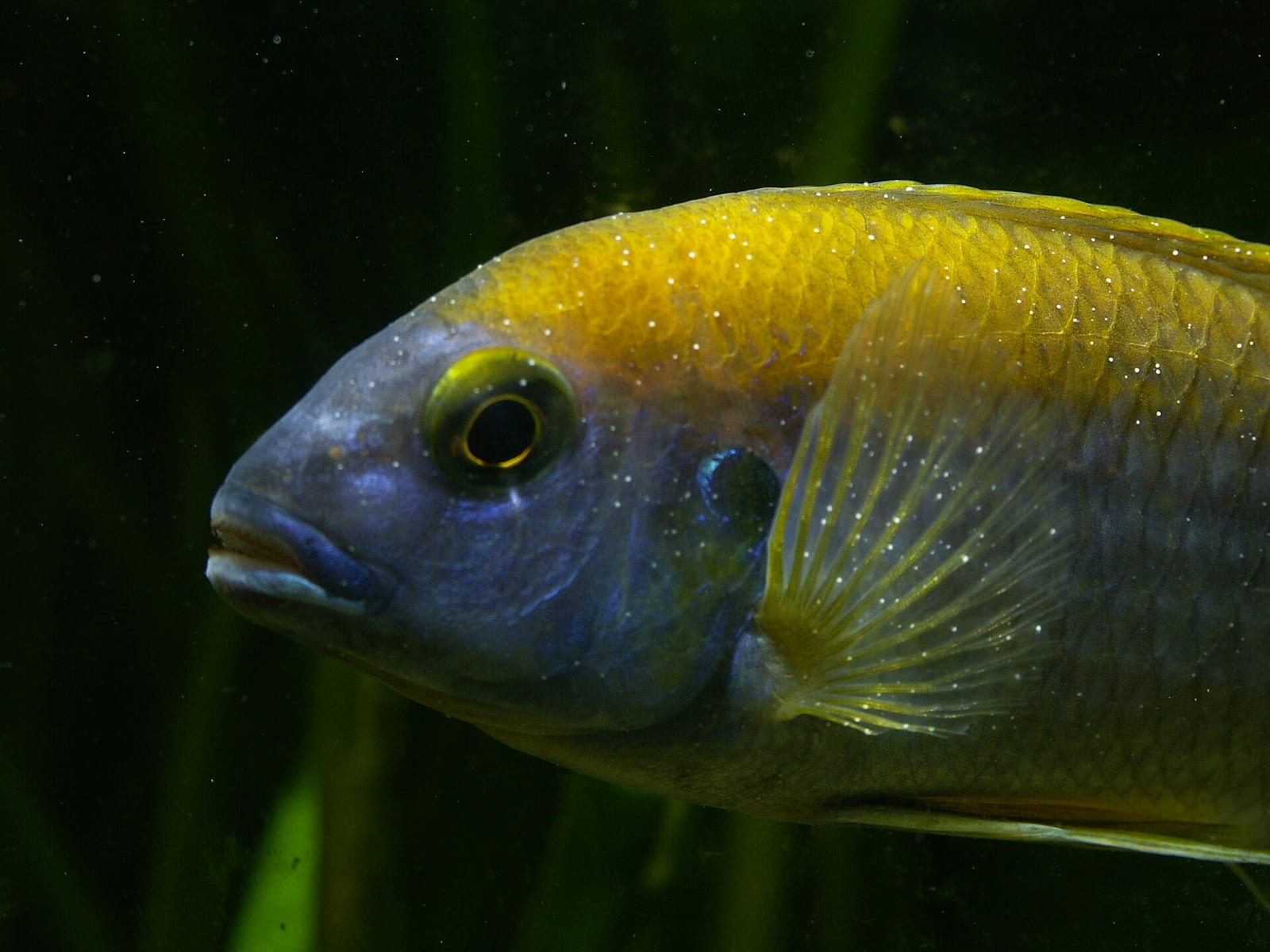
One habit worth building: check the fish against a dark background with a light source to the side, not in front. Frontal light washes out both gold dusting and the raised profile of a cyst.
What about nerve damage and the swim bladder?
These are the residual categories, and they are worth naming so you know when to stop testing water.
Aquarium Science lists internal bacterial infection reaching the brain among the causes of shimmying, alongside chlorine in change water, very poor water quality, aerosols used near the tank, and bacterial toxins from something decaying. That aerosol entry deserves more attention than it gets: air freshener, oven cleaner, hairspray and insecticide all enter a tank through the surface, and an open-topped aquarium in a kitchen is exposed to whatever gets sprayed in that room.
Buoyancy problems can look like twitching from a distance, because a fish fighting to hold depth makes constant small corrections. The distinguishing feature is direction. A swim bladder case drifts up or sinks and works against it; a shimmying fish holds depth fine and simply cannot travel. The swim bladder page separates the constipation version from the infection version.
Genuine neurological damage from a past ammonia exposure is a real outcome and there is no treatment for it. A fish that survived a bad tank and retains a permanent tremor in otherwise perfect water is living with a scar. Keep the water immaculate, keep the flow gentle, and accept the tremor.
What to do, in order
- Watch for a full minute. Classify the behaviour using the table above. Shimmying, flashing, darting and trembling send you to different sections.
- Test ammonia, nitrite, nitrate, pH and temperature. Record the five numbers.
- Fix anything that reads wrong, starting with a 50 percent temperature-matched, dechlorinated water change if ammonia or nitrite is above zero.
- Reconstruct 48 hours. New water, new fish, new decor, a medication, something sprayed in the room, a filter rinsed under a tap.
- Give it 24 hours. Most water-driven cases improve visibly within a day of correction, which is itself diagnostic.
- Only then look for a parasite, with a torch, against a dark background, and treat one thing at a time.
- If water is clean, temperature is stable, nothing is visible and the tremor persists, stop adding chemicals. You are most likely looking at damage rather than an active process.
Check Seachem Prime on Amazon Affiliate link. See our disclosure.
What not to do
Do not medicate on the behaviour alone. Twitching is produced by at least six unrelated causes and most of them get worse under an antibiotic that also damages the filter colony.
Do not stack treatments. Salt plus a copper product plus an antibiotic plus raised heat is four stressors on a fish that is already failing to control itself.
Do not raise the temperature reflexively. The heat protocol belongs to ich, where it shortens the parasite’s life cycle. On a fish that is twitching because the tank is already too warm, it is the opposite of the fix.
Do not dose baking soda and crushed coral because a forum told you to. That is molly advice, and this species comes from soft water.
Do not skip the dechlorinator on a top-up. Chlorine entering a small tank is one of the few things that produces this picture within minutes, and Aquarium Science names chlorine in change water directly.
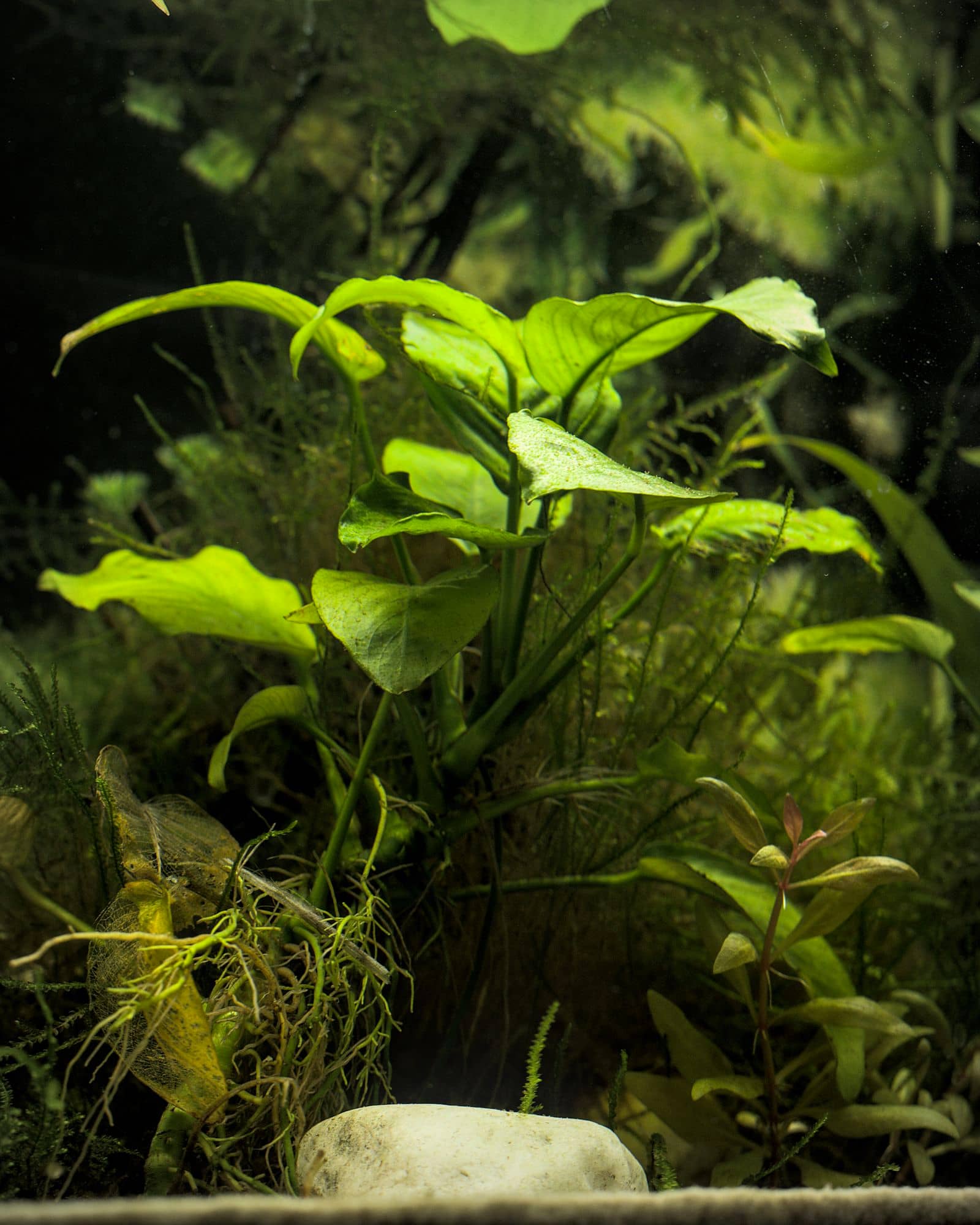
A fish that is twitching in water you have tested, at a temperature you have verified, in a tank nothing new has entered, is a genuinely difficult case. A fish that is twitching in an untested tank is nearly always a water problem wearing a disguise, and normal betta behaviour is worth reading alongside this page so you know what you are comparing against.
Related on this site
- Betta Fish Water Parameters: The Complete Reference Table
- Betta Ammonia Poisoning: Signs, Emergency Response, Recovery
- Betta Water Temperature: 76–82°F and Why Stability Wins
- Betta Water Chemistry: pH, Hardness, Ammonia Basics
- Betta Ich (White Spot Disease): Heat Treatment Protocol
- Betta Velvet Disease (Piscinoodinium): Darkness and Copper Protocol
- Betta Swim Bladder Disease: Constipation, Infection, and the Pea Test
- Betta Fish Behavior: What Normal Looks Like and What Is a Warning Sign